
Until recently, a Manhattanite might venture no more than a few dozen blocks to find the world’s most sophisticated cancer treatment. Cutting-edge American medicines have helped reduce the U.S. cancer death rate by about a third since 1990, and New York City hospitals deliver some of the best care in the country.
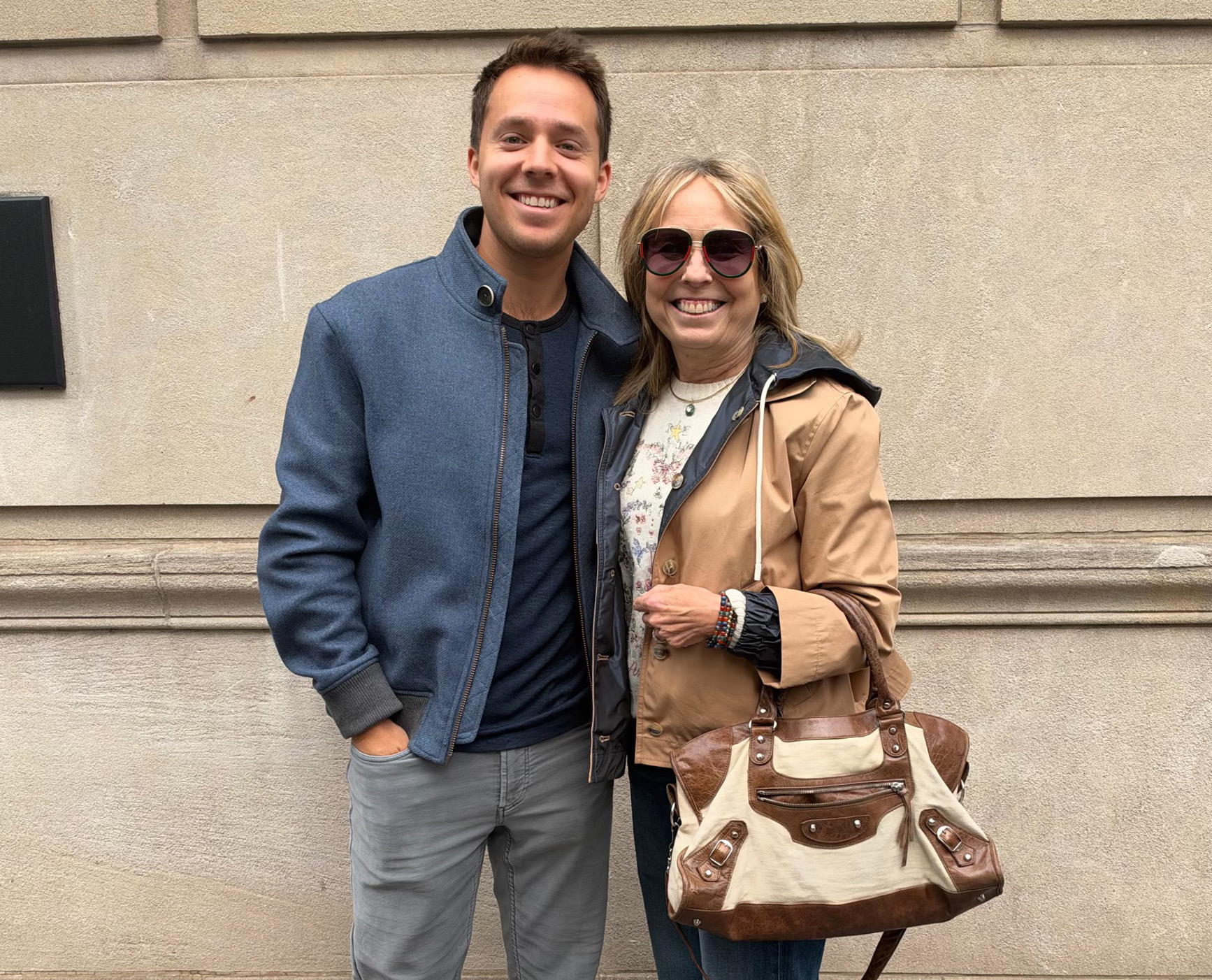
But in January 2025, the city’s health systems had no good options for Debbie Doppelt, a 60-year-old jeweler with an unusual form of lung cancer that mostly afflicts nonsmokers like her. The Food and Drug Administration hadn’t yet approved sunvozertinib, a drug developed in China that targets the mutation driving Doppelt’s tumors. She had been through chemotherapy and surgery, but the cancer had now spread to her brain. And she didn’t qualify for the relevant clinical trials.
Then an option emerged, in an offhand remark.
“Too bad she’s not Chinese,” a doctor told her son Max Doppelt, who had organized his mother’s care since her 2023 diagnosis. “She could go to a pharmacy in China and buy it.”
Within hours, mother and son had reached out to friends and relatives, one of whom procured a small supply of sunvozertinib from a contact living in China. A few months later, Max flew to Shanghai to get a refill.
Other patients have followed. “No organization or doctor is guiding patients to China, but word gets out,” Max said. He said he knows of at least 30 Americans who’ve made the pilgrimage to obtain the drug, which the FDA licensed in July 2025 but wasn’t yet on the U.S. market as of mid-October of this year.
Sunvozertinib, made by Shanghai-based Dizal Pharmaceutical, isn’t the only treatment drawing patients to China. Americans, Europeans, and others are trekking there to enter clinical trials for CAR-T therapy, an area in which China is now a world leader.
China, until recently known more as a supplier of drug precursor chemicals and generic medicines, has become a biotech powerhouse, accounting for as much as 46% of new drugs tested around the world in 2025. U.S. pharmaceutical companies are testing new therapies there and signing billion-dollar contracts with Chinese firms to develop and market their drugs.
China’s progress has alarmed some politicians, who warn of lost jobs and U.S. dependency on Chinese medicines. The Trump administration in June kicked off Operation TrialBlazer, aimed at speeding up some FDA regulatory processes to lure back more clinical trials.
China’s poor showing in vaccine and drug development during the covid pandemic prompted the country to overhaul its biotech sector, dramatically altering the global industry, said Sam Rasty, a veteran of small biotech companies who now leads one called FynderBio. Venture capital now flows heavily to early-stage clinical work in China and Australia, where regulatory systems enable key first-in-human studies much more quickly than in the United States.
Chinese companies are so much faster at this process that U.S. biotechs, which used to share early advances at conferences or funding meetings, now routinely conceal their progress out of fear that competitors will take their ideas and speed them to market, said Steve Potts, CEO of Breakthru Medicine, a small biotech.
At a meeting he attended in May, nearly all the 60 biotech CEOs in the room planned to run phase 1 trials in Australia, Europe, or China, Potts said. Five or 10 years ago, most of those trials would have been carried out in the U.S.
“Slow and prohibitive” FDA requirements are driving investment to more-nimble Chinese companies, President Donald Trump’s nominee to lead the agency, Heidi Overton, warned in her opening statement at her Sept. 24 confirmation hearing.
The movement of clinical trials overseas “should give pause to every American and those who serve on their behalf,” Overton said. “When we lose this advantage, we lose our health security. And when we lose our health security, we lose everything.”
Overton pledged to continue TrialBlazer, which mirrors Australian processes begun in 1991. It is aimed at accelerating clinical trials and approvals so patients do not feel compelled to seek treatment abroad, said Department of Health and Human Services spokesperson Emily Hilliard. It is sometimes legal to obtain medication abroad for personal use, but the FDA “cautions patients about potential safety and quality risks associated with treatments outside our regulatory system,” she added.
As the FDA moves to streamline drug development, members of Congress are trying to slow Chinese firms’ integration into U.S. biotech.
Rep. John Moolenaar (R-Mich.), who chairs the House Select Committee on the Chinese Communist Party, in June co-sponsored legislation with Rep. Debbie Dingell (D-Mich.) requiring all U.S. pharmaceutical deals with Chinese companies to be cleared by the Treasury Department.
Others see biotech protectionism as misguided. China’s focus on improved medicines can only help us, said Peter Kolchinsky, managing partner of RA Capital Management, which has Chinese investments in its biotech portfolio.
“We may be adversaries in many areas, but we’re not competing with them to cure cancer. We are collaborating with them to cure cancer,” he said. “There are things that are bigger enemies than any other nation on Earth.”
Cancer Knows No Boundaries
A minor but persistent cough led to the diagnosis of Debbie Doppelt’s cancer in late 2023. Chemo, immunotherapy, and surgery kept it at bay for months, but in December 2024, scans showed the cancer had spread to her brain, with 10 tiny tumors.
The FDA earlier that year had approved amivantamab, a drug that targeted the mutation driving Doppelt’s tumor, but Max was concerned about its toxicity. Also, several doctors he consulted told him that amivantamab might not penetrate brain tissue to fight cancer there.
Doppelt tried to enter a clinical trial at Memorial Sloan Kettering Cancer Center, where she was a patient, for zipalertinib, another drug that targeted her mutation. But in January 2025, the Doppelts learned that a slight scarring on her lungs had rendered her ineligible for the study.
That left sunvozertinib, which gained approval in China in 2023. It was also being tested in the U.S., but only in late-stage trials in which half the subjects received chemotherapy only. That risk was a nonstarter for Doppelt, whose cancer had already outsmarted chemo.
So Max flew to Shanghai, returning with 26 boxes of sunvozertinib in his luggage. The drugs cost about $10,000, he said.
“Getting on the plane and bringing the medicine home felt like my life’s purpose,” Max said. “The data was so clear that this drug had significant efficacy in the brain. Anything else she might do, she might not last a year.”
On Sept. 1 of this year, AstraZeneca signed an agreement with Dizal to distribute the drug worldwide, and it plans to make it available in the U.S. by the start of 2027, spokesperson Tara Parsell said.
Doppelt, who runs a diamond business with her husband, has tried to stay positive and healthy, scarcely missing a day of work since her 2023 diagnosis. She said she’s grateful she has a loving community and the means to afford the best available therapies.
“I think I’ve been pretty successful at having, actually, an amazing three years,” she said. “In some ways a better three years, with all of it, than the three years before, because you’re so appreciative of everything.”
Doppelt’s parents were Holocaust survivors. “They were always saying: ‘This piece of bread tastes so good! Do you know what it is to be hungry?’”
Searching for help for his mother gave Max, a 30-year-old computer engineer, an idea for helping patients find the right treatment — which, in cases of advanced cancers, may be a clinical trial.
A year ago, he quit his tech job and started a company that uses artificial intelligence to combine data from research and drug company sites with a patient’s health records to help them find the right study.
Similar apps are being used to help drug companies and hospital systems increase the percentage of U.S. cancer patients who enter clinical treatment trials, currently at about 7%. This will also strengthen the U.S. drug industry, said Paradigm Health CEO Kent Thoelke, whose company offers an AI program designed to help hospitals and clinics enroll trial subjects.
About 300 patients have used Max’s app. So far his clients, whom he doesn’t charge, have all been lung cancer patients like his mom. Sunvozertinib seems to help about half those who take it, he said.
A 70-year-old woman whom Max had assisted got a six-month supply of the drug earlier this year from China, only to learn after three months that it wasn’t working. “My cancer had spread,” said the woman, whom KFF Health News agreed not to name, to protect sensitive health information.
‘I’ll Do Everything in Our Power’
Doppelt has done well on the drug. Some 19 months after starting on it, her cancer was still mostly kept at bay, with the help of a few radiation treatments and dose adjustments.
AstraZeneca’s plans to widely distribute sunvozertinib would mean no more trips to China. But Max had few illusions that the drug would work for his mom forever.
“She has a metastasizing cancer that will learn to bypass the drug,” he said. “At that point we’ll be dependent on the latest and greatest therapies. If they happen to be in China, I’ll do everything in our power to go there.”
At his Upper East Side apartment one recent afternoon, Max examined the current clinical trial outlook for his mother. He pulled up her profile on the app and scrolled down a list scoring available trial sites according to their fit and proximity.
“This one looks good,” he said, pointing to a clinical trial for firmonertinib, a drug China approved in 2021 that’s under study in the U.S. and elsewhere.
CAR-T therapy is another possibility, particularly a variety that the University of Colorado has developed to boost patients’ immunological attack on mutations like the ones driving Doppelt’s cancer.
But Kyle Concannon, a leader of the Colorado research team, said regulatory uncertainty has slowed his progress. As new tools enable sophisticated measures of things like toxicity and tissue distribution, they add time, cost, and risk to the therapy’s development. These technologies may be better at detecting possible harms, “which is good,” Concannon said, “but the alternative to a new medicine, with a natural disease like lung cancer, is the individuals will die from their disease.”
Max Doppelt and other patient advocates, while pushing for faster FDA processes, don’t want to rule out more Chinese medicine runs.
“When drugs are approved in China but not in the U.S., of course we will deploy the China option where necessary,” said Marcia Horn, CEO of the nonprofit International Cancer Advocacy Network. “Lives depend on it.”
Max would prefer to see the drugs his mother needs developed in the United States. But he, too, opposes any effort to freeze out the Chinese biotech industry.
The discovery of new life-preserving drugs “really brings us together,” he said. “We’re all humans at the end of the day.”
KFF Health News is a national newsroom that produces in-depth journalism about health issues and is one of the core operating programs at KFF—an independent source of health policy research, polling, and journalism. Learn more about KFF.This article first appeared on KFF Health News and is republished here under a Creative Commons Attribution-NonCommercial-NoDerivatives 4.0 International License.
from Health Industry Archives - KFF Health News
0 Response to "As Politicians Argue About China, US Patients Find Cutting-Edge Treatment There"
Posting Komentar