They Worked To Protect Public Health. Now They Want the Public’s Votes.

A handful of former public health officials are campaigning for top statewide offices across the country, testing whether their experience with covid and other hot-button health issues will appeal to voters in November.

The officials, all Democrats, are running at a time when the Trump administration is reducing government funding for scientific research, restricting access to some vaccines, and making it more difficult for some Americans to obtain health insurance.

Shaughnessy Naughton, president of 3.14 Action, a political action committee that recruits Democratic candidates with science and health backgrounds, said it is unusual to see so many public health leaders running for office.

“But it’s not surprising given the moment we are living in, with an arsonist running HHS working to undermine the vaccine schedule and public health at large,” she said.

Health and Human Services Secretary Robert F. Kennedy Jr. is a longtime anti-vaccine activist who disparaged public health measures implemented during the pandemic, going as far as calling the covid vaccine the “deadliest vaccine ever made.”

Neither HHS nor the White House responded to requests for comment.

Several of the candidates benefit from name recognition built during the covid pandemic, political science scholars say, when daily news briefings from local health officials became must-see-TV for many citizens sheltering in place from the novel virus. But that cuts two ways.

While many Americans regarded public health officials as offering prudent advice and a steady voice, others criticized them for pushing school closures, mask mandates, and new, quickly created vaccines. The attacks have escalated under President Donald Trump, with Republicans targeting pandemic-era public health leaders such as Anthony Fauci with investigations and a former Fauci adviser even facing criminal prosecution.

National polls show healthcare is top of mind for many voters this year, with Democrats most worried about costs and Republicans about fraud. But that’s no guarantee of victory. Nirav Shah, an epidemiologist who led Maine’s top public health agency through the pandemic, lost a narrow Democratic primary in the state governor’s race in June.

Here are some of the public health officials on the ballot this year:

Xavier Becerra, Running for Governor in California

A photo of former HHS Secretary Xavier Becerra speaking in front of news reporters' microphones.
Xavier Becerra speaks to reporters in Los Angeles on Jan. 9. (David Crane/MediaNews Group/Los Angeles Daily News via Getty Images)

Becerra, who served as HHS secretary under President Joe Biden, is the highest-ranking former health official running this cycle. He won a crowded and expensive open primary and now faces Republican Steve Hilton, a British-born former Fox News host, in the general election.

Mark Peterson, a public policy professor at the UCLA Luskin School of Public Affairs, said with the pandemic in the rearview mirror, any judgment voters may have about the federal government’s response is more likely to reflect on Biden rather than Becerra, who has no medical background and maintained a low profile as HHS secretary.

Leading the nation’s health department as the pandemic lingered, Becerra focused more on expanding access to the Affordable Care Act and Medicaid, overseeing record numbers of people enrolled in the publicly financed programs during his tenure. He did face criticism over the processing and placement of a massive influx of migrant children at the U.S.-Mexico border, as well as his agency’s response to a baby formula shortage brought on, in part, by major product recalls.

Becerra has said he now wants to be California’s “healthcare governor,” a mantle outgoing Gov. Gavin Newsom tried to claim upon taking office in 2019.

Becerra’s campaign did not respond to a request for comment.

Before becoming HHS secretary, Becerra served as California’s attorney general and sued the first Trump administration more than 100 times, leading a coalition of states against GOP efforts to gut the ACA. He also started a unit in his office focused solely on healthcare. During Becerra’s tenure, his office reached a $575 million antitrust settlement with the California hospital system Sutter Health, pursued pharmaceutical companies that delayed generic drugs, and helped block a Trump administration rule that let employers choose whether to cover birth control.

Voters often regard decades of experience in government as a negative, Peterson said. But for the job of running the nation’s most populous state and the world’s fourth-largest economy, he added, “I think there are a lot of people out there who would like to have somebody who actually has run a big enterprise.”

In televised debates, Becerra has said California should maintain state-funded Medicaid coverage for immigrants without legal status. He is also a longtime supporter of implementing single-payer healthcare, though in recent interviews he has said it needs to be addressed at the federal level.

Amy Acton, Running for Governor in Ohio

Amy Acton stands, speaking to a crowd with a microphone. Around her, supporters hold signs that read, "Dr. Amy Acton for Governor."
Amy Acton addresses attendees at a campaign rally in Cincinnati on April 28. (Jon Cherry/Getty Images)

Acton ran Ohio’s health department from February 2019 to June 2020.

During the first months of the pandemic, Acton appeared at daily news conferences with the state’s Republican governor, Mike DeWine, that were jokingly dubbed “Wine With DeWine.” She earned fans with her calm and positive demeanor while explaining her approach to keeping covid at bay.

But she also attracted critics with her recommendations to stay at home, mask up, and shut down some businesses to curb the virus’ spread. Protesters even showed up at her home.

Acton’s Republican opponent in the governor’s race, Vivek Ramaswamy, has labeled her “Dr. Lockdown” on social media. His criticism of her role in shutting down businesses could prove effective with the economy at the top of many people’s minds, said Christopher Devine, a University of Dayton political science professor.

“It’s a double-edged sword, because she also really upset some people,” Devine said of Acton’s time as the health director during the pandemic.

He said that is a tricky attack for Ramaswamy to pursue, though, because DeWine — still the sitting governor and a popular conservative figure — endorsed the covid measures Acton recommended, granting her emergency powers to sign the orders, and has since said he takes all responsibility for those actions.

For her part, Acton has done little on the campaign trail to highlight her time as the state’s public health director. Instead, she has focused more on healthcare affordability, highlighting the Trump-led cuts to Medicaid and the scaled-back subsidies for ACA plans that have resulted in thousands of people dropping coverage in the state.

“I hear from families across Ohio that healthcare costs are rising and they just can’t keep up,” Acton said in an emailed statement. “That’s why I will fight to protect and expand access, reduce the price of prescription drugs, forgive medical debt holding Ohioans back, and lower premiums.”

Abdul El-Sayed, Running for U.S. Senate in Michigan

Abdul El-Sayed speaks on-stage at a venue. Behind him is a backdrop that reads, "Abdul for US Senate." Blurred in the foreground are the silhouettes of two heads of people watching El-Sayed speak.
Abdul El-Sayed at a campaign event in Ferndale, Michigan, on July 25. (Emily Elconin/Getty Images)

El-Sayed — who ran the health departments in the city of Detroit and Wayne County, Michigan — is one of two leading Democratic candidates for Senate. The primary is Aug. 4.

El-Sayed, a progressive, is facing off against Haley Stevens, a four-term congresswoman. They are vying to run against Republican nominee Mike Rogers, a former congressman, for the Senate seat held by retiring Democrat Gary Peters.

From 2015 to 2017, El-Sayed ran the Detroit Health Department, which had been gutted and privatized as part of the city’s 2013 bankruptcy. In his role, he led efforts to test Detroit schools for lead in the wake of the Flint water crisis and provide free eyeglasses to children in public schools.

From 2022 until 2025, he ran the health department in Wayne County, the state’s most populous county, which includes Detroit. In that job, he initiated a program to retire medical debt for thousands of residents and make naloxone available in public areas to reverse the effects of opioid overdoses.

In an interview with KFF Health News, El-Sayed said his public health experience helped him become an effective communicator and challenge corporations and the role they play in healthcare.

“Politics have become overrun by big money and corporations, and my training and background in public health has taught me to think about that and push back against it,” he said.

El-Sayed, who did not practice medicine after completing his residency and is not licensed to do so, has faced criticism from some in his party for calling himself a doctor.  

El-Sayed, who has endorsements from Sen. Bernie Sanders (I-Vt.) and U.S. Rep. Alexandria Ocasio-Cortez (D-N.Y.), supports “Medicare for All,” a policy favored by many progressives that would make more people eligible for the federal health program for people who are 65 and older or disabled.

David Dulio, a professor of political science at Oakland University in Rochester, Michigan, said that the broader economy, Trump’s tariffs, and trade are eclipsing healthcare this year as top concerns for voters in the state. But he added that “progressive stances such as Medicare for All are attractive in the Democratic primary electorate.”

KFF Health News is a national newsroom that produces in-depth journalism about health issues and is one of the core operating programs at KFF—an independent source of health policy research, polling, and journalism. Learn more about KFF.

This article first appeared on KFF Health News and is republished here under a Creative Commons Attribution-NonCommercial-NoDerivatives 4.0 International License.


from Health Industry Archives - KFF Health News
Related Posts:

Medicaid Insurers’ Contracts on the Line in Tight Governor’s Race

One of America’s most competitive gubernatorial races could settle a heated argument over whether private insurance companies should run Medicaid.

The race is in Iowa, whose Medicaid program has been plagued with controversy since 2016, when the state hired national insurance companies to manage billions of dollars’ worth of benefits.

That shift was made by then-Gov. Terry Branstad, a Republican. With his executive order, Iowa joined most other states in privatizing the management of Medicaid, which covers healthcare for more than 67 million Americans with low incomes or disabilities.

The arguments have resurfaced this year during the competition to replace Republican Gov. Kim Reynolds, who was Branstad’s protégé and continued contracting with private companies to manage Medicaid benefits. Zach Lahn, the Republican candidate to succeed the retiring governor, supports the practice. Rob Sand, the Democratic candidate, wants to end it.

“It’s been a disaster,” said Sand, Iowa’s state auditor. “The number of complaints has been catastrophic.”

Pros and Cons

Supporters of privatization say the insurers, known as managed-care organizations, make Medicaid more effective and efficient. Critics contend the companies pad their profits by denying payment for crucial health services and by shortchanging agencies and professionals who provide care.

Iowa is among 41 states, plus the District of Columbia, that contract with outside companies to run at least part of their Medicaid programs. Overall, private insurers manage the benefits of more than three-quarters of Medicaid patients. Connecticut is the only state that has fully reversed course after privatizing its Medicaid system.

Sand has criticized privatized Medicaid for years. As state auditor, he published reports alleging that the national insurers systematically deny or delay payment for services to which Medicaid participants are entitled.

He has vowed not to renew state contracts with the three insurers managing care for more than 600,000 Iowans on Medicaid, which is jointly financed by the state and federal governments. He would resume having state employees review and pay bills from clinics, hospitals, and other healthcare providers.

Lahn told KFF Health News that Sand’s pledge to resume state administration of Medicaid “is the exact wrong idea.”

Lahn is a former activist for Americans for Prosperity, a national pro-business group affiliated with the Koch family. He contends that state governments and Medicaid participants benefit when insurers compete to serve them.

“There are very few things that government does more efficiently than the private sector,” he said.

Lahn, who is a businessman and farmer, emphasized that state officials should strictly enforce contract requirements, ensuring that the insurers treat Medicaid recipients fairly and make prompt payments to care providers. He also said he would bar insurers from using artificial intelligence systems to determine whether to pay for medical claims under Medicaid. “Iowans deserve to have a human looking at their case,” he said.

Sand said in a recent interview that he doesn’t want Iowa to fully return to a “fee-for-service” Medicaid system, in which hospitals, clinics, and other healthcare agencies would effectively be paid piecemeal for whatever services they provided. Instead, he said, state employees should take over operation of a managed-care system, in which administrators review services to help ensure Medicaid participants receive what they need without wasting public money on ineffective services.

A few months ago, Republicans controlling the Iowa Legislature considered a bill to require the state to have a privately managed Medicaid system. That proposal would have blocked future governors from unilaterally shifting back to public management of the program. But the bill failed to pass.

Sand, a former assistant state attorney general, said he is confident he would have legal authority as governor to stop contracting with private Medicaid managers, although he cautioned that the transition would be complicated and could take time.

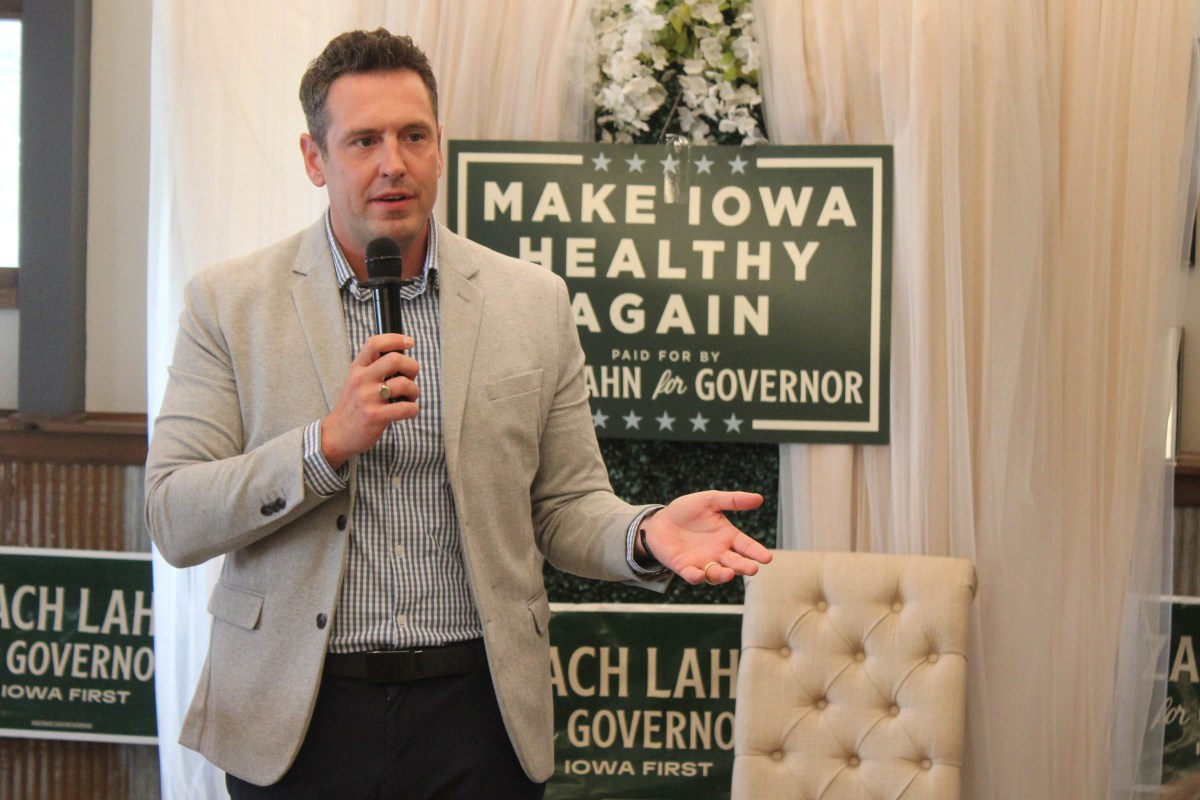
A man in light colored blazer and button down shirt holds a microphone. Behind him, campaign signs that say "MAKE IOWA HEALTHY AGAIN" are visible.
Republican candidate Zach Lahn says that if he were elected Iowa governor he would continue contracting with private insurance companies to manage the state’s Medicaid program because he believes they are more efficient than the government. (Erin Murphy/The Gazette via AP)
A man wearing a button down shirt and beige pants holds a microphone as he speaks to a small crowd of people.
Democratic candidate Rob Sand says that if he were elected Iowa governor he would end private management of the state’s Medicaid program, which he says has been a disaster. (KC McGinnis/Bloomberg via Getty Images)

A Toss-Up Race

National political observers say the Iowa governor’s race could go either way.

This June, Lahn won an underdog primary campaign to beat a sitting congressman backed by President Donald Trump. Lahn gained Trump’s endorsement after winning the Republican primary. He is a vocal supporter of the Make America Healthy Again movement, led by Health and Human Services Secretary Robert F. Kennedy Jr., which aims to improve Americans’ diets and reduce environmental poisons.

Sand noted that Lahn’s past political activism included a failed 2014 attempt to defeat a proposal to cover more people under Montana’s Medicaid program.

Lahn said that at the time he worried the federal government would reduce how much money it would contribute to such Medicaid expansions, leaving states to foot much of the bill. He said he also didn’t want to see public programs such as Medicaid giving benefits to adults capable of providing for themselves. But he said those concerns have been allayed, partly by the Trump administration’s moves to require millions of Medicaid recipients to prove they are working, volunteering, or going to school.

If elected governor, he said, he would not try to reverse Iowa’s expansion of Medicaid, which happened in 2014 under Branstad.

Branstad also is the governor who decided in 2016 to hire private insurers to manage Medicaid.

Branstad, who declined to comment for this article, did not need the legislature to approve his momentous decision. He weathered controversy over the change, including allegations that the companies systematically denied payment for care that people with disabilities needed to remain in their homes.

Andy Schneider, a Georgetown University researcher who studies health policy issues, said it’s understandable that many government leaders see an advantage in hiring private Medicaid management companies. Each state’s Medicaid program pays claims for hundreds of thousands or even millions of members, and administrators must scrutinize bills from thousands of hospitals, clinics, and other healthcare organizations. “That’s a heavy lift,” said Schneider, who worked in federal Medicaid administration when Barack Obama was president.

Schneider noted that Medicaid expenses are among the biggest parts of any state’s budget. The costs can vary dramatically year to year, he said, which is hard for legislators and governors to plan for. Management companies sign contracts for set amounts of money per enrollee, depending on people’s ages and health conditions. Managed-care companies say they can improve Medicaid members’ health and reduce expenses. But Schneider said outside researchers have been unable to confirm or disprove those claims.

Federal law gives states flexibility in how they run their Medicaid programs, including whether they hire private insurers to manage the programs. “Unwinding those arrangements might take a little time, but there’s no question they can do it,” Schneider said.

Connecticut ended its use of private insurers to run Medicaid in 2012. Minnesota legislators decided to contract only with nonprofit insurers, starting in 2025, and that state’s governor has talked about doing away with private management altogether.

Gary Jessee, a former Texas Medicaid director who helped transition that state’s program into managed care, noted that most Americans’ health coverage is managed by some kind of insurance company, whether they obtain it on their own or get it through a government or employer plan.

Jessee now helps run a health policy consulting company whose clients include Medicaid managed-care companies. He said states rarely talk about totally scrapping contracts with such companies. Instead, he said, states have options to change the contracts, including to increase oversight or limit profits.

Overall, Jessee said, managed-care companies help Medicaid enrollees obtain the services they need to stay healthy. But it’s hard to calculate how much money the companies save states, he said, because all healthcare costs have been rising, and new members of managed-care plans may at first use more services as the insurance companies encourage them to get regular checkups instead of waiting for emergencies.

Iowa’s Medicaid program is managed by three insurers: Molina Healthcare, Elevance Health subsidiary Wellpoint, and Centene subsidiary Iowa Total Care.

None responded to requests for comment for this article.

Catherine Gray of Des Moines helps run a Facebook page for families who use Iowa’s Medicaid system. Her adult son, John, is on Medicaid because of a disability. Gray said the managed-care companies have made it much harder for people to obtain services, including mental healthcare, dental care, and transportation to health appointments. Iowa’s shift to the private system was abrupt and chaotic, she said. “We know people have died,” she said.

Gray said she probably will vote for Sand for governor, even though she doesn’t agree with every nuance of his stance on Medicaid. She suspects many other Iowans who use the program will do the same. “They’ve really been put through the wringer for 10 years, and they’re exhausted.”

KFF Health News is a national newsroom that produces in-depth journalism about health issues and is one of the core operating programs at KFF—an independent source of health policy research, polling, and journalism. Learn more about KFF.

This article first appeared on KFF Health News and is republished here under a Creative Commons Attribution-NonCommercial-NoDerivatives 4.0 International License.


from Health Industry Archives - KFF Health News

Related Posts:

Uninsured but Undaunted, a Surgical Patient Searched the Globe for a Deal

Around the end of last year, Ronmel Rangel, 63, began to feel a familiar discomfort in his lower abdomen. Twenty-five years earlier, while living in his native Venezuela, he had undergone surgery to repair a hernia on the right side of his groin.

Now, the same pain had returned — on the left.

This time, Rangel was in the U.S. and lacked health insurance. In 2019, he moved to Portland, Maine, where one of his daughters lives.

As a green-card holder, he qualified to purchase health insurance through the Affordable Care Act marketplace. But he quickly realized that the premiums for someone his age were beyond his budget. He decided to go without insurance, even though it had been a priority for him.

Instead, Rangel signed up for a plan at a concierge practice where patients pay as little as $70 a month for services, including unlimited office visits and minor procedures such as stitches and biopsies.

But when Rangel was diagnosed with a hernia, surgery became unavoidable. Ben Hagopian, his primary care physician, helped him compile a list of hospitals and surgical centers to consider. Rangel has a PhD in management, a field he pursued while serving in the navy in Venezuela. Armed with that knowledge and a naturally inquisitive mind, he began researching prices.

His efforts paid off when the bill came.

The Medical Service

Rangel had what is called an inguinal hernia, which occurs when the contents of the abdomen bulge through a weak spot in the lower abdominal wall. The condition is relatively common, particularly among older adults.

In most cases, surgery is required to fix the muscle wall and can be performed as an outpatient procedure. There are three main surgical approaches to repair an inguinal hernia: open, laparoscopic, and robot-assisted. Studies have shown that the three approaches have similarly low rates of hernia recurrence and are safe and effective.

Rangel underwent an open repair, an approach often preferred by physicians for recurrent hernias. He said his operation lasted less than two hours, and he walked out of the surgical center shortly afterward.

The Bill

$2,900: The flat rate Rangel ultimately paid for his hernia repair at an outpatient surgery center in Maryland, including the surgeon’s fee and anesthesia. He said he also paid around $1,800 to travel to the surgery center from his home in Maine, including airfare, meals, and lodging for him and his wife.

The Billing Problem: No Insurance — But Time To Shop

Because Rangel did not have insurance, he had no protections from high costs — except time and his ability to shop for an acceptable price for his procedure.

Rangel’s first stop was a nonprofit hospital close to home. He scheduled a consultation with a surgeon with MaineHealth, the state’s largest health system, and received an estimate showing it would cost approximately $23,000 to repair his hernia laparoscopically.

Laparoscopic procedures generally cost more because surgeons use more advanced tools. Still, the average laparoscopic inguinal hernia repair costs nearly twice as much at a hospital as it does at an ambulatory surgery center for a patient covered by Medicare, which pays $5,280 for the hospital-based option.

“I wasn’t going to mortgage my life just to have surgery and spend the next 30 years paying off the debt,” said Rangel, now 64.

So, he kept shopping. He considered a surgical center in Oklahoma that was far cheaper, but he ultimately ruled it out because it was so far away. He also explored traveling to Universidad de los Andes in Santiago, Chile, where another of his daughters lives. There, his hernia repair would have cost about $7,000, but once he added thousands of dollars in travel expenses, that option no longer made financial sense.

Gerard Anderson, a professor who analyzes healthcare spending at the Johns Hopkins Bloomberg School of Public Health, said patients without health insurance are often the ones hit hardest by wide price variations.

A closer look at any hospital bill helps explain why. “Every hospital is different,” he said, “but generally about half of the total charge is the facility fee,” a charge added to hospital care to help cover overhead costs.

Anderson said hospitals often mark up prices far more than smaller facilities do.

Medical billing researchers say the price gap between hospitals and ambulatory surgery centers partially reflects the higher overhead costs of operating a hospital.

Hagopian, Rangel’s physician, acknowledged that hospitals have higher administrative expenses. “But that doesn’t explain the high costs.”

MaineHealth declined to comment to KFF Health News, directing questions about the hospital-based procedure’s cost to Jeffrey Austin, president of the Maine Hospital Association.

Austin said that, unlike surgery centers, hospitals must absorb the costs of providing “money-losing” services, such as behavioral healthcare and care for Medicaid patients. He added that revenue generated by large hospitals in a health system supports other facilities, improving access to care.

Hospital prices, which can vary widely, are also driven by negotiations with insurers and market concentration. For uninsured patients, those list prices can become the starting point for negotiations — or the full amount owed.

Anderson noted that standardized payment rates exist for Medicare and Medicaid but not for most privately priced medical services. “In the private sector, providers can charge whatever they want.”

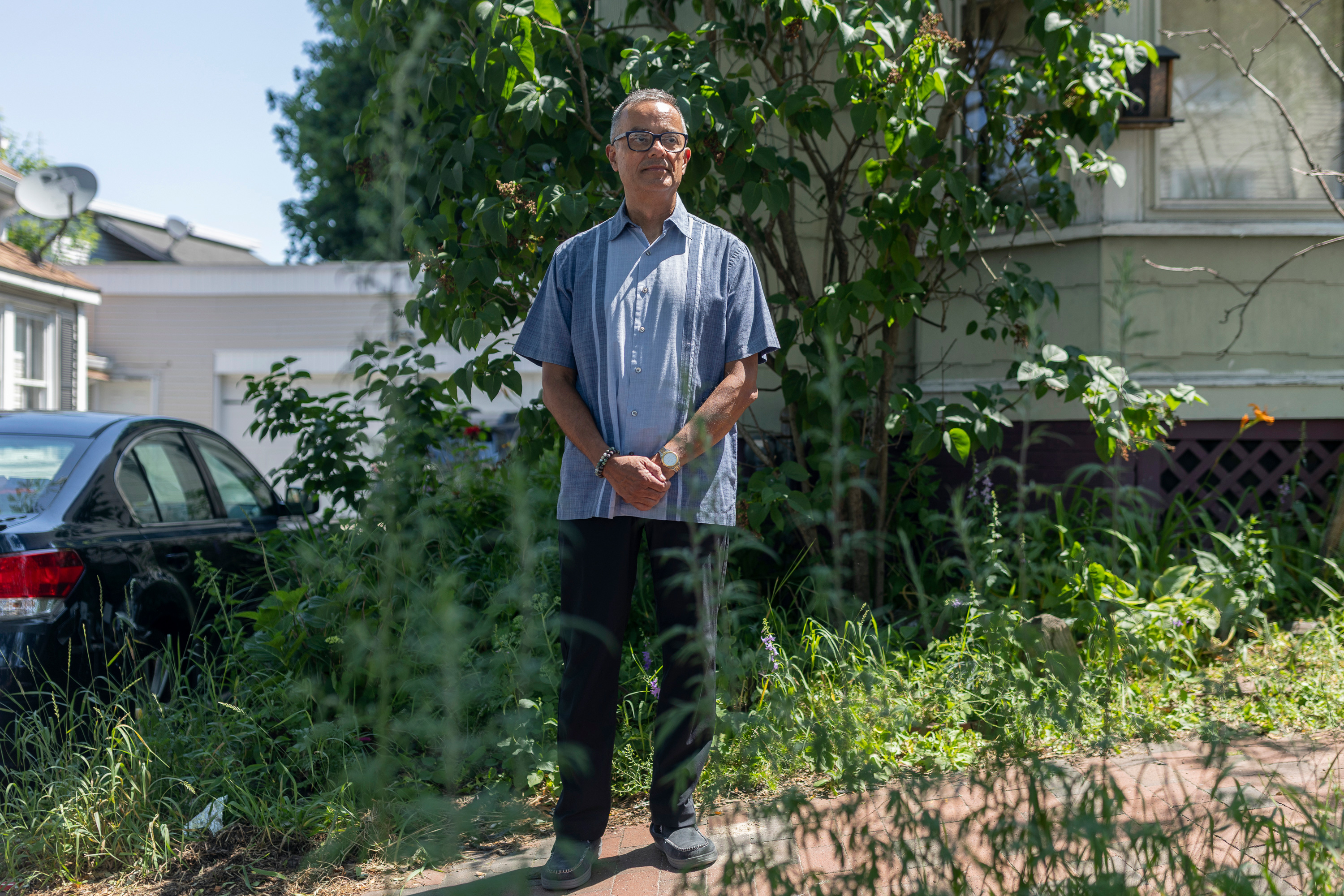
A photo of Ronmel Rangel standing in an area with green shrubbery outside his home.
Rangel collected estimates from facilities near and far from his home in Portland, Maine, including some outside the United States. “I wasn’t going to mortgage my life just to have surgery and spend the next 30 years paying off the debt,” he says. (Brianna Soukup for KFF Health News)

The Resolution

Rangel has another daughter in Argentina, a son in Venezuela, and other family in Spain. But he decided to stop looking around the globe for a good price, because he finally found what he was looking for in Maryland.

In April, he traveled to the Affordable Hernia Surgery center in Rockville, where he said “an efficient, well-coordinated system” guided him through the entire process.

“I received professional and very human care,” Rangel said. He was fully recovered within two weeks, as his surgeon predicted, he said.

The surgery center charged Rangel a flat fee for his hernia repair. The added travel expenses for the two-day trip with his wife went toward airline tickets, transportation, meals, and one night in a hotel.

Rangel said he paid about $4,700 total.

Alan Kravitz, the surgeon who performed Rangel’s operation, said the price difference uninsured patients face compared with insured patients is far from fair. “In the predatory and strategic world of U.S. healthcare pricing, uninsured patients generally get charged more than providers would accept from Medicare or commercial insurance.”

Kravitz then pulled out an estimate another patient had received for an inguinal hernia repair from a different large health system. The price: $37,000.

The Takeaway

Without insurance, many patients are on their own to negotiate.

“With the help of their primary physicians, patients can dig into prices and compare their options to avoid falling into medical debt,” Rangel said.

That approach, however, is most feasible for elective procedures with several surgical options offering comparable outcomes.

Patients facing medical emergencies do not have the luxury of comparing prices before seeking care, though many hospitals offer cash-pay discounts or charity care for those paying without insurance.

Billing analysts say patients who do have time to shop should look beyond cost alone. They recommend checking the quality of hospitals and surgical centers by reviewing publicly available ratings and patient reviews. Research has found that higher prices do not necessarily translate into a better quality of care, but it’s also important to select a reputable care provider.

Comparison shopping for medical care can be time-consuming. But for patients facing elective procedures, the effort can pay off — sometimes saving thousands of dollars.

“This was a learning experience for me,” Rangel said, “and I hope it will be for other people, too.”

Bill of the Month is a crowdsourced investigation by KFF Health News and The Washington Post’s Well+Being that dissects and explains medical bills. Since 2018, this series has helped many patients and readers get their medical bills reduced, and it has been cited in statehouses, at the U.S. Capitol, and at the White House. Do you have a confusing or outrageous medical bill you want to share? Tell us about it!

KFF Health News is a national newsroom that produces in-depth journalism about health issues and is one of the core operating programs at KFF—an independent source of health policy research, polling, and journalism. Learn more about KFF.

This article first appeared on KFF Health News and is republished here under a Creative Commons Attribution-NonCommercial-NoDerivatives 4.0 International License.


from Health Industry Archives - KFF Health News
Related Posts:

Federal Loan Caps Add Barriers — And Likely Debt — for Healthcare Students

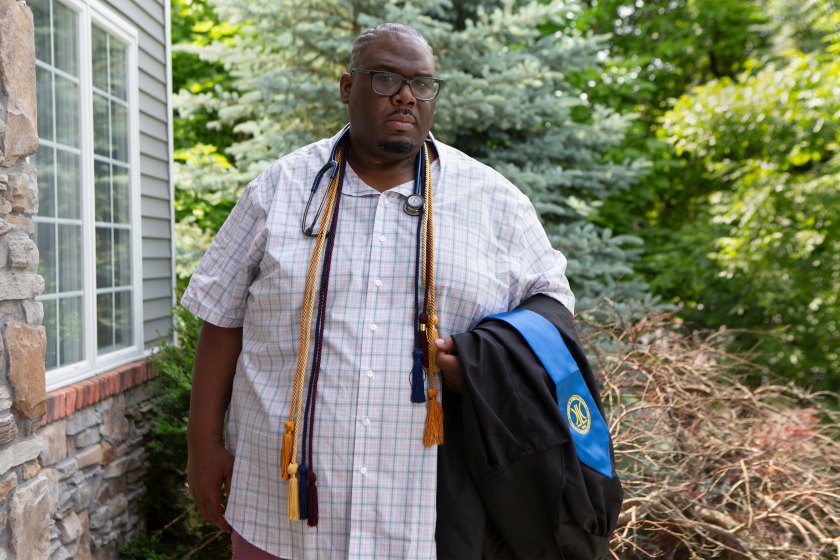
Benjamin Pinckney stands outside. He is holding his graduation gown and has his graduation cords draped over his neck.
Benjamin Pinckney has dreamed of becoming a physician assistant since he was 20 years old but says new student loan limits enacted by Congress in 2025 may prevent him from pursuing his goal. (Erica S. Lee for KFF Health News)

The federal government is capping the amount graduate students can borrow. The Department of Education says the new rules are designed to help curb student debt and pressure schools to lower tuition. But some loan experts fear those good intentions could leave many at the mercy of private lenders with higher interest rates. Saddling healthcare graduate students with pricier debt burdens can narrow their career choices.

KFF Health News correspondent Lauren Sausser joined WAMU’s Health Hub on July 22 to explain how the loan caps could make healthcare provider shortages worse or compromise the diversity of the workforce. Plus, she discusses how some states are pushing back against the new rules.

KFF Health News is a national newsroom that produces in-depth journalism about health issues and is one of the core operating programs at KFF—an independent source of health policy research, polling, and journalism. Learn more about KFF.

This article first appeared on KFF Health News and is republished here under a Creative Commons Attribution-NonCommercial-NoDerivatives 4.0 International License.


from Health Industry Archives - KFF Health News
Related Posts:

Trump Administration Demands Hospitals Share Emergency Room Records

A tiny federal agency tasked with protecting the public from injuries caused by lawn mowers and coffeemakers is demanding that some of the nation’s biggest health systems turn over detailed, personally identifiable medical records of all patients who seek help at their emergency rooms.

The Consumer Product Safety Commission, responsible for tracking and issuing recalls of dangerous products sold in the U.S., began discreetly pressuring hospital executives this year to share personally identifiable health data with a private contractor. But hospital lawyers and other industry experts have questioned the agency’s authority to collect, its ability to safeguard such a swath of sensitive information, and whether it has followed the legal process to overhaul its surveillance system.

After KFF Health News asked the CPSC about the new system, the agency announced the program on July 21. Left unmentioned, however, is the alarm it has raised among hospital executives, as well as the nature and extent of the agency’s data demands.

In a stark departure from its product-focused mission, the agency’s goal is to obtain millions of Americans’ medical records from emergency room visits for most injuries, from a broken bone to a childhood vaccine reaction or even a suicide attempt, according to documents and emails obtained by KFF Health News, as well as interviews with five people involved or familiar with the discussions.

A CPSC official also insisted in the emails that the institutions provide all ER patients’ identifiable information — such as names, addresses, diagnoses, and other personal details — to the contractor, Konza Health, for analysis. In correspondence with hospital executives, Konza representatives described participation as “mandatory” or “required.”

As a condition of viewing the correspondence, KFF Health News agreed not to republish some of the emails it obtained.

The CPSC wants at least 100 hospitals to start sending detailed medical records by the end of this year, according to an internal memo.

“The whole thing is troubling,” said Sharona Hoffman, a professor of health law at Case Western Reserve University who noted that giving a private entity access to a sweeping collection of data will introduce risks to patient privacy. “If this company really is collecting identifiable information, that is worrisome for patients.”

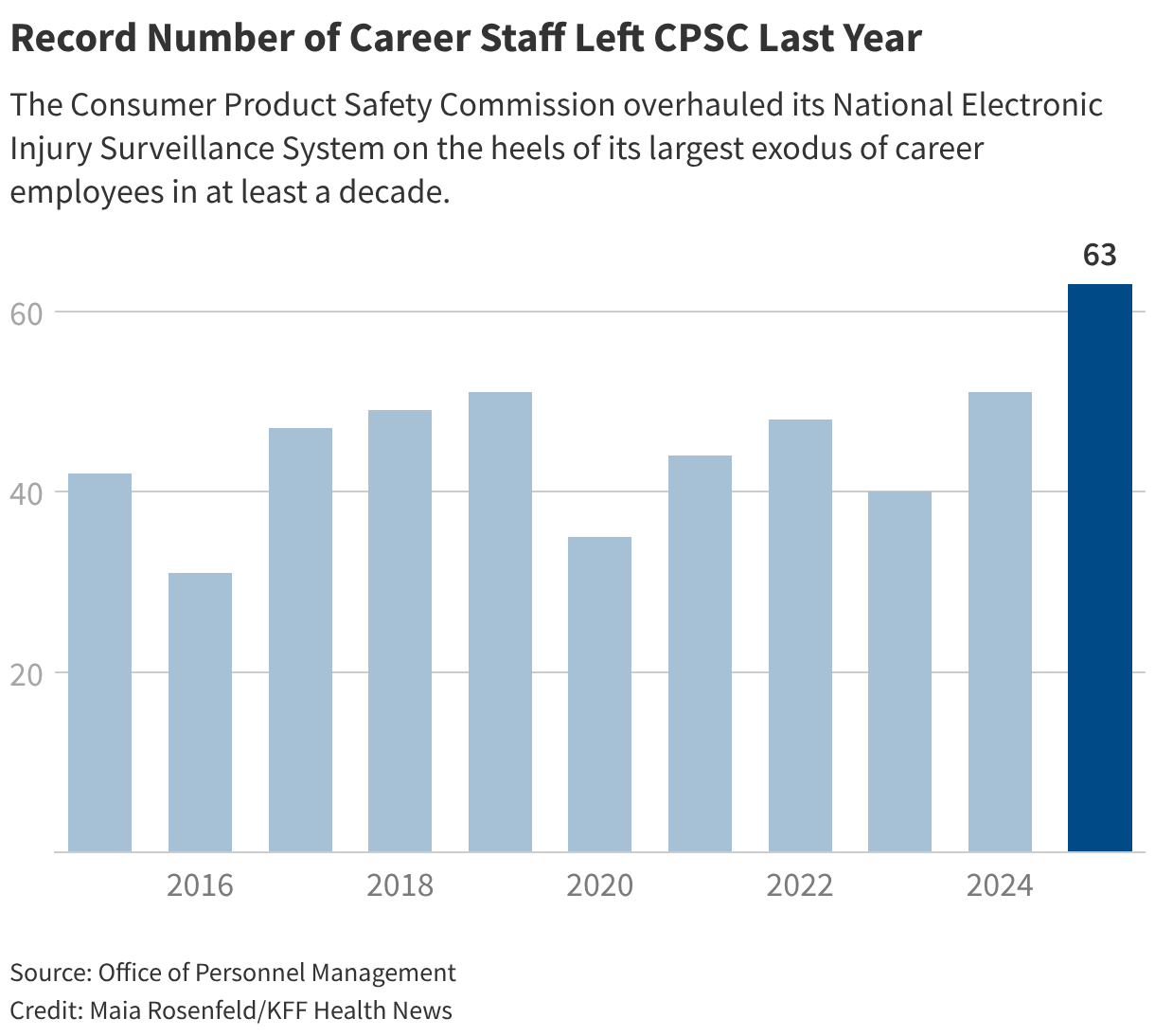
The new project was launched amid upheaval at the traditionally independent agency, which is without a governing board since President Donald Trump fired the CPSC’s three Democratic board members. Nearly 1 in 5 career staffers left the CPSC in the first 16 months of the new administration, according to a KFF Health News analysis of federal workforce data.

The initiative also comes as the Trump administration has sought unprecedented access to millions of Americans’ medical records, with the Office of Personnel Management requesting federal workers’ sensitive health information and Health and Human Services Secretary Robert F. Kennedy Jr. using a private organization to collect more medical records for his studies on vaccines and autism.

Steve Roney, CPSC spokesperson, said in an emailed statement on July 10 that the CPSC is “modernizing” its surveillance system. Asked whether the CPSC will file complaints against hospitals that do not participate, he said only that while the previous system “operated as a voluntary program, the ability of hospitals to opt out limited the sample size and usefulness of the data.”

Roney also acknowledged that the agency had not yet notified the public, as “required by law.”

Federal law requires the agency to provide notice and a public comment period before requesting information from 10 or more entities, a step it has not taken despite plans for 100 hospitals to join the surveillance system. KFF Health News independently confirmed with over a dozen hospitals that they had been approached.

Federal public health authorities cannot legally mandate that private health data be reported. But CPSC officials have suggested publicly and privately that if hospitals decline to share data with the new surveillance system, they could be subject to strict penalties from a data-sharing regulation known as “information blocking.”

Yet some hospital executives say they are reluctant to share patients’ sensitive data because they’re concerned about a different violation — that of federal privacy law.

AI Takes Over

Dozens of ERs across the country already participate in the CPSC’s voluntary National Electronic Injury Surveillance System, or NEISS, through which trained hospital workers report injuries involving consumer products, almost always stripped of patients’ identifiable information. The system helps the CPSC identify products, such as baby loungers, toys, and household appliances, with a pattern of injuring consumers.

The new injury surveillance program goes much further.

At a toy industry trade event in February, acting CPSC Chairman Peter Feldman said the agency is “investing in AI-enabled workflows that improve the quality and quantity of injury surveillance data, while also building up digital infrastructure to handle a massive new volume of electronic health records.”

Konza Health, a Kansas-based organization that runs the state’s health data exchange, will automatically pull and analyze medical records of all patient visits from ERs nationwide. Konza won a five-year contract worth up to $15.9 million with the CPSC last fall.

In email correspondence with hospital technology officials, Konza Health President and CEO Laura McCrary also has described ERs’ participation as “required,” stipulating that they share patients’ records with identifying information.

McCrary told KFF Health News by email that the company is not using AI to process the records it receives, saying instead that Konza will use “advanced analytic parsing and filtering capabilities.” Roney, the CPSC spokesperson, did not answer questions about the use of AI.

For years, agency officials have discussed moving away from human contractors and automating NEISS to save time and money.

But without workers on-site, hospital staffers may no longer receive training to determine what clinical information is important to include for the CPSC. In short, the changes could dilute the quality of the product safety data the agency collects.

“They want to suck in as much data as possible, but I’m not sure how thoughtful they’re being about what is collected and what is actually needed by the agency,” said former CPSC chair Alexander Hoehn-Saric, one of the Democratic appointees Trump fired last year.

Record Number of Career Staff Left CPSC Last Year (Column Chart)

Wanted: Injuries From Vaccines and Stingrays

The CPSC’s new data collection appears to contradict its own 214-page operating manual, which instructs hospitals not to include identifiable information “such as names, birthdates, or addresses” when reporting cases.

The agency is supposed to receive patients’ identifying information only when needed for follow-up investigations, which happens in fewer than 1% of reported cases, according to the manual.

The CPSC has also historically limited the records it collects to minimize privacy violations in case of a data breach.

The risk is not hypothetical: From 2017 to 2019, the agency improperly released personal health information of around 30,000 people, a disclosure that a top Republican at the time called “concerning.”

Konza, however, will receive even more sensitive information on many more people. McCrary said in a statement that Konza will remove patients’ names, addresses, and medical information “not needed by CPSC” before sharing records with the agency.

Leaving a private organization to collect sensitive information introduces risks, including that it could be stolen or used for business purposes, said Hoffman, the Case Western professor.

“Very often, they will use information for marketing because now they’re going to know what conditions people have,” she said.

Roney said that its contract with Konza, which has not been made public, prohibits the organization from selling or marketing the data it collects.

The CPSC’s manual also identifies types of ER visits that should not be reported to the CPSC, which has jurisdiction over only certain consumer products. Excluded injuries are those caused by food, illegal drugs, medical devices, alcohol, or plants, as well as injuries that did not involve consumer products — such as a cut from a rock or broken bones from a fall on the ground — and suicide attempts by adults.

But in a contract offered to one hospital and reviewed by KFF Health News, Konza set no such limits on the information it would gather from ER records and said it would hold on to patient health information for at least 30 days.

In an email sent to hospital technology officials, McCrary wrote that Konza would provide the CPSC with records when a patient is treated in the ER for any of more than 10,000 conditions. The expansive list of diagnostic codes Konza provided in the email includes injuries that do not involve consumer products.

Child injuries resulting from “poisoning by” vaccines or contact with stingrays, neither of which is regulated by the CPSC, are included in the list.

A limited number of hospitals once shared deidentified data on all injuries — regardless of product involvement — through the NEISS using the Centers for Disease Control and Prevention’s injury-tracking program. But the CDC halted that data collection, after funding and staffing were cut last year, and has not restarted it.

Pressure on Hospitals

CPSC Chief Data Officer Elizabeth Puchek, who joined the agency late last year after engineering U.S. Citizenship and Immigration Services’ data system, has told hospitals in emails that they must seek an exemption from the program if they decline to share patients’ emergency room records with Konza.

The CPSC’s targeted outreach has included some of the nation’s largest urban and rural health systems, as well as small, publicly owned hospitals.

Staff members at Mary Greeley Medical Center in Ames, Iowa, said that Konza and federal officials told them their participation in the new program was mandatory. The hospital, which has long participated in NEISS, signed a new contract in April to share its ER records with Konza.

Yet the hospital is reevaluating its participation after being notified that the funds it received to participate in NEISS were “no longer available,” spokesperson Steve Sullivan said.

Several hospital executives, lawyers, and others have raised doubts about the CPSC’s claimed authority.

Harborview Medical Center spokesperson Susan Gregg said the Seattle hospital’s emergency room has “voluntarily submitted de-identified data for many years, but we are not obligated to report this information.”

In Boston, Mass General Brigham has declined to participate in the new program, with spokesperson Kelly Mitchell saying that “to protect patient privacy, we are unable to provide these medical records.”

Henry Ford Health in Detroit; St. Luke’s in Boise, Idaho; and Sanford Health based in Sioux Falls, South Dakota — which together handle over a million ER visits a year — are among the health systems that have been approached but not yet entered into an agreement with Konza, according to representatives. Several of the nation’s busiest hospital systems targeted for the program — including the Mayo Clinic in Minnesota, Yale New Haven Hospital in Connecticut, Nationwide Children’s Hospital and the Cleveland Clinic in Ohio, and Baylor Scott & White Health in Texas — declined to answer questions about whether they’re participating.

Hoehn-Saric, the agency’s former chairman, said he was surprised that the CPSC would insist that hospitals provide identifiable records from all emergency room visits.

“This idea that they can simply demand patient information from a hospital and that the hospital would provide it — I really don’t understand the basis for that,” he said.

KFF Health News is a national newsroom that produces in-depth journalism about health issues and is one of the core operating programs at KFF—an independent source of health policy research, polling, and journalism. Learn more about KFF.

This article first appeared on KFF Health News and is republished here under a Creative Commons Attribution-NonCommercial-NoDerivatives 4.0 International License.


from Health Industry Archives - KFF Health News
Related Posts:

‘The Child Is Terrified’: Doctors on the Front Lines of a Measles Comeback Speak Out

This isn’t just a bad year for measles. It looks to be the start of a bad era. Confirmed measles cases just hit a 35-year high, and it’s only July. Together with last year, the number of cases has exceeded the combined total over the previous 25 years. The vast majority of cases stem from domestic outbreaks fueled by low rates of vaccination—and rates are declining.

For the first time in a quarter century, the U.S. no longer meets a main criterion for having eliminated measles as a public health threat. That status hinges on sporadic outbreaks fizzling out within a year. Utah’s outbreak has lasted for longer, since June 2025.

Nearly 400 people have been hospitalized with measles in the U.S. this year and last, three people have died, and at least three suffered brain swelling with lingering symptoms.

This month, the Centers for Disease Control and Prevention is set to finalize a comprehensive study of the nation’s measles situation, examining data from January 2025 through June 2026.

“I don’t think we could say with a straight face that there hasn’t been transmission over the past 12 months,” said a CDC scientist with knowledge of the agency’s measles report. (KFF Health News agreed not to name the researcher, who is concerned about retaliation.) The researcher said a national committee of measles specialists will review the CDC’s internal report, which then goes to the Pan American Health Organization, a group that evaluates the measles elimination status of countries throughout North, South, and Central America and the Caribbean.

PAHO will make its decisions at an annual meeting this fall, but scientists say the writing is on the wall. “The assessment for elimination isn’t until November, but that is a scheduling issue, basically,” said Anne Schuchat, who led the CDC’s immunization and respiratory disease group from 2006 to 2015.

“It’s just so sad, because some people will get brutally ill,” she said of measles’ return. “This is a wake-up call.”

The emergency department entrance to a hospital is shown in the foreground and mountains are visible in the distance behind it.
Southwestern Utah has been hit hard by an ongoing measles outbreak that’s lasted for more than a year. (Amy Maxmen/KFF Health News)

Pediatricians in Utah have been on the front lines as measles and other vaccine-preventable ailments have returned to the U.S. In interviews with KFF Health News, six doctors shared insights on this new era of vaccine hesitancy — and what could be done to turn the situation around.

The conversations have been edited for clarity.


On Unvaccinated Children Hospitalized With Measles Complications

Emilie Morris, a hospital pediatrician in Salt Lake County and Utah County: When children come in, they’re often bent over. We call it tripoding, which is particular to upper respiratory infections and airway swelling. They have a rash — viruses cause rashes all the time — but in this context, the kid is hunched over, mouth open, drooling, crying, maybe not even producing tears, because they’re so dehydrated. Really labored breathing, kind of tugging in their belly, tugging between their ribs. Their eyes look kind of glazed over. It’s like they’re seeing through you.

Nathan Money, a hospital pediatrician in Salt Lake County and Utah County: If the child has a fever or trouble breathing, and they’re unvaccinated, I have to be way more aggressive from a medical standpoint, because they are at higher risk of having life-threatening illnesses. I have to do more blood work, or lumbar punctures to rule out meningitis. I have to do things which are painful, and it’s traumatic for the families.

I tell them, “Because your child doesn’t have vaccines, I have to be more worried about conditions like sepsis or meningitis, so therefore I need to do more workup.” The last thing I want to do is miss something. These are parents who love their children. They always tell me, “Do what you need to do to make sure my child is safe.”


On Treating Unvaccinated Children Hospitalized for Measles

Trahern W. Jones, a pediatric infectious disease specialist based in Salt Lake City: So I’m coming into a room and just hearing the most awful barking cough, just a cough and a high-pitch stridor as the child is trying to breathe. And he’s just coughing so hard it just makes you feel short of breath. He looks like he’s been beaten down for days, but he can’t rest, because the cough keeps him awake.

The parents tell me they’re not anti-vaccine, but in the past, somebody they know had a reaction to a vaccine — or something they thought was a reaction to a vaccine — and so they paused vaccines when the child was a baby. They were planning to catch up later.

In another case, the parent was stunned by how awful it was. I asked them what they knew about measles before their child was sick, and they said the only person who’d ever taught them anything about measles was their grandmother who had taken care of her kids with measles ages ago. That’s something I’ve heard from other parents. It’s such an awful illness. Even the best possible course is going to be one of the worst diseases most children ever go through.

There are multiple facets to it. Physically, the child has been beat down for multiple days by this virus. The parents don’t get to sleep, because they’re nursing their child. Then there’s the emotional component because the parent is regretting not getting the vaccine, not realizing how bad this was, and then feeling deeply ashamed, trying to reconcile with family members who are really upset at them for not getting their child vaccinated.

Morris: One child was from a family that was uninsured because they didn’t feel that they would need to use the medical system. They were faced with the high burden of cost of our healthcare system. The cost was playing into the parents’ decision on whether or not their child should receive necessary medical care. I said something like: “Please don’t go home. Your child needs oxygen. She has pneumonia. We will figure out a way to pay for this, because we acknowledge what we do is expensive.”

On top of that, the parent had several other children in the home who weren’t vaccinated. It was past the period where we could intervene with vaccines to try to prevent infection, so then our recommendation was to quarantine their children at home for 21 days: “Don’t interact with anybody else in your community. Don’t go to the grocery store, even with a mask. Please take this seriously.”

It takes time for parents to understand the level of concern I have, even when their child is physically ill in the hospital requiring ongoing care. It’s pretty indicative of the breakdown of trust between physicians and families. I say, “This is the gravity or severity of your child’s situation and how serious we need to be about protecting other people.”

It’s frustrating. How can I make people understand I have a very genuine concern for their child? And I know they share that concern, but maybe it’s not the same degree of concern, because they don’t understand the illness and how severe it can become.

Money: It’s heartbreaking to see these children struggling to survive when measles could have been easily prevented by a safe mechanism that is readily available and well studied. These are well-meaning parents who love their children, who have gotten bad information from federal leadership or from online sources. The saddest part to me is when I am caring for a child and the parent says, “I didn’t know that this could get so bad.”


On Conversations With Parents Who Don’t Vaccinate Their Children

Tim Duffy, a pediatrician in Salt Lake County: A lot of families aren’t aggressively anti-vax, but they’re hesitant. Younger parents who grew up in the digital age have done their research — “research” in quotation marks — for months. And they keep getting confirmation of their concerns on social media. They think they’re doing what’s best for their child.

I’ve told families: “You could do nothing I say as a pediatrician. You could sleep your child on their stomach. You could not put them in a car seat or, when they’re older, not use seat belts. You could do nothing I say, and for your individual child, they will probably be OK. But from my standpoint, where I’m taking care of thousands of kids, within a system that takes care of hundreds of thousands of kids, we will have bad outcomes. These children will show up at our facilities, and it’s so sad.”

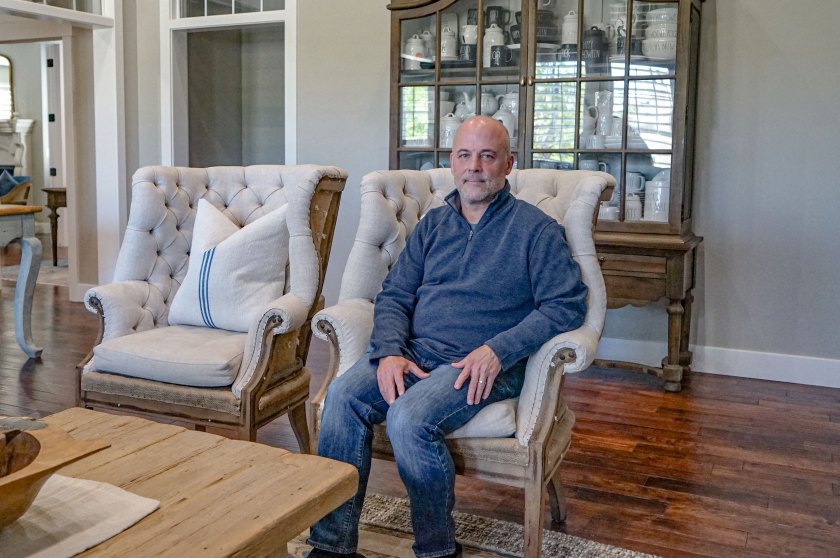
A man in half-zip fleece and jeans since in a light gray armchair and looks at the camera.
Tim Duffy, a pediatrician in Salt Lake County, Utah, says many parents are concerned about incorrect claims about vaccines seen on social media. (Amy Maxmen/KFF Health News)

Pediatrician in southern Utah whom KFF Health News agreed not to name, because of concerns about harassment after being targeted by anti-vaccine activists in the past: A lot of parents are concerned about autism. I’ve told them that I’d be very concerned if there was any evidence that what we’re doing is causing autism. But if vaccines were causing autism, we should see more cases of autism in vaccinated kids compared to unvaccinated kids, and we’re just not seeing that.

I’ve also had families who say they want to be natural, or that they’re concerned about what is in the shots. A frequently asked question is: “Did you vaccinate your children?” I say that knowing what I know, I’m confident giving this to my kids. They’re all vaccinated.


On the Influence of Politics on Vaccine Hesitancy

Jones: Vaccines have become a political football. That wasn’t true 20 years ago. But now it’s used to drive a wedge between groups of people, which is unfortunate. Vaccines are one of the main reasons why we don’t have to worry about losing our kids.

Southern Utah pediatrician: People don’t know who to believe. If politics comes up, I tell parents that my messaging on vaccines is not politically motivated. When parents ask about changes to the vaccine schedule, I’m transparent. [In January, the Department of Health and Human Services controversially recommended reducing the number of vaccines given to children. A few months later, a federal judge blocked those changes.]

I’ve said there was a process for the approval of immunizations through ACIP [the Advisory Committee on Immunization Practices], which is made up of scientists, public health experts, and doctors, and all those people were let go, and a new panel was selected. A couple of individuals changed the recommendation outside of the time-tested, evidence-based process for evaluating vaccines. That raises concerns for me as a doctor. I tell parents that the American Academy of Pediatrics, the American Academy of Family Physicians, and several other professional organizations have issued statements saying that these changes are not based on evidence.

Ellie Brownstein, pediatrician in Salt Lake County and president-elect of the Utah chapter of the American Academy of Pediatrics: I avoid talking about politics, but what’s being said has added another layer to our work. One family asked me about changes to vaccine recommendations, so instead of just telling them what immunizations are due, I talk with them about why physicians and researchers have followed a different schedule for years, about the reasoning and the science behind it. I explain that I trust these experts over someone without a lot of experience.

A close-up image through a glass door of the inside a refrigerator where white plastic containers with labels such as "MMR (LIVE) greater than or equal to 12 mo" are lined up on shelves.
The Southwest Utah Public Health Department stocks vaccines against measles, whooping cough, tetanus, hepatitis B, and other diseases. (Amy Maxmen/KFF Health News)

Money: People are not vaccinated, because they’ve lost trust in the medical community. They’re placing trust elsewhere. Rebuilding trust is a complicated process, but it comes from consistent messaging at every level, from the pediatrician to local health departments to community leaders, city leadership, district leadership, religious leadership, educational leadership.

We need consistent messaging from state leadership, which has been pretty absent. I want to see commercials on TV about the safety of the MMR [measles, mumps, and rubella] vaccine and the dangers of the measles, sponsored by my state leadership. I’d like to see this on billboards and in schools, in public buildings and grocery stores. I want to go to a sports event and see messages about the measles and the MMR vaccine. Right now, people have to go out of their way to find information from reputable sources.

We also need policy changes to support vaccination. This train is going in the wrong direction, and it can feel like a helpless situation, because we’re just not seeing the public messaging and leadership that’s needed to turn this around.


Advice on Talking With Parents Who Don’t Vaccinate Their Children

Jones: Approach them with as much compassion as you possibly can. Ask open-ended questions to learn about their experiences that led them to have these concerns. I think it’s really important to not come down on them, citing facts and figures and pointing to guidelines on why they need to get their kids vaccinated. But try to direct their attention to the fact that you’re a real person with your own real experiences and knowledge. I point out to families that I have my own kids, and I would never recommend something for your kids that I wouldn’t do for mine.

Southern Utah pediatrician: I’ve learned that if you come down hard, you’re going to lose people who need care. My number one goal now is to build bridges and maintain a relationship with families, because that’s what’s going to allow me to convince some of them.

I approach people differently depending on where they are. Parents who are very skeptical or anti-vax will say no when I tell them their child is due for immunizations. I’ll say: “Fine. You guys get to choose. You’re the parents. But I’m curious to know what your reasoning is.” Sometimes they’re just like, “It’s something I’ve decided.” They don’t want to have a conversation.

It’s a good day if I can have a conversation with someone who doesn’t want to vaccinate, even if I don’t convince them. I try to help them think through things rather than shoving anything down their throat. When they’re done talking, I’ll ask, “Can I share my perspectives on this?” Some will say yes enthusiastically, and others will say yes because they’re being polite.

A lot of parents aren’t sure what to do, and those are the people I focus most of my time on. I focus our conversation on their specific concerns, and I’m open about specific side effects that different immunizations can have. For example, I’ll tell them that some children get a fever after a vaccine, which is OK. The fever is not harmful, but it can make babies feel crummy as their body is building up antibodies against viruses and bacteria.

Brownstein: I don’t like the idea of excluding unvaccinated kids from my practice. I know some do that. But what that does is it ends any future discussion. I can’t keep talking with parents about vaccines if I kick them out of my practice, and if these parents find like-minded doctors, this situation will get worse.


On Being on the Front Lines of Measles’ Comeback in the U.S.

Money: I wish that people could see what I see. Everyone else sees what people post on Instagram. Or they think, “Someone I know had measles when they were a kid and they were fine.” But as a hospital-based pediatrician, I see what happens when things go poorly. I see what happens when children with measles aren’t able to breathe on their own, and they’re in a hospital bed with a cannula in their nose, struggling to breathe, an IV in their arm because they can’t drink on their own. And the child is terrified, and the parents are scared that their child might die.

It’s heartbreaking as a pediatrician and as a father to know that the entire situation could have been easily prevented.

Duffy: Even though parents say vaccination is their choice, I still feel personally responsible if something bad happens that’s preventable, because I feel like I didn’t say the right thing, I didn’t ask the right questions. Maybe I let it drop because of the look on a parent’s face.

Morris: Every pediatrician I know cares so deeply about what they do. Sometimes people forget that we are human beings practicing this discipline, and we bring all our concerns for our community into this space. I’m trying to navigate a lot of complex human emotions, like how it feels to hold grief with a family when something bad happens that was preventable — which is the worst situation, because you think, “Could I have done something differently?”

Jones: I think we’ll see more diseases start coming back that we thought we had gotten rid of. I think it’s going to take dramatic changes to actually prevent those outcomes. I’m not necessarily seeing those changes being done by those in power.

I think of that quote from The Lord of the Rings. It’s something like, you don’t get to choose the time that you’re born into, but you get to choose what you’re going to do about it. And if there’s any comfort that I have, it’s in knowing that there are right decisions to make and that I’m going to make them, and I’m going to help others make them, too.

KFF Health News is a national newsroom that produces in-depth journalism about health issues and is one of the core operating programs at KFF—an independent source of health policy research, polling, and journalism. Learn more about KFF.

This article first appeared on KFF Health News and is republished here under a Creative Commons Attribution-NonCommercial-NoDerivatives 4.0 International License.


from Health Industry Archives - KFF Health News

Related Posts:

Severely Ill Prisoners Granted Early Release Are Left Stuck Behind Bars

ʻAIEA, Hawai‘i — Christian Alameda used a cane to push himself up out of bed in his cell at the Halawa Correctional Facility in Honolulu. He has been recovering in the prison’s medical infirmary since a January stroke left the right side of his body mostly paralyzed.

In February, Hawai‘i’s parole board granted the now-52-year-old compassionate release, which allows prisoners to receive early probation to seek medical attention for severe conditions.

But without a long-term care facility willing to accept him, Alameda has not been able to leave.

As of June, at least three other prisoners granted release to tend to their medical needs were living indefinitely in the infirmary after long-term care facilities were unwilling to accept them, primarily because of their criminal backgrounds, the state parole authority said.

“This is a challenge across the country,” said Molly Crane, an attorney for FAMM, which advocates for fairness in prison policies.

Every state allows compassionate release for prisoners, though Hawaiʻi is the only one without a specific law, relying instead on an internal policy. The prisoners who typically qualify for compassionate release can’t care for themselves or have terminal illnesses and may need an assisted living center, a nursing home, or hospice.

But many long-term care facilities nationwide decline to take such prisoners, leaving them incarcerated for months — or years — after they were granted release.

In Rhode Island, a study found that rejections from nursing homes soared after they were told that a patient was coming from prison. In Colorado, prisoners with extensive medical needs stayed an average of 200 days after being granted parole, because of denials from long-term care centers. And in New York, prisoners granted parole sued the state when they couldn’t get placed in nursing homes.

President Donald Trump’s signature One Big Beautiful Bill Act further strains long-term care providers’ ability to take people from incarceration. Prisoners don’t qualify for Medicaid, so parolees often need to apply after they’re granted the release. The law, enacted last summer, reduces the window in which facilities can get reimbursed retroactively for new Medicaid patients from three months to as little as 30 days before they apply. That means facilities risk not getting paid for new Medicaid patients whose applications are not submitted within the reduced timeframe.

The Centers for Medicare & Medicaid Services “encourages providers and beneficiaries to prioritize timely application submission to maximize coverage,” CMS spokesperson Timothy Foster said.

‘Risk Is Just Too High’

Most nursing homes nationwide already have a waiting list for new residents, according to a 2024 report by the American Health Care Association and the National Center for Assisted Living. Those waitlists are another hurdle to getting prisoners placed, said Bob Merce, a former attorney who advocates for prisoners’ compassionate release.

“We tell the nursing homes that most of the people who we are talking about cannot hurt somebody,” Merce said.

Some of the prisoners staying at the Halawa infirmary in June couldn’t walk or dress themselves. One man couldn’t recall what his illness was. Another with brain cancer couldn’t coherently respond to questions.

Sean Sanada, the Oʻahu Region CEO with the Hawaiʻi Health Systems Corp., oversees the region’s two state-funded long-term care facilities, Leahi Hospital and Maluhia. Sanada said that the health system has reviewed dozens of compassionate release referrals but has never accepted any of them.

Sanada said the facilities don’t discriminate based on where the resident comes from. His main concerns, he said, were his staff’s safety and the lack of resources to adequately care for the patient.

“The risk is just too high in most of those instances,” Sanada said.

Violent incidents in long-term care facilities have been well documented. A 2024 study observing 14 assisted living facilities found that in just one month, 15% of residents experienced resident-to-resident aggression.

When long-term care facilities refuse to accept prisoners who have been granted compassionate release, it leaves state taxpayers footing a larger bill. The annual cost to incarcerate an individual in Hawai‘i with complex needs is up to eight times the $112,505 average of housing one person in prison, according to FAMM. In comparison, the average Medicaid reimbursement for a long-term care patient at a Hawaiʻi Health Systems Corp. facility is about $135,000 a year.

A photo of a guard checkpoint at Halawa Correctional Facility.
Even after being granted compassionate release, prisoners who cannot find placements at long-term care facilities can wait for months or longer in the infirmary at the Halawa Correctional Facility in Honolulu. (Ashley Mizuo/KFF Health News)

Four states — Connecticut, Georgia, Massachusetts, and Vermont — contract with nursing facilities to take prisoners who are granted compassionate release, according to FAMM.

The iCare Health Network’s MissionCare Health, which operates nursing homes for people coming out of prison, secured contracts in three of those states. David Skoczulek, iCare’s vice president of business development and communication, estimated that its rates are $100 to $350 a day more per patient than the average nursing home rates in the states where they operate.

In Hawaiʻi, the correctional department determines recommendations to send to the parole board, which decides whether to grant the release. Prisoners who are granted the early probation can be released to family members who commit to caring for them or to a long-term care facility.

Corey Reincke, head of the Hawaiʻi Paroling Authority, said that in his 24-year career he couldn’t recall getting anyone placed into a long-term care facility without family intervening, for instance by contacting facilities themselves.

“Parole has to find a facility that can meet their medical needs and is also willing to take them,” Reincke said. “That’s where we’re hitting the roadblocks.”

For one parolee, Reincke called more than 100 care homes, he said, but they all declined to accept the patient, over safety concerns. According to a 2024 state report, while Hawaiʻi’s long-term care facilities use about 80% of their bed capacity, workforce strains make it difficult to maintain even those levels.

Hawaiʻi Prisoners’ Refuge: Family

Last year, 69-year-old Paul Kupihea died at a hospital five days after the state granted him compassionate release to his family. He died before he could get on a flight to his home island.

In July 2025, Lahela Kruse, the mother of Kupihea’s child, received a call from a Honolulu hospital informing her that his condition had become severe. By then he had been diagnosed with an incurable form of cancer and had been in and out of the hospital while still in custody.

Kruse and their daughter flew to Oʻahu to see him and were shocked when they saw how sick he was. Their daughter agreed to take him into her home in Hilo, on Hawaiʻi Island, despite not having a relationship with him for most of her life.

“She knew he was sick,” Kruse said. “I told her that, but she didn’t know the severity of it. I didn’t truly know.”

Her daughter’s willingness to take him prompted his compassionate release. But Kruse said the notification about Kupihea’s illness came too late.

FAMM’s Crane has been working on expanding compassionate release laws in states to allow for more prisoners to qualify and strengthen transparency in the process. Hawaiʻi lawmakers have tried for years to pass bills on compassionate release, but none has succeeded.

Crane said without a law that outlines a formal process and who qualifies, even family support isn’t enough. Prisoners can still face life-threatening delays, she said.

“The absence of a compassionate release statute means that people who need compassionate release languish and even die in prison,” Crane said.

A photo of a road in Honolulu. To the left of the road is a barbed-wire fence, fencing in the Halawa Correctional Facility.
Because Medicaid does not cover healthcare in prisons like the Halawa Correctional Facility, the high cost of care for sick prisoners is left to state taxpayers. (Ashley Mizuo/KFF Health News)

In Alameda’s cell, two beds stood about 3 feet apart, with a seatless metal toilet in the corner and a window looking out on a concrete wall. The smell of bleach permeated the room. Alameda said he hoped to see his daughter soon. She recently turned 5.

“I made some mistakes in my life,” said Alameda, who has been incarcerated since 2024 for drug possession, driving a stolen vehicle, and jumping bail. “I tried when my daughter was born, but I know I’ll change, because she needs me out of here.”

Merce, the former attorney, is still trying to find a place for Alameda, who committed no violent crimes. Merce became aware of prisoners’ struggles through his work as a trial lawyer. He said he has helped about 15 prisoners leave Hawaiʻi correctional facilities for medical treatment.

He said he’s seen cases in which people have waited years to get out.

“The ones that stick with me, though,” Merce said, “are the ones that I never found placements for.”

KFF Health News is a national newsroom that produces in-depth journalism about health issues and is one of the core operating programs at KFF—an independent source of health policy research, polling, and journalism. Learn more about KFF.

This <a target="_blank" href="https://kffhealthnews.org/health-industry/sick-prisoners-compassionate-release-parole-long-term-care-hawaii/">article</a&gt; first appeared on <a target="_blank" href="https://kffhealthnews.org">KFF Health News</a> and is republished here under a <a target="_blank" href="https://creativecommons.org/licenses/by-nc-nd/4.0/">Creative Commons Attribution-NonCommercial-NoDerivatives 4.0 International License</a>.<img src="https://kffhealthnews.org/wp-content/uploads/sites/8/2023/04/kffhealthnews-icon.png?w=150&quot; style="width:1em;height:1em;margin-left:10px;">

<img id="republication-tracker-tool-source" src="https://kffhealthnews.org/?republication-pixel=true&post=2262108&amp;ga4=G-J74WWTKFM0&quot; style="width:1px;height:1px;">

from Health Industry Archives - KFF Health News
Related Posts:

Pregnant Woman’s Roadside Death Triggers Push To Reopen Mississippi Delta Hospital

BELZONI, Miss. — Harmony Ball-Stribling’s path to pregnancy had been turbulent, from an endometriosis diagnosis to an arduous in vitro fertilization process and sky-high blood pressure. But as her due date approached in the summer of 2021, her health improved and those storm clouds seemed to scatter.

“It was just too perfect,” said her mother, Shenelle Ball-Green, of those calm, hot weeks.

Then, early on July 5, four days shy of her scheduled cesarean section, Ball-Stribling began experiencing complications from preeclampsia, a potentially life-threatening blood pressure disorder. Speeding up to 110 mph, her husband drove her to the nearest hospital 25 miles away from their home in Belzoni, a Mississippi Delta town of about 1,900 people.

Minutes before reaching the facility, Ball-Stribling suffered a seizure in the passenger seat. Her husband pulled her from the car and performed CPR on the side of the road. It was too late. She and the couple’s unborn daughter, Harper, died on the side of U.S. Route 49.

The tragedy might have had a different outcome if the hospital in Belzoni, a five-minute drive from Ball-Stribling’s home, hadn’t closed 13 years ago. Today, Humphreys County has no hospital, no emergency room, no urgent care clinic, and no county health department. It is one of more than 100 rural hospitals in the U.S. that have fully closed since 2005.

In Belzoni, self-proclaimed “The Heart of the Delta,” and its surrounding area, communities are close-knit, and Harmony’s story is well known. Now, her death has galvanized local and state leaders determined to bring a hospital back to the county that has suffered without one.

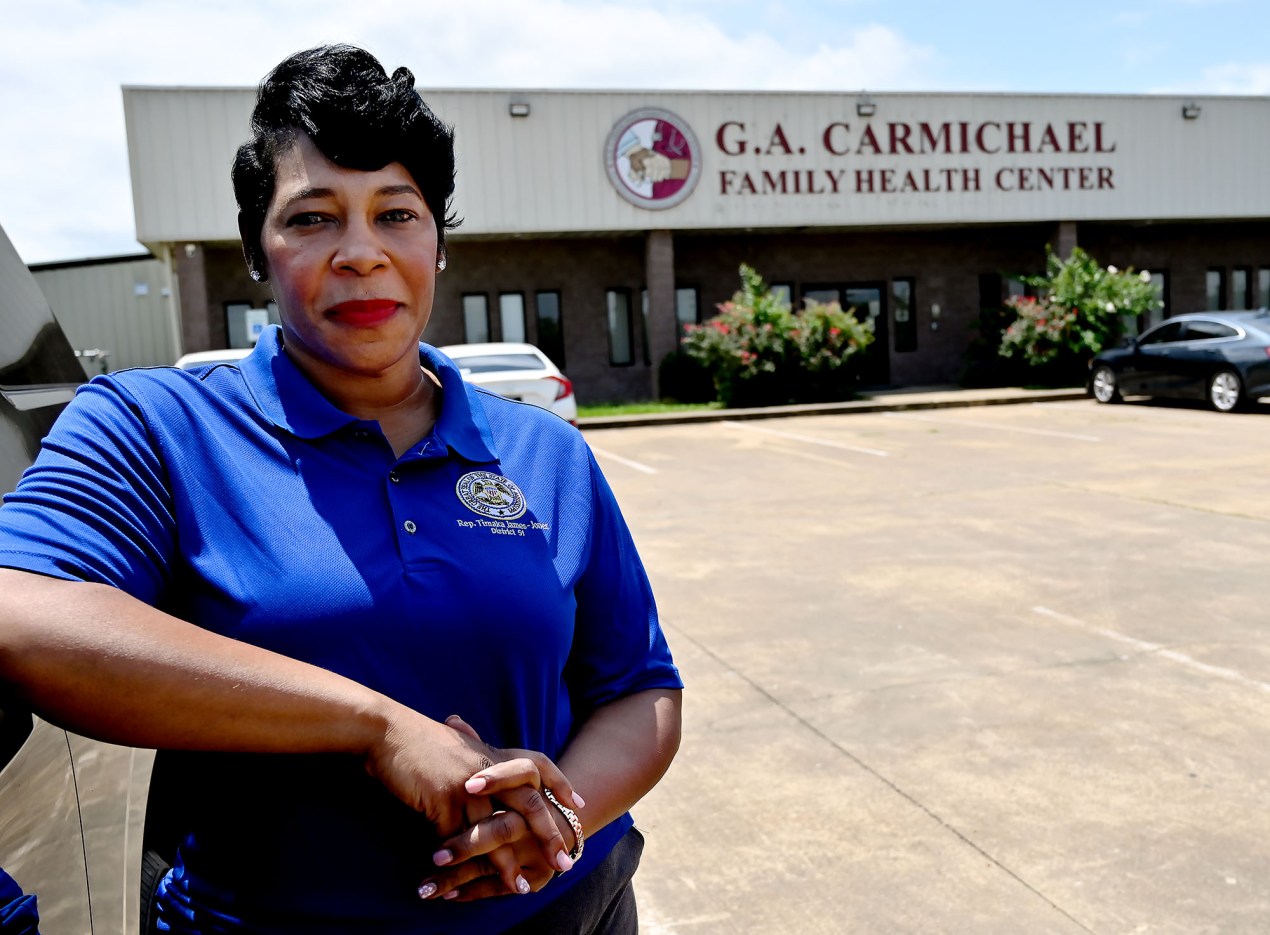
“It was a tremendous eye-opener for this community,” said state Rep. Timaka James-Jones, a Democrat who represents the district that includes Belzoni and is Ball-Stribling’s aunt. “It brought to light how we are so without.”

Poverty often shapes the health disparities Humphreys County residents experience. Approximately 1 in 7 Humphreys County residents under age 65 lack health insurance coverage, compared with about 1 in 11 people nationwide. Humphreys County also has the highest rate of Medicaid enrollment of any Mississippi county, reflecting the economic challenges many residents face. These disparities are evident in the county’s infant mortality rate, which is among the highest in the state at roughly 15 deaths for every 1,000 births.

James-Jones has watched these circumstances influence the lives — and deaths — of her loved ones. She said she wants to see a hospital reestablished before her four-year term is up in early 2028.

But that may be easier said than done. In Belzoni, local leaders hoping to restore healthcare services face a tangled web of policy challenges that are especially demanding for a small town with limited resources. Its story reflects what many healthcare policy experts warn: Once a rural community loses a hospital, bringing it back can be nearly impossible.

Belzoni, Mississippi (Vickie D. King/Mississippi Today)

Humphreys County’s Healthcare Losses

Humphreys County Memorial Hospital opened in Belzoni in 1951 as part of a nationwide hospital building boom fueled by a Truman-era law called the Hill-Burton Act. The legislation provided billions of dollars in grants and loans to build and modernize healthcare facilities. At the time, roughly 40% of all U.S. counties had no hospital. When the building boom began to subside by 1970, all but seven counties in Mississippi had at least one hospital.

But by the 2000s, many rural hospitals in the U.S. confronted financial difficulties. Low patient volumes, an increase in outpatient care, and meager revenues left many on precarious footing. Many had high rates of uninsured patients or those covered through government programs such as Medicaid, which typically reimburse providers at lower rates than commercial insurers.

Humphreys County’s hospital was among those struggling facilities. It was burdened with millions of dollars in debt, and county officials sold it in 2008 to a private company. It was renamed the Patients’ Choice Medical Center. The hospital shut down five years later after Ray Shoemaker, the company’s CEO, was convicted on healthcare fraud charges related to another hospital he owned.

“I do hope they reopen,” Shoemaker wrote in a recent text message to Mississippi Today. “The community needs a hospital.” He said he stepped down from the company before going to prison in 2012.

In 2017, the University of Mississippi Medical Center partnered with the county supervisors and U.S. Rep. Bennie Thompson, a Democrat whose district includes Humphreys County, to secure a nearly $1 million grant from the U.S. Department of Agriculture to open an after-hours acute care clinic in Belzoni. The clinic shut down in 2020, and UMMC officials declined to say why.

G.A. Carmichael Family Health Center, a Canton-based federally qualified health center with five other locations in Mississippi, took it over but did not maintain the extended hours, again leaving Humphreys County residents without after-hours care. Other public health services in the county have closed outright. Three years ago, the county’s health department stopped providing clinical services, said Greg Flynn, a spokesperson for the Mississippi State Department of Health. The county department closed entirely last year, citing staffing shortages and low patient volumes.

In the years since the hospital closed, the county has lost a fourth of its population, falling to 7,000 people, according to census data. James-Jones said she does not believe the community can experience growth until healthcare services are reestablished.

“I don’t know how I can see us growing any other way,” she said.

Shenelle Ball-Green lost her daughter, Harmony Ball-Stribling, and unborn grandchild in July 2021 during a medical emergency as Ball-Stribling was en route with her husband to the nearest hospital, 25 miles away. (Vickie D. King/Mississippi Today)

‘Something’s Way Better Than Nothing’

Months after losing her daughter and unborn granddaughter, Ball-Green climbed the steps of the stately, tan, brick Humphreys County Courthouse to attend a crowded Board of Supervisors meeting.

She stood at the dais and urged the supervisors to reestablish emergency healthcare services in the county to protect other residents from the fates of her loved ones.

“I wanted to let them know at any given moment that could be your child, your mother,” she said. “We’re a small town. Everyone knows everyone.”

She remembered the disappointment she felt when the supervisors told her there was nothing they could do. But when the board’s makeup changed after the 2023 elections, she said, she saw these attitudes shift.

The Humphreys County Courthouse is located in Belzoni, Mississippi. (Vickie D. King/Mississippi Today)

Among the newly elected officials was Reggie Pinkston, who is now the president of the board and previously worked as an EMT when the hospital was open. His own family has suffered the consequences of limited healthcare access. A cousin living in Louise, a town about 20 miles south of Belzoni in the county, had a stroke in 2021 and waited an hour for an ambulance to arrive. She died two days later.

Pinkston said witnessing residents’ delays in care has made expanding access to healthcare services one of his priorities.

“We’re losing too many people in our county because of lack of healthcare,” Pinkston said.

The board enlisted several consultants to develop a strategy for expanding healthcare access and identifying funding sources to support these efforts. In late 2025, Thompson secured approximately $1 million for Humphreys County through the congressional Community Project Funding process, which allows lawmakers to request federal support for specific projects.

The funds will be used to expand services at G.A. Carmichael’s Belzoni location in a county-owned building on U.S. Route 49, Pinkston said. Expansion plans include extending its hours of operation overnight to 5 a.m., purchasing equipment, and a possible renovation of the facility. It could begin its expanded operations by September, said James Coleman Jr., the health center’s CEO.

Establishing an after-hours urgent care clinic is a starting point toward reestablishing emergency care services or a hospital, James-Jones said.

“Something’s way better than nothing,” she said.

Mississippi state Rep. Timaka James-Jones, a Democrat who represents the district that includes Belzoni, is one of the community leaders spearheading an effort to reestablish a hospital in Humphreys County. (Vickie D. King/Mississippi Today)

‘Not for the Faint of Heart’

Despite that encouraging first step, Humphreys County faces steep obstacles to opening a hospital.

At the University of North Carolina-Chapel Hill, George Pink is a senior research fellow at the Cecil G. Sheps Center for Health Services Research and tracks rural hospital closures across the U.S. He said he’s aware of only a few communities that have successfully reopened a hospital after it closed.

“I can count that on one hand,” said Pink, who knows of roughly five such examples.

Communities face significant hurdles to reestablishing a hospital, including securing financing for construction or renovation, recruiting qualified staff, and covering substantial operating expenses during the licensing process before the facility can treat patients and generate revenue, said Brock Slabach, the National Rural Health Association’s chief operations officer and a former rural hospital administrator in southwestern Mississippi.

“Reopening a hospital is not for the faint of heart,” Slabach said. “Once they close, it’s very difficult to reopen them.”

To finance a potential hospital project in Humphreys County, local and state leaders said they plan to seek funding through the Rural Health Transformation Program, a federal initiative that will distribute $50 billion to states over five years. The federal government allocated Mississippi nearly $206 million in December for the program’s first year.

The program is meant to offset budget cuts passed into law last summer that could harm rural hospitals. Republicans’ One Big Beautiful Bill Act will cut the federal government’s Medicaid spending by $911 billion over 10 years and increase the number of uninsured people by 10 million, according to Congressional Budget Office estimates. Mississippi hospitals are projected to lose roughly $160 million annually beginning in 2029, according to Cindy Bradshaw, executive director of the Mississippi Division of Medicaid.

But according to federal guidelines, the program’s funding cannot be used for construction or major building expansions. Officials said the county will instead consider applying for funds through the program to support the recruitment of healthcare professionals.

The federal Rural Emergency Hospital designation is another way rural communities can keep emergency and outpatient services. Hospitals in that program receive over $3 million annually from the federal government and a higher Medicare reimbursement rate, but they cannot offer inpatient care.

Research by Pink’s team shows that many hospitals that converted to the model, which was established in 2023, saw an increase in profitability.

But there’s a catch. To receive the designation, a hospital must have been open in 2020, making Humphreys County ineligible. Mississippi’s junior U.S. senator, Republican Cindy Hyde-Smith, introduced legislation in 2024 to extend the cutoff to 2014, a threshold that would have still excluded Humphreys County.

James-Jones said county leaders have urged Hyde-Smith to amend the proposed legislation so Humphreys County could qualify. Hyde-Smith did not respond to a request for comment for this article.

Belzoni, Mississippi, is self-proclaimed “The Heart of the Delta.” (Vickie D. King/Mississippi Today)

For county leaders, the path to widening healthcare access means navigating a thicket of state and federal policies, funding streams, and regulatory hurdles.

Some recent state-level policy changes have created opportunities for healthcare expansion in Humphreys County. In March, Republican Gov. Tate Reeves signed legislation exempting Humphreys County from Mississippi’s certificate of need requirements, which are meant to prevent unnecessary healthcare expansions.

The exemption could make the county more attractive to prospective healthcare providers. But the financial challenges that contributed to the closure of Patients’ Choice Medical Center in 2013 remain, and Mississippi lawmakers have continued to reject Medicaid expansion, limiting a potential source of reimbursement for rural hospitals and clinics.

Industry officials expect hospitals’ financial pressures to intensify as Medicaid funding cuts take effect. The latest challenge is predicting how these cuts will affect the bottom lines of these facilities and whether additional cuts will come in the future, said Richard Roberson, president and CEO of the Mississippi Hospital Association.

“If someone’s trying to run a business, they’ve got to be able to know what those numbers look like,” Roberson said. “And it’s really hard to try to project that out right now.”

The G.A. Carmichael Family Health Center, a federally qualified health center with five other locations in Mississippi, took over an acute care clinic in Belzoni, which shut down in 2020. (Vickie D. King/Mississippi Today)

‘Now I Understand’

For Ball-Green, giving in to these obstacles would be a disservice to the Humphreys County residents who face health emergencies similar to the one her daughter experienced.

It has been five years since the funeral, but Ball-Green remembers it clearly. The day was stormy, but attendees brightened the gathering by wearing yellow, Ball-Stribling’s favorite color.

As friends and family gathered to pay their respects, her mother thought back on a relative’s funeral four months earlier. At that service, Ball-Stribling sang the gospel classic You Are My Strength to a roomful of mourners.

“She was singing, and she looked at me,” Ball-Green said, describing a peaceful but eerie expression on her daughter’s face in that moment — a sign of something to come, though she didn’t yet know what. “She turned around, and it was just that look, you know?”

Months later, as she sat at her daughter’s funeral, she began to interpret the foreboding glance differently. She came to believe it was a sign that Ball-Stribling’s gift for helping others by sharing her story would not end with her death.

That purpose had taken shape years earlier in her work as a teacher and continued as she shared candid social media posts about her fertility struggles and IVF journey in the final months of her life. Ball-Green said the community became deeply invested in her and Harper’s story.

In the years since, this gift has endured, she said. Ball-Stribling’s story has continued to resonate throughout Humphreys County, serving as a reminder of what residents stand to lose if they do not reopen the hospital.

“I think back on when she looked back at me,” Ball-Green said. “Now I understand.”

KFF Health News is a national newsroom that produces in-depth journalism about health issues and is one of the core operating programs at KFF—an independent source of health policy research, polling, and journalism. Learn more about KFF.

This <a target="_blank" href="https://kffhealthnews.org/rural-health/rural-mississippi-delta-hospital-desert-pregnant-woman-dies-emergency-services/">article</a&gt; first appeared on <a target="_blank" href="https://kffhealthnews.org">KFF Health News</a> and is republished here under a <a target="_blank" href="https://creativecommons.org/licenses/by-nc-nd/4.0/">Creative Commons Attribution-NonCommercial-NoDerivatives 4.0 International License</a>.<img src="https://kffhealthnews.org/wp-content/uploads/sites/8/2023/04/kffhealthnews-icon.png?w=150&quot; style="width:1em;height:1em;margin-left:10px;">

<img id="republication-tracker-tool-source" src="https://kffhealthnews.org/?republication-pixel=true&post=2260851&amp;ga4=G-J74WWTKFM0&quot; style="width:1px;height:1px;">

from Health Industry Archives - KFF Health News

Related Posts: