The Peculiar Politics of Hospitals

The Host

Julie Rovner photo
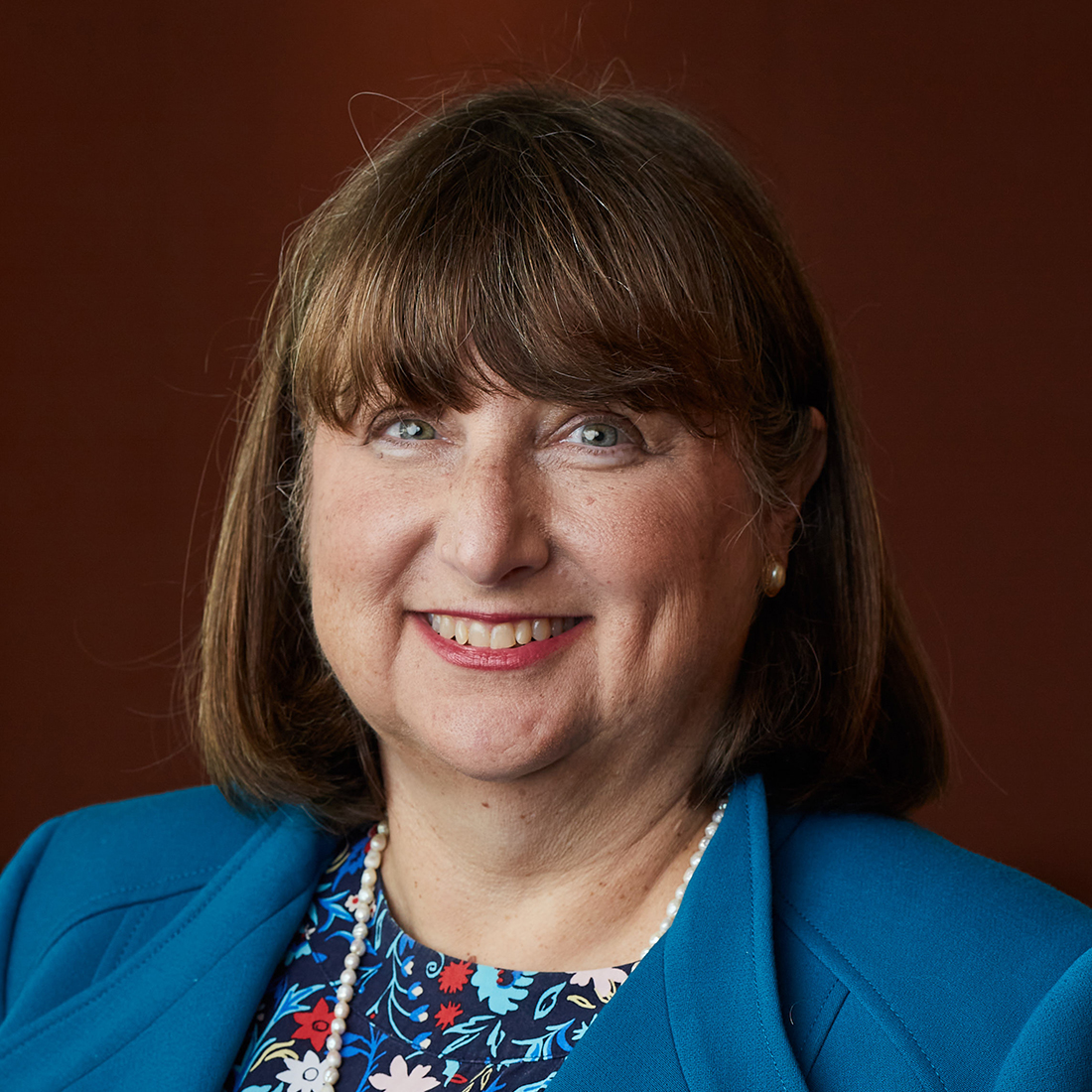
Julie Rovner KFF Health News @jrovner @julierovner.bsky.social Read Julie's stories. Julie Rovner is chief Washington correspondent and host of KFF Health News’ weekly health policy news podcast, "What the Health?" A noted expert on health policy issues, Julie is the author of the critically praised reference book "Health Care Politics and Policy A to Z," now in its third edition.

Republicans and Democrats on the House Ways and Means Committee had strong words for hospital CEOs about their prices at a hearing this week. But it remains unclear whether they will follow up their words with actions to force prices down.

Meanwhile, in a rare bit of positive health policy news, a study of the first two years of the new 988 suicide prevention hotline shows it reduced suicides among young people, and more so in states that fielded more calls.

This week’s panelists are Julie Rovner of KFF Health News, Joanne Kenen of the Johns Hopkins Bloomberg School of Public Health and Politico Magazine, Shefali Luthra of The 19th, and Rachel Roubein of The Washington Post.

Panelists

Joanne Kenen photo
Joanne Kenen Johns Hopkins University and Politico @JoanneKenen @joannekenen.bsky.social Read Joanne's bio.
Rachel Roubein photo
Rachel Roubein The Washington Post @rachel_roubein Read Rachel's stories.

Among the takeaways from this week’s episode:

  • Hospitals have long been the most sacrosanct of healthcare stakeholders to politicians, partly because every member of Congress has at least one in their district. Hospitals are often major employers and have a powerful lobbying presence. So it was notable that members of Congress from both parties were willing to criticize hospital CEOs strongly at a hearing to examine hospital prices.
  • The Supreme Court heard arguments this week about labeling for the controversial pesticide glyphosate, which may or may not cause or contribute to cancers. The issue divides the Make America Healthy Again movement, which sees the Trump administration’s support of the Environmental Protection Agency’s conclusion that the product is not carcinogenic as a political betrayal.
  • A study demonstrating the effectiveness of the national 988 suicide prevention hotline in reducing youth suicide is a bit of good news stemming from a rare bipartisan effort to address a serious problem.
  • Another pair of studies this week suggest that the Trump administration’s delay of the recommended birth dose of the vaccine to prevent hepatitis B could increase the number of cases of the disease and cost millions more in health spending to treat its complications.

Plus for “extra credit” the panelists suggest health policy stories they read this week they think you should read, too: 

Julie Rovner: The New York Times’ “While Advising Kennedy, Top Aide Had More Than $25 Million Stake in Wellness Company,” by Christina Jewett and Benjamin Mueller.

Joanne Kenen: ProPublica’s “Unfounded Health Concerns Are Powering a Solar Backlash,” by Anna Clark.

Rachel Roubein: KFF Health News’ “Big Companies Position Themselves for Payday from $50B Federal Rural Health Fund,” by Sarah Jane Tribble.

Shefali Luthra: The Atlantic and KFF Health News’ “A ‘Barbaric’ Problem in American Hospitals Is Only Getting Bigger,” by Elisabeth Rosenthal.

Also mentioned in this week’s podcast:

Credits

Francis Ying Audio producer
Stephanie Stapleton Editor

Click here to find all our podcasts.

And subscribe to “What the Health? From KFF Health News” on Apple Podcasts, Spotify, the NPR app, YouTube, Pocket Casts, or wherever you listen to podcasts.

KFF Health News is a national newsroom that produces in-depth journalism about health issues and is one of the core operating programs at KFF—an independent source of health policy research, polling, and journalism. Learn more about KFF.

This <a target="_blank" href="https://kffhealthnews.org/podcast/what-the-health-444-hospital-pricing-congress-988-suicide-april-30-2026/">article</a&gt; first appeared on <a target="_blank" href="https://kffhealthnews.org">KFF Health News</a> and is republished here under a <a target="_blank" href="https://creativecommons.org/licenses/by-nc-nd/4.0/">Creative Commons Attribution-NonCommercial-NoDerivatives 4.0 International License</a>.<img src="https://kffhealthnews.org/wp-content/uploads/sites/8/2023/04/kffhealthnews-icon.png?w=150&quot; style="width:1em;height:1em;margin-left:10px;">

<img id="republication-tracker-tool-source" src="https://kffhealthnews.org/?republication-pixel=true&post=2232481&amp;ga4=G-J74WWTKFM0&quot; style="width:1px;height:1px;">

from Health Industry Archives - KFF Health News

Related Posts:

States Rush To Figure Out How To Enforce Trump’s Medicaid Work Requirements

State officials remain uncertain on how to enforce a requirement that many adult Medicaid enrollees show they’re working — even as one state launches its program this week — and they’re taking a variety of approaches to the job, including, in a handful of states, using artificial intelligence.

A KFF survey of Medicaid officials from 42 states and the District of Columbia offers insights into key policy decisions state officials face as the Jan. 1, 2027, deadline for implementing the work requirement nears. Lingering questions include which diseases and illnesses will qualify Medicaid beneficiaries for exemptions and how to automate compliance verification. 

Federal guidance is not expected to be released until June. But some states are moving forward with their own definitions of “medical frailty,” which under congressional Republicans’ One Big Beautiful Bill Act will allow Medicaid enrollees to escape the requirement.

The law, President Donald Trump’s signature domestic achievement, revamps Medicaid in more than 40 states that, along with Washington, D.C., fully or partially expanded the program for low-income people to cover adults without children who don’t get insurance through a job. While most adult Medicaid beneficiaries already work or are disabled, caregivers for other people, or in school, many Republicans contend that people enrolled in the program who don’t work sap resources that ought to support low-income children, pregnant women, and disabled people.

About 20 million people gained Medicaid coverage from the expansion, created by the Affordable Care Act — a law that most Republicans still oppose.

The new work rules require that a person be a student at least part-time or work or participate in other qualifying activities, such as community service, for at least 80 hours each month. The requirement could potentially reshape who is eligible for Medicaid and applies to people who are already enrolled.

The Congressional Budget Office estimates that work requirements will reduce federal Medicaid spending by about $326 billion over 10 years. The agency also estimates that 4.8 million more people will be uninsured in 2034 because of the work requirement.

 “A lot of states are working on a super-condensed timeline,” said Amaya Diana, a policy analyst at KFF who worked on the survey. They are “still making these big decisions with less than a year before implementation.”

KFF is a health information nonprofit that includes KFF Health News.

The law permits short exemptions from work requirements for enrollees experiencing certain hardships — natural disasters, residing in a county with a high unemployment rate, admission to a hospital or nursing home, or having to travel for an extended period to obtain medical care.

While 28 states and Washington, D.C., will offer hardship exemptions, three of those states won’t adopt all four exemptions allowed by the law and two — Iowa and Indiana — don’t plan to adopt any.

People can also be exempted from the work requirements if they are “medically frail.” But the federal government has not told states how to define that term or how to determine whether an enrollee falls into the category.

The survey showed that 21 states, as of March, had not defined medical frailty. Nebraska, which is implementing its work requirement May 1, recently issued a list of thousands of health conditions that could qualify enrollees as “frail” and exempt them from working.

Some states plan to allow patients to self-attest to medical frailty, while others will require confirmation by a medical professional. The most common way of verifying medical frailty, which will be used in just over 30 states, is by examining Medicaid claims data.

Mehmet Oz, administrator for the federal Centers for Medicare & Medicaid Services, told KFF Health News in an interview this week that “we don’t like self-attesting” and that “documentation is critical.”

Many beneficiaries and their advocates have expressed concerns about losing coverage for administrative reasons. When Arkansas briefly implemented Medicaid work rules, for instance, most lost coverage not because they did not meet the requirements but for failing to correctly submit paperwork in time.

Six states plan to use AI to assist with the work requirement implementation in some way, such as for document processing or comparing beneficiary data from different sources, KFF found. Two states, Maryland and New Mexico, plan to use AI to analyze claims data.

Three states — Arkansas, Missouri, and Oklahoma — plan to use AI to interact directly with people on Medicaid and assist them with identifying and uploading verification documents and data.

Adults on Medicaid will have to reverify that they’re working, or that they’re exempt from the requirement, at least every six months. Some states plan to check quarterly.

When possible, states must use available data sources to verify exemptions or compliance with work requirements.

For example, data from the National Student Clearinghouse will be used by about 10 states to verify school attendance. Some states also plan to tap sources including the Department of Veterans Affairs, AmeriCorps, and service commissions.

But more than half of states told KFF’s researchers that they have insufficient time to add new data sources and cited ongoing costs as a challenge.

KFF Health News is a national newsroom that produces in-depth journalism about health issues and is one of the core operating programs at KFF—an independent source of health policy research, polling, and journalism. Learn more about KFF.

This <a target="_blank" href="https://kffhealthnews.org/medicaid/medicaid-work-requirements-kff-survey-state-implementation-strategies/">article</a&gt; first appeared on <a target="_blank" href="https://kffhealthnews.org">KFF Health News</a> and is republished here under a <a target="_blank" href="https://creativecommons.org/licenses/by-nc-nd/4.0/">Creative Commons Attribution-NonCommercial-NoDerivatives 4.0 International License</a>.<img src="https://kffhealthnews.org/wp-content/uploads/sites/8/2023/04/kffhealthnews-icon.png?w=150&quot; style="width:1em;height:1em;margin-left:10px;">

<img id="republication-tracker-tool-source" src="https://kffhealthnews.org/?republication-pixel=true&post=2232959&amp;ga4=G-J74WWTKFM0&quot; style="width:1px;height:1px;">

from Health Industry Archives - KFF Health News

Related Posts:
HHS To Reinstate 988 Line For LGBTQ+ Youth In Crisis, RFK Jr. Says

KFF Health News is a national newsroom that produces in-depth journalism about health issues and is one of the core operating programs at KFF—an independent source of health policy research, polling, and journalism. Learn more about KFF.

This <a target="_blank" href="https://kffhealthnews.org/morning-breakout/mental-health-14/">article</a&gt; first appeared on <a target="_blank" href="https://kffhealthnews.org">KFF Health News</a> and is republished here under a <a target="_blank" href="https://creativecommons.org/licenses/by-nc-nd/4.0/">Creative Commons Attribution-NonCommercial-NoDerivatives 4.0 International License</a>.<img src="https://kffhealthnews.org/wp-content/uploads/sites/8/2023/04/kffhealthnews-icon.png?w=150&quot; style="width:1em;height:1em;margin-left:10px;">

<img id="republication-tracker-tool-source" src="https://kffhealthnews.org/?republication-pixel=true&post=2231752&amp;ga4=G-J74WWTKFM0&quot; style="width:1px;height:1px;">


from Health Industry Archives - KFF Health News

Related Posts:

Big Companies Position Themselves for Payday From $50B Federal Rural Health Fund

Tory Starr is worried about the people who get medical care at Open Door Community Health Centers along California’s North Coast.

“They’re the folks that work at restaurants. They’re the teacher’s aides,” said Starr, a registered nurse who became Open Door’s chief executive more than six years ago. Those patients, he said, are “really the heart and soul of rural America.”

He said if his remote health centers don’t get a share of the billions of dollars Congress earmarked to transform health care in rural America, patients may soon lose services. About 50% of Open Door’s 60,000 patients are on Medicaid, the joint state and federal insurance program that, together with the related Children’s Health Insurance Program, covers about 76 million people with low incomes or disabilities.

When Congress approved the One Big Beautiful Bill Act last summer, it cut nearly $1 trillion from Medicaid over the next decade. Now, Starr hopes the $50 billion Rural Health Transformation Program, which was part of the same bill, will help keep his patients covered.

Yet, small community health care providers, such as Open Door, may find they are sharing the billions with an army of corporate giants before it reaches their patients.

Months after federal leaders announced that all 50 states won first-year awards, ranging from $147 million for New Jersey to $281 million for Texas, state plans reveal that a heavy dose of prescribed spending will go to companies that can increase the use of electronic health records, strengthen cybersecurity, and improve state and health system technology platforms.

And at least four large-scale coalitions of companies are now pitching multipronged services to the states. Many of the companies already work with regional health systems and states through Medicaid contracting or mobile and telehealth operations.

How those services will help improve the health care of rural Americans at places such as Open Door remains an open question.

States Stare Down Reporting Deadlines

Federal regulators were “really interested in seeing digital health investments” when they crafted the five-year rural health program rules last year, said Maya Sandalow, an associate director at the Bipartisan Policy Center, a think tank based in Washington, D.C. She co-authored a recent report on how the 50 states plan to invest in technology, including modernizing health care infrastructure and expanding virtual care options such as telehealth and remote patient monitoring.

“The rural health fund isn’t really designed to directly replace or offset the lost Medicaid funding,” Sandalow said, noting that the federal staffers in charge of the program capped provider payments — money that could help rural hospitals and clinics pay for patient care — at 15% of the total funding awarded to a state.

Federal regulators also established tight reporting deadlines, forcing states to move quickly.

States must file progress reports by the end of August and obligate all first-year funding by Oct. 30, according to the Centers for Medicare & Medicaid Services, the federal agency overseeing the program. States could see their awards decreased or terminated at any time if they fail to follow federal requirements, according to the CMS notice of funding opportunity.

As of early April, CMS had not approved or had only partially approved some state budgets, including those of Wyoming, Colorado, and Vermont, according to state officials. CMS spokesperson Catherine Howden, who declined to say which states still needed revised budgets approved, said the agency does not provide “state-by-state updates.”

In Alaska, the budget is approved but the state has not announced when it will release full grant proposals and awards, said Tricia Franklin, program coordinator for Alaska’s rural health transformation.

“Early summer was the target,” Franklin said. But the response from vendors and applicants has been “much greater than expected, so it may take us a little longer.”

Working with consulting companies is an established way for states to “quickly and effectively” meet federal deadlines and roll out grant money, said Morgan McDonald, national director for population health at the Milbank Memorial Fund, a nonprofit focused on state health policy work.

Upgrading Technology, Modernizing Rural Health

Science Applications International Corp., a Fortune 500 government contractor, pulled together the Alliance for Advancing Rural Healthcare. SAIC does a variety of technology work such as cybersecurity and engineering support. The alliance also includes Walgreens and Mission Mobile Medical, which turns RVs into primary care clinics. A data analytics company, a telemedicine and software company, and a company that helps place medical graduates in health systems are also part of the coalition.

The SAIC alliance offers “an ecosystem” of companies that can coordinate the work states have promised, said Suresh Soundararajan, SAIC’s Rural Health Transformation Program lead and a former chief information officer for the Virginia Department of Health. Each of the companies has representatives focused on the rural program, he said.

A lack of digital infrastructure — such as electronic health records at different clinics and hospitals that can talk to one another — has been a consistent barrier for rural medical care teams, said the Bipartisan Policy Center’s Sandalow.

“The funding hasn’t always been there in order for rural areas to create the infrastructure that’s needed to fully adopt remote patient monitoring, telehealth, artificial intelligence in ways that will really be supportive,” Sandalow said. “It takes things like updating infrastructure, changing workflows.”

Sandalow’s recent report found that Maine and Utah are investing in cybersecurity; Indiana, Missouri, and New Mexico plan to modernize their electronic health records; Oklahoma plans to buy hardware and software, subsidize subscriptions, and give technical support to rural providers; and states such as Arizona and South Carolina will use funds to create telehealth hubs or buy remote patient monitoring equipment.

Federal regulators, when creating the rural program’s spending rules, also said no more than 5% of a state’s total funding awarded could be used to replace electronic medical records systems that already meet federal standards. Sandalow said that means states will focus on enhancements and upgrades to their current systems.

Gainwell Technologies, which operates the systems for dozens of state Medicaid programs, is spearheading another coalition. Rushil Desai, a Gainwell senior vice president, said states’ detailed spending plans are “changing in real time.”

Maine’s Medicaid plan contracts with Gainwell, and the state’s initial application listed four contracts worth more than $16 million over five years for the company. The state confirmed it has received federal approval for only its first year of spending, which includes a $250,000 contract to implement changes to the state’s Medicaid claims system.

James Lomastro, a senior-care advocate in rural Massachusetts with the nonprofit Dignity Alliance, said he worries that large vendors and health systems will get the state’s transformation dollars.

Clinics, home care agencies, and nursing homes that “actually provide day-to-day support in the community are mostly on the margins” of state discussions about how to spend the money, he said. A spokesperson for Massachusetts’ Executive Office of Health and Human Services, Olivia James, said state officials would “ensure that everyone has a seat at the table” with training, financial incentives, and direct investments.

Arizona’s rural fund budget, which is $167 million for the first year, allocates up to about $30 million for medical diagnostic equipment and technology upgrades, including to electronic health records, specifically for rural health care facilities.

But it also prioritizes grants for county public health departments, said Pima County Public Health Director Theresa Cullen. The approved budget includes up to $4 million for grants to support community health workers.

A professional headshot of Tory Starr.
Tory Starr is a registered nurse and the chief executive officer of Open Door Community Health Centers.

“In these rural communities, you need to be present,” Cullen said.

Alina Czekai, director of the CMS rural health transformation office, said her team plans to visit all 50 states. She spoke at the National Rural Health Association’s policy conference in Washington, D.C., in February and told the audience that her team wants “the money to go to rural communities, rural providers, rural patients.” The association’s members include rural hospitals and clinics, which are expected to suffer big losses under the Medicaid cuts.

In California, Open Door’s Starr said he provided input on his state’s initial application, which won $234 million in first-year funding, but he is not clear on what the next steps will be for getting money from the program.

For his patients, Starr said, money is needed for technology upgrades. After all, he said, updated electronic health systems could operate seamlessly and store the documentation needed to keep a patient enrolled in Medicaid.

Updated technology could be exactly what Open Door and other area clinics need to “help keep people covered,” Starr said.


KFF Health News senior correspondent Phil Galewitz and rural health care correspondent Arielle Zionts contributed to this report.

KFF Health News is a national newsroom that produces in-depth journalism about health issues and is one of the core operating programs at KFF—an independent source of health policy research, polling, and journalism. Learn more about KFF.

This <a target="_blank" href="https://kffhealthnews.org/rural-health/rural-health-transformation-program-cms-state-contractors-ehr-patients/">article</a&gt; first appeared on <a target="_blank" href="https://kffhealthnews.org">KFF Health News</a> and is republished here under a <a target="_blank" href="https://creativecommons.org/licenses/by-nc-nd/4.0/">Creative Commons Attribution-NonCommercial-NoDerivatives 4.0 International License</a>.<img src="https://kffhealthnews.org/wp-content/uploads/sites/8/2023/04/kffhealthnews-icon.png?w=150&quot; style="width:1em;height:1em;margin-left:10px;">

<img id="republication-tracker-tool-source" src="https://kffhealthnews.org/?republication-pixel=true&post=2228223&amp;ga4=G-J74WWTKFM0&quot; style="width:1px;height:1px;">

from Health Industry Archives - KFF Health News

Related Posts:

In Connecticut, Doctors and Dentists Are More Likely Than Hospitals To Sue Patients

How often do hospitals, physicians, and other providers sue patients over unpaid bills? 

That’s a question we’ve asked a lot over the last several years at KFF Health News. Since 2022, we’ve been working with newsrooms around the country, such as the Connecticut Mirror, to explore the scale and impact of America’s medical debt crisis. It’s part of a project we call “Diagnosis: Debt.” 

We know that this type of debt burdens many people — about 100 million adults, according to a nationwide survey we did. But in most states, it’s almost impossible to gauge how many patients are getting taken to court over health care debt. 

Connecticut’s court data is different. 

It offered an opportunity to explore just how many people are being sued over medical and dental bills, who is suing patients, and for how much. Over the past year, I’ve collaborated with CT Mirror reporters Katy Golvala and Jenna Carlesso to learn more about the people facing legal actions.

What we found was surprising … and sad. This week, we shared the first of our articles, which explores how hospitals have been supplanted by physician groups and other medical and dental providers as the most aggressive bill collectors.

That’s a major reversal from five years earlier, when hospital system lawsuits made up three-quarters of health-related collection cases in the state’s courts.

The shift is moving medical debt collections into a less regulated realm. Most hospitals, because they are tax-exempt nonprofits, must make financial aid available to low-income patients and follow federal regulations that limit aggressive collection activities. Other medical providers, such as private medical groups, are generally exempt from these rules. 

Lawsuits can lead to garnished wages, liens on homes, and hundreds of dollars of added debt from interest and court fees. They also pile additional financial strains on struggling families, prevent patients from getting needed care, and sap trust in medical providers.

“It’s really messed up,” said Allie Cass-Wilson, a nurse in Bristol, Connecticut, who was sued over a $1,972 debt by an OB-GYN practice where she’d been a patient years earlier. She did not contest the lawsuit, court records show. Still, she asked: “How can they do that to people?”

KFF Health News is a national newsroom that produces in-depth journalism about health issues and is one of the core operating programs at KFF—an independent source of health policy research, polling, and journalism. Learn more about KFF.

This <a target="_blank" href="https://kffhealthnews.org/health-care-costs/the-week-in-brief-connecticut-doctors-dentists-medical-debt/">article</a&gt; first appeared on <a target="_blank" href="https://kffhealthnews.org">KFF Health News</a> and is republished here under a <a target="_blank" href="https://creativecommons.org/licenses/by-nc-nd/4.0/">Creative Commons Attribution-NonCommercial-NoDerivatives 4.0 International License</a>.<img src="https://kffhealthnews.org/wp-content/uploads/sites/8/2023/04/kffhealthnews-icon.png?w=150&quot; style="width:1em;height:1em;margin-left:10px;">

<img id="republication-tracker-tool-source" src="https://kffhealthnews.org/?republication-pixel=true&post=2230134&amp;ga4=G-J74WWTKFM0&quot; style="width:1px;height:1px;">

from Health Industry Archives - KFF Health News

Related Posts:

A ‘Barbaric’ Problem in American Hospitals Is Only Getting Bigger

In the last months, weeks, and days of his life, “I will not go to the emergency room” became my husband’s mantra. Andrej had esophageal cancer that had spread throughout his body (but not to his ever-willful brain), and, having trained as a doctor, I had jury-rigged a hospital at home, aided by specialists who got me pills to boost blood pressure; to dampen the effects of liver failure; to stem his cough; to help him swallow, wake up, fall asleep. 

“I will not go to the emergency room” — emphasis on not — were his first words after passing out, having a seizure, or regurgitating the protein smoothies I made to pass his narrowed esophagus. He said it again and again, even as fluid built up in his lungs, rendering him short of breath and prone to agonizing coughing spells. He had been a big, athletic guy, but now, in the ugly process of dying, he was looking gaunt. Ours was a precarious existence, but I understood his adamant rejection of the emergency department. Most prior visits had morphed into extended trips into a terrifying medical underworld — to a purgatory known as emergency department boarding.

I managed to keep Andrej at home while we planned for hospice, until one dreadful night at 2 a.m., when I ran out of hacks. We got into an ambulance and together headed to the hospital.

* * *

We had already learned the hard way that if you need admission to the hospital, you can remain in the emergency department — in the hallway or a curtained bay on a hard stretcher or in a makeshift holding area — for more than 24 hours, even for days, while waiting for a real hospital bed. In this limbo state, you’re technically admitted to the hospital, but still located in the physical domain of the ER. And the rules governing acceptable care and safety measures become much less clear.

In the summer of 2024, still being treated to keep his cancer at bay, Andrej had suddenly become somewhat delirious, requiring hospital admission to rule out the possibility of infection or, worse, of the cancer having spread to his brain. After we went to an emergency department near our home, in New York City, he lay trapped on a hard stretcher, with its rails up, for more than 36 hours, amid the alarms and calls for the code team, without any clues of whether it was day or night, and with access only to the few toilets shared by the dozens of patients and visitors in the emergency room. None of this helped his mental state. By the end of Day 2, he knew me — kind of — but had become convinced that the doctors were “the enemy” and that I was their paid accomplice.

After I pressed to move him to a bed “upstairs” — I meant to an inpatient ward — he was transported to a bed five floors higher. I realized too late that this was an “ED overflow area,” according to the paper sign attached to the entrance’s swinging door. A plaque in the hall identified it as a former labor and delivery floor. It had been kitted out with some of the trappings of an actual ward, such as real beds and bathrooms, but not the most important one: adequate personnel.

The space was by turns eerily quiet and wildly cacophonous. Although patients there were undergoing intimate, embarrassing procedures, rooms were gender-neutral. That first night, Andrej’s roommates were a man in a coma and an elderly French woman in a diaper and boots (no pants), who marched around her bed singing like a chanteuse. In the morning, I pestered a harried nurse and got Andrej moved to a quieter room with three beds, where two people died in three days.

The overworked staff did the best they could, but that was far from good care. My husband — who needed protein and calories but could consume only soft foods — was served chicken cutlets. When I noted to one nurse that Andrej’s soiled sheets hadn’t been changed for several days, she directed me to a linen cart so I could change them myself.

* * *

That first time, one of several extended ER stays Andrej made as a boarder, I thought perhaps we had just hit a busy time at a busy hospital. When I worked as an emergency medicine doctor a few decades ago, the ED was mostly empty at the beginning of my 7 a.m. shift. A few patients might be lingering from the day before: alcoholics who would sober up and leave, patients with a severe burn or a bad case of pneumonia who were waiting for a bed in intensive care.

In the decades since, EDs have doubled or even tripled in size. Even so, patients are piling up. When I started asking around, I quickly discovered ED boarding has become commonplace in the past five or so years and is getting worse, more or less omnipresent in hospitals. “Everyone knows about this problem, and no one cares enough to do anything about it,” Adrian Haimovich, an ED doctor at Boston’s Beth Israel Deaconess Medical Center who studies ED boarding, told me. “It’s barbaric.”

Measuring the problem has been challenging because data on ED boarding time is limited. Only this past November did the Centers for Medicare & Medicaid Services finalize a rule that would require hospitals to collect data on ED boarding times. Using what other data he could find, Haimovich has shown that boarding for more than 24 hours has increased dramatically for people 65 and older since the pandemic.

Once they enter ED boarding, patients exist in a gray zone. There has been a national push to establish “safe staffing” nurse-to-patient ratios in EDs. Even with that, if an ED boarder has a medical complaint that needs quick attention, it’s easy for them to fall through the cracks, Haimovich said: In some hospitals, an admitting team of doctors from upstairs is responsible for the boarders stuck in the ED (but not the associated floor nurses); in others, overstretched ED medical staff must take full responsibility to care for boarders until a bed opens — and that in addition to seeing new patients. Some EDs now routinely hold more boarders — many of them quite ill — than patients being actively evaluated.

Doctors and nurses have complained bitterly about the situation, which forces them to provide inadequate care. Gabe Kelen, the director of emergency medicine at Johns Hopkins University, told me it’s creating a moral hazard for emergency department staff. But doctors and department heads such as Kelen are not in control of admissions. Generally, a hospital’s administration parcels out inpatient beds, and emergency department boarding is in many ways a result of today’s business models and pressures.

* * *

When I worked as a doctor, if an ED was overwhelmed beyond capacity, the attending (that was me) typically called in to ambulance dispatch to request “diversion” — ambulances should take patients to another hospital. If a hospital got too full, the admitting office canceled elective admissions. Today, hospitals run like airlines and intentionally overbook, Kelen said. They also have fewer beds than they did a few years ago — in part because nurse (and executive) salaries have risen since the pandemic. An empty, staffed bed is a money loser, so the institution has an incentive to keep beds full and make new patients wait.

“The problem isn’t inefficiency — it’s the way health care finance is structured,” Kelen said. “Hospitals typically run on thin margins. Elective admissions are prioritized because they tend to be for lucrative procedures like heart catheterizations and joint replacements.”

Admitting patients through the emergency room has business advantages, too, even if it means they wait for a bed. The evaluation generates charges that typically run many thousands of dollars; once admitted, my husband was still billed the inpatient rate even for a stretcher in the hall. Old, sick, and dying patients are more likely to linger there in part because, after they’re in a real bed, they may take up that spot for days or weeks at a time while waiting for a bed in rehab or hospice, requiring nursing time but not the types of interventions that generate revenue.

Hospitals have tried band-aid fixes, such as bed-tracking software and discharge lounges where patients can wait for paperwork or transport home. Many do hire more doctors and nurses and orderlies in the ER to confront the overflow. But “long ED wait times and boarding have root causes that extend far beyond EDs and hospitals themselves,” Chris DeRienzo, the chief physician executive at the American Hospital Association, told me in an email. He listed the high cost of opening beds and the shortage of rehabilitation facilities, and emphasized the precarious financial situation of many hospitals.

But while Andrej waited in the overflow area, we were not thinking of any larger picture: He was sick, desperate, and still waiting for care. He lingered in boarding for four days before he got a bed. Each time he had to return to the ED, each time he faced a painful wait, he hardened his resolve to never go back.

* * *

Thunk. Crash. “Elisabeth, help!” Those were the sounds that woke me at 2 a.m.

I had fallen asleep on our bed, next to Andrej, his head raised with a foam wedge to ease his breathing and make sure food would not come up. Before I dozed off, I listened to his breathing — 30 times a minute, two times faster than normal — a sign he was struggling to get sufficient oxygen. And that racking cough. This was not good.

Now his bruised body was twisted, lying on the floor with his head against the bed frame. He’d attempted to use his walker to go to the bathroom. He was complaining of chest pain, coughing and short of breath. But he managed to get out those words: “I will not go to the ER.”

I knelt by his side in tears, telling him that I loved him but that I could not do anything more right now at home. Carlos, our super, helped me get him into bed and called EMS. I promised Andrej (against hope) that, given his condition, he would surely be quickly assigned to a real room and bed.

What happened next was a blur. I have a vague memory of paramedics arriving, putting him on the stretcher, sliding him into the ambulance, giving him oxygen. I mechanically grabbed his “do not resuscitate” form from under the refrigerator magnet and buckled myself in beside him.

Then he was in the ED, which was thrumming with activity, under the fluorescent lights, with oxygen in his nose, wearing a hospital gown, and looking gray and sick. The staff asked what was, for them, the operative question about a guy with widespread cancer: “Does he have a DNR?” Andrej asked me what was, for him, the operative question: “Did you bring my shoes?” He already wanted to leave.

An X-ray showed possible pneumonia, more tumors, and a buildup of fluid in his lungs. A medical team that covers oncology patients wrote an admitting note — he was now a boarder, again — and then retreated upstairs. They started antibiotics and gave him something to help him sleep amid the alarms and shouting. He didn’t.

When I came back the next morning — and two mornings after that — I was alarmed to see him still there on a hard stretcher, his feet dangling off the end, exhausted and in pain. “When will he be admitted to a bed?” I implored. If some of the stuff in his lungs was infectious, maybe he could be treated and get home.

Likely soon and I hear your frustration — I came to detest those two phrases.

Neighboring patients came and went 24 hours a day. Some were pleasant; some were screaming in pain or just screaming mad. Pulmonary doctors came and, in this semipublic space, used a large needle to remove three liters of fluid from Andrej’s right lung cavity.

* * *

Near the end of the Biden administration, in response to a bipartisan congressional request, the Department of Health and Human Services convened a meeting on emergency department boarding. Its report, from HHS’ Agency for Healthcare Research and Quality, came out the same month that the Trump administration took office, not long before Andrej’s fall — the last night he spent at home.

“Emergency department (ED) boarding is a public health crisis in the United States,” the report concluded. “Patients who are sick enough to require inpatient care can wait in the ED for hours, days, or even weeks.”

“Boarding contributes to increased mortality, medical errors, prolonged hospital stays, and greater dissatisfaction with care,” the report said.

The meeting proposal called for the formation of an expert panel to recommend solutions. In theory, a panel could have weighed in on key questions: Should hospitals — some of which are rich institutions — get paid an inpatient rate for boarding in the ED? Should they have to report boarding times and face penalties for excess? Should they be required to open more real beds, and should requirements for licensing be lessened? How can the country create more rehabilitation beds?

But since then, the Trump administration has dramatically cut that HHS agency’s staffing, as well as its grant programs. (Congress is still pushing to fund the agency.) The expert panel never formed, let alone offered solutions. The Centers for Medicare & Medicaid Services this year did initiate a program that will include voluntary reporting of boarding times in 2027, becoming mandatory in 2028. Bad marks will eventually affect Medicare reimbursement.

In an emailed statement, the Joint Commission, which certifies the nation’s hospitals, called boarding a “serious public health crisis” and “one of the most incredibly complex challenges in healthcare.” Although the organization does indirectly look at hospitals’ “ED throughput” from charts, such data is not comprehensive. Little information exists, for instance, about how many people’s last days are spent on stretchers, in hospital limbo.

None of this knowledge would have helped my dying husband. So I did what I’d promised myself I’d never do: I called a doctor friend, who called the hospital’s VIP office.

Suddenly Andrej was whisked to a real hospital room, with a bed that he could adjust to keep his head elevated, a tray he could eat from, a morphine pump, a TV, a bathroom, and a nurse call button at his side. A room with extra chairs, so his stepkids and friends could visit with gifts and mementos one last time. A room where the caring staff placed a chaise longue, where I could sleep over. That way, when he woke scared and coughing and yelling for me, I was there to hold his hand, adjust the oxygen, and push the button for an extra dose of narcotic.

Until, six days after we got in the ambulance and three days after we’d moved to this room, he woke early one morning, agitated and coughing, calling out, “Elisabeth?” I was there. But then, in a blink, he wasn’t.

KFF Health News is a national newsroom that produces in-depth journalism about health issues and is one of the core operating programs at KFF—an independent source of health policy research, polling, and journalism. Learn more about KFF.

This <a target="_blank" href="https://kffhealthnews.org/health-industry/emergency-room-ed-boarding-hospital-beds-long-waits-crisis/">article</a&gt; first appeared on <a target="_blank" href="https://kffhealthnews.org">KFF Health News</a> and is republished here under a <a target="_blank" href="https://creativecommons.org/licenses/by-nc-nd/4.0/">Creative Commons Attribution-NonCommercial-NoDerivatives 4.0 International License</a>.<img src="https://kffhealthnews.org/wp-content/uploads/sites/8/2023/04/kffhealthnews-icon.png?w=150&quot; style="width:1em;height:1em;margin-left:10px;">

<img id="republication-tracker-tool-source" src="https://kffhealthnews.org/?republication-pixel=true&post=2230362&amp;ga4=G-J74WWTKFM0&quot; style="width:1px;height:1px;">

from Health Industry Archives - KFF Health News

Related Posts:
Watch: Acknowledging Health Care’s Great Divide

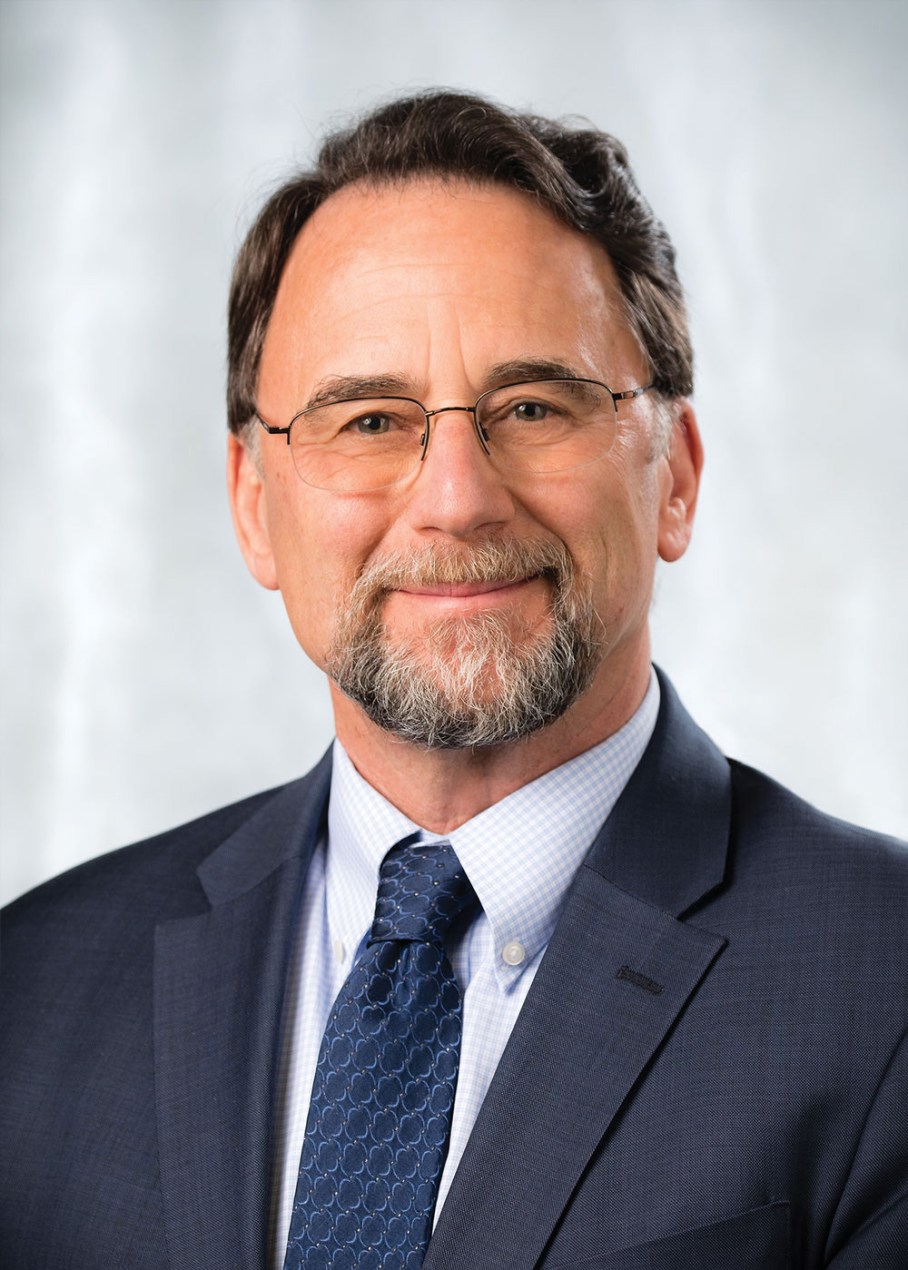
In this “How Would You Fix It?” interview, Julie Rovner, KFF Health News’ chief Washington correspondent and host of the What the Health? podcast, sat down with David Blumenthal — a physician, health policy expert, former Obama administration official, and author — to explore the dynamics that make fixing the nation’s health care system so difficult.

They discussed the pivotal role the president of the United States plays in health policy — whether it is building support for or opposition to new plans and proposals. “Presidents have a level of authority which is often underappreciated, especially in health care,” Blumenthal said.

Blumenthal and Rovner also discussed the historical reasons the U.S. has been unable to enact universal health care, incrementalism versus sweeping change, and what he described as “the dance” between proponents and opponents — usually a clear party-line split between Democrats and Republicans — of major health care reforms.

Today, the split seems to have come to a head, as public health, science, and expertise are being viewed by one end of the political spectrum as “the opposition,” Blumenthal said, which will complicate efforts. Still, he outlined ideas for moving forward.

An abbreviated version of this interview aired April 23 on Episode 443 of What the Health? From KFF Health News: “RFK Jr. vs. Congress.”

Blumenthal’s latest book, Whiplash: From the Battle for Obamacare to the War on Science, co-written with James A. Morone, offers a behind-the-scenes look at how three presidential administrations pursued very different health policy goals.

KFF Health News is a national newsroom that produces in-depth journalism about health issues and is one of the core operating programs at KFF—an independent source of health policy research, polling, and journalism. Learn more about KFF.

This <a target="_blank" href="https://kffhealthnews.org/health-industry/health-care-policy-political-divide-david-blumenthal-interview/">article</a&gt; first appeared on <a target="_blank" href="https://kffhealthnews.org">KFF Health News</a> and is republished here under a <a target="_blank" href="https://creativecommons.org/licenses/by-nc-nd/4.0/">Creative Commons Attribution-NonCommercial-NoDerivatives 4.0 International License</a>.<img src="https://kffhealthnews.org/wp-content/uploads/sites/8/2023/04/kffhealthnews-icon.png?w=150&quot; style="width:1em;height:1em;margin-left:10px;">

<img id="republication-tracker-tool-source" src="https://kffhealthnews.org/?republication-pixel=true&post=2230749&amp;ga4=G-J74WWTKFM0&quot; style="width:1px;height:1px;">

from Health Industry Archives - KFF Health News

Related Posts:
Medigap Premiums Leap, and Consumers Have Few Alternatives

After decades of selling insurance, Illinois-based broker John Jaggi had never seen anything like it.

More than 80 of his customers who were enrolled in the same Medicare supplemental plan from the insurer Chubb got hit last August with a 45% increase.

“In my 49 years of doing biz as a broker, I’ve never seen a premium increase be effective immediately on everyone, instead of on their policy anniversary,” said Jaggi, whose brokerage scrambled to find more affordable options for clients. The policies pick up deductibles and other costs not covered in traditional Medicare, and without one there is no upper limit on how much a consumer might owe each year.

While 45% was an unusually big jump, Jaggi and other brokers say double-digit premium increases for Medicare supplemental, or Medigap, policies are becoming the norm.

A Chubb spokesperson did not respond to requests for comment on the increase.

More than 12 million people — about 43% of those in traditional Medicare — buy a Medigap policy. Others rely on some sort of retiree employer coverage or a different backup. About 13% of people in traditional Medicare don’t have supplemental coverage, according to KFF, meaning they could be vulnerable to large costs if they have a serious illness.

In the supplemental market, following big increases last year, rates appear to be rising again. In early 2026 filings with state insurance commissioners from Aetna, Blue Cross Blue Shield, Cigna, Humana, Mutual of Omaha, and UnitedHealthcare, rate increases for Plan G policies — the most commonly purchased supplement type — ranged from just over 12% to more than 26% in the first quarter, according to Nebraska-based consulting firm Telos Actuarial.

“While this is a small dataset across a select number of states, it’s an indication that carriers are looking to correct their premium rates in light of upward pressure on their claims experience,” said Brett Mushett, a consulting actuary with Telos.

Climbing Numbers

Premium rates vary based on the type of coverage chosen, where a beneficiary lives, and their age. For Plan G coverage, beneficiaries paid an average monthly premium of $164 in 2023, according to KFF. That amount has likely risen since.

“In some states, like Ohio, Medicare supplements for years would have a 3% to 5% year-over-year increase. Now it’s 10% to 15%,” said Amanda Brewton, owner of Medicare Answers Now, a marketing organization whose clients are sales agents.

In Alaska, Premera Blue Cross raised the premiums on its Plan G policies by nearly 12% for this year, according to rate sheets provided to KFF Health News by insurance agent Patricia Mack, who said another insurer raised rates by nearly 13%.

For example, a 65-year-old woman who last year would have been charged $172 a month for a Plan G policy would now face a monthly rate of $192, said Mack, who owns Alaska Insurance Benefits in Wasilla.

Premera spokesperson Courtney Wallace said in an email that Medicare makes changes to deductible and copayment rates each year, which affects supplemental plans that cover those increasing amounts.

Wallace also noted that the insurer saw higher medical service use among its members, “which further drove claims costs and ultimately impacted premiums.”

Agents and policy experts blame a range of factors for rising premiums: an increase in the use of medical services by beneficiaries; the aging of the population; increases in labor and medical costs; rules in some states governing Medigap plans; and people’s enrolling in — or getting out of — private Medicare Advantage plans.

“Five years ago, it was exceedingly uncommon to have a carrier with a rate increase of more than 10%. Now it’s very uncommon to see a rate increase below 10%, and it’s not uncommon to see it over 20%,” said Chalen Jackson, vice president for government affairs at Integrity, a Dallas-based company that sells life and health insurance.

Jaggi, who co-owns Jaggi Petry Insurance & Investments in Forsyth, Illinois, along with his daughter, said he eventually found other options for many of those 80-plus clients with the large increase, which came from an insurer that had previously been the lowest-cost option. But it wasn’t easy — and continuing increases are expected.

“These are unbelievable increases,” said Jaggi, who said he is seeing premium hikes exceeding 15% this year across a range of insurers.

Policy experts have outlined possible solutions, including for Congress to cap out-of-pocket costs for Medicare beneficiaries or subsidize the purchase of Medigap coverage.

“Traditional Medicare is the only federal health insurance program without an out-of-pocket cap,” Sen. Ron Wyden (D-Ore.) wrote in an email, adding that the program “needs to be updated and strengthened to protect the Medicare guarantee for American seniors.”

But making changes to Medicare that require congressional approval is unlikely in the current legislative environment, especially because adding an out-of-pocket cap would add costs to the federal budget.

How This Plays Out

People generally qualify for Medicare when they turn 65. Beneficiaries have six months after they initially enroll in the traditional fee-for-service program to purchase a Medigap plan at standard rates without having to answer health-related questions.

Strict rules then kick in around when beneficiaries can enroll in or switch Medigap coverage and options become much more limited, with each one generally involving trade-offs or tough choices.

At least 16 states have what’s known as a “birthday rule,” which requires insurers once a year to allow people enrolled in a Medigap plan to change to different supplemental coverage — usually around their birthdays — without being medically underwritten. Those rules can help consumers, including those with health conditions, to switch.

An additional four states — Connecticut, Massachusetts, Maine, and New York — require insurers to offer at least one Medigap policy to all applicants either year-round or during an annual enrollment period, depending on the state. Changes are allowed no matter the person’s health.

Another option for those facing high Medigap costs is to leave traditional Medicare and enroll in a private-sector Medicare Advantage plan, which have out-of-pocket caps. But joining one means beneficiaries must generally rely on a set of in-network doctors and hospitals. And if they change their mind and want to go back to traditional Medicare, they have only a 12-month window in which to purchase a Medigap plan without passing health questions. After that, it can be more difficult.

“A lot of people don’t know that if they are in Medicare Advantage for a year, they can get turned down by a Medigap plan or charged really high premiums because of a preexisting condition, which for many people effectively traps them in MA plans,” said Brian Keyser, a research associate at the liberal Center for American Progress and co-author of a recent report on the issue.

There are some exceptions. For example, if a Medicare Advantage plan withdraws from a market or leaves the Medicare program, its enrollees can qualify for a supplemental plan without being asked health questions or charged more for having preexisting conditions.

For this year alone, about 2.6 million people lost Medicare Advantage coverage when their insurer pulled out of their markets, according to KFF, and more than a million lost coverage for 2025. Many switched to other MA plans, but “somewhere around 440,000 of those people did go to a Medicare supplement policy,” sometimes because there was no other MA plan in their area, said George Dippel, president of Deft Research, a Minneapolis-based market research organization focused on insurance for older people. Deft is part of Integrity, the Dallas company.

Some Medicare experts note that anytime insurers enroll people whose health status they can’t consider — whether because of birthday rules or because their Medicare Advantage plan left the market and thus qualified them for an exemption from medical underwriting — it potentially exposes them to more health care utilization and higher costs, making them more likely to increase premiums across the board to offset the possible financial hit.

Another option mentioned by brokers for people looking to lower their costs is to consider one of the two types of Medigap plans that come with a deductible, which is currently just under $3,000 for a year. Those plans charge far lower monthly premiums than Medigap plans that pick up a much larger portion of annual amounts people must pay toward their Medicare services.

Still, “a lot of people are not comfortable with a $3,000 deductible,” Mack said.

KFF Health News is a national newsroom that produces in-depth journalism about health issues and is one of the core operating programs at KFF—an independent source of health policy research, polling, and journalism. Learn more about KFF.

This <a target="_blank" href="https://kffhealthnews.org/medicare/medigap-medicare-advantage-premiums-rate-increase-few-alternatives/">article</a&gt; first appeared on <a target="_blank" href="https://kffhealthnews.org">KFF Health News</a> and is republished here under a <a target="_blank" href="https://creativecommons.org/licenses/by-nc-nd/4.0/">Creative Commons Attribution-NonCommercial-NoDerivatives 4.0 International License</a>.<img src="https://kffhealthnews.org/wp-content/uploads/sites/8/2023/04/kffhealthnews-icon.png?w=150&quot; style="width:1em;height:1em;margin-left:10px;">

<img id="republication-tracker-tool-source" src="https://kffhealthnews.org/?republication-pixel=true&post=2228699&amp;ga4=G-J74WWTKFM0&quot; style="width:1px;height:1px;">

from Health Industry Archives - KFF Health News

Related Posts:

New Federal Medicaid Rules Require One Month of Work. Some States Demand More.

Millions of people who apply for Medicaid in the coming years will have to prove they’ve been working, going to school, or volunteering for at least a month before they can gain or retain health insurance through the government program.

But Republican lawmakers in some states think the new rules — part of the GOP’s One Big Beautiful Bill Act, signed last July by President Donald Trump — don’t go far enough.

Indiana is leading that charge, with a new law that requires applicants to prove they’ve been working or participating in a similar activity for three consecutive months to get benefits.

Meanwhile, residents in many other states will have to show they’ve been working just one month, the least cumbersome option under Trump’s signature tax-and-domestic-spending law. It instructs states to decide whether to require one, two, or three months of work history.

As in Indiana, Republican Idaho lawmakers approved a three-month requirement, and the state’s governor signed the bill into law on April 10.

The efforts, along with similar moves in Arizona, Missouri, and Kentucky, are aimed at restricting flexibility to implement the federal law at the state level.

“Normally, you would not see state legislators weighing in on these decisions,” said Lucy Dagneau, a senior official with the American Cancer Society’s advocacy arm.

The nonpartisan Congressional Budget Office estimated 18.5 million adults will be subject to the new rules, which will be enforced across 42 states and the District of Columbia. In Indiana, work rules will target about 33% of the state’s Medicaid population. The rules generally wouldn’t apply to children, people 65 or older, or people with disabilities or serious health issues.

Typically, state administrators — not lawmakers — detail how they plan to comply with new federal standards, and they often look to federal regulators for guidance. But officials at the Centers for Medicare & Medicaid Services have yet to tell states how to comply with many aspects of the sweeping budget law, leaving state lawmakers to intervene.

Gov. Mike Braun, a Republican, signed the Indiana bill into law on March 4, making his state the first to set the Medicaid work requirement at three months — the longest period allowed under the federal law.

Republican state Sen. Chris Garten introduced a bill in January, saying it was needed to “align” state law with the new federal Medicaid rules. He also pitched the bill as a way to crack down on “waste, fraud, and abuse” in public programs.

When ineligible people get enrolled, it robs “the truly vulnerable Hoosier who actually needs the help,” Garten said during a January committee hearing.

Democratic state Sen. Fady Qaddoura expressed skepticism during the hearing and questioned the necessity of the legislation. Qaddoura asked Indiana Family and Social Services Administration Secretary Mitch Roob to provide an estimate of the number of ineligible people who enrolled in Medicaid in the state.

“I think very few,” Roob replied. “It’ll never be none.”

After hearing Roob’s answer, Qaddoura said there is no evidence of a widespread problem in Indiana. He accused Republicans of using waste, fraud, and abuse as justification to deny health benefits and food aid to vulnerable Hoosiers.

Garten later called Qaddoura’s accusation a “fundamental mischaracterization” of the bill.

Republicans have said imposing these limits protects the Medicaid program’s longevity.

“We believe in a safety net for our most vulnerable, not a hammock for able-bodied adults that choose not to work,” Garten said. “By tightening these screws, we ensure that our safety net remains sustainable.”

Indiana’s Medicaid enrollment is expected to decrease because of Garten’s legislation, according to an analysis from Indiana’s nonpartisan Legislative Services Agency.

Medicaid helps keep people healthy, so they can continue to work, said Adam Mueller, executive director of the Indiana Justice Project, a nonpartisan legal advocacy organization focusing on health, housing, and food insecurity.

Mueller worries that people will struggle to prove their work history, especially those with nontraditional jobs.

“If the point is to get people engaged, the one month would do it,” Mueller said.

Ultimately, he fears the law will harm Hoosiers with the greatest need for assistance. “They’re going to get tripped up by the bureaucratic hurdles.”

An analysis by the Center on Budget and Policy Priorities predicted that work rules will impose new barriers to coverage and that how states choose to implement the rules will “significantly affect the number of people who lose coverage.” State policy decisions will determine just “how intense the burden is,” the left-leaning think tank found, and opting for a shorter look-back period “will enable more people to enroll.”

Lawmakers in multiple states considered limits. And the same right-leaning lobbying group, the Foundation for Government Accountability, testified in favor of these measures in Arizona, Indiana, and Missouri.

In Missouri, FGA lobbyist James Harris said the measure intends to “move people from dependency and give them back that dignity and pride of work.”

Missouri state Rep. Darin Chappell proposed requiring a three-month look-back period like the measure in Indiana. But the latest version of the bill he sponsored would require applicants to show they were working for only one month before enrolling.

Chappell, a Republican, said his initiative would encourage a “working mindset.”

Anna Meyer, owner of a small bakery in Columbia, Missouri, said the implication is that she and others on Medicaid are lazy. “I have been working since I was 15 years old,” she said. “I’m 43 now.”

Meyer, who voiced her opposition, said she previously had problems submitting information to the state Medicaid agency. She fears new reporting requirements will put her and others at risk of losing coverage, even if they meet the work rule.

She has fibromyalgia, a chronic condition that increases overall sensitivity to pain. She also has food allergies. Medicaid helps pay for medications and doctor visits that keep her healthy and allow her to keep working.

“I work very hard,” Meyer said.

In St. Louis, Jessica Norton, an OB-GYN, treats many Medicaid patients at an Affinia Healthcare clinic. She said they struggle to remain insured even though Missouri extends a full year of Medicaid coverage to eligible women after they give birth. Some of her patients are inexplicably kicked off that coverage by the time of their checkups six weeks after birth. She fears red tape from the new work requirements will make it harder to hang on to insurance, even though pregnant women and new mothers are supposed to be exempt.

Norton criticized lawmakers for the message this policy sends to vulnerable patients. They are saying, “Oh, actually, health care is a privilege, and you have to earn it,” she said.

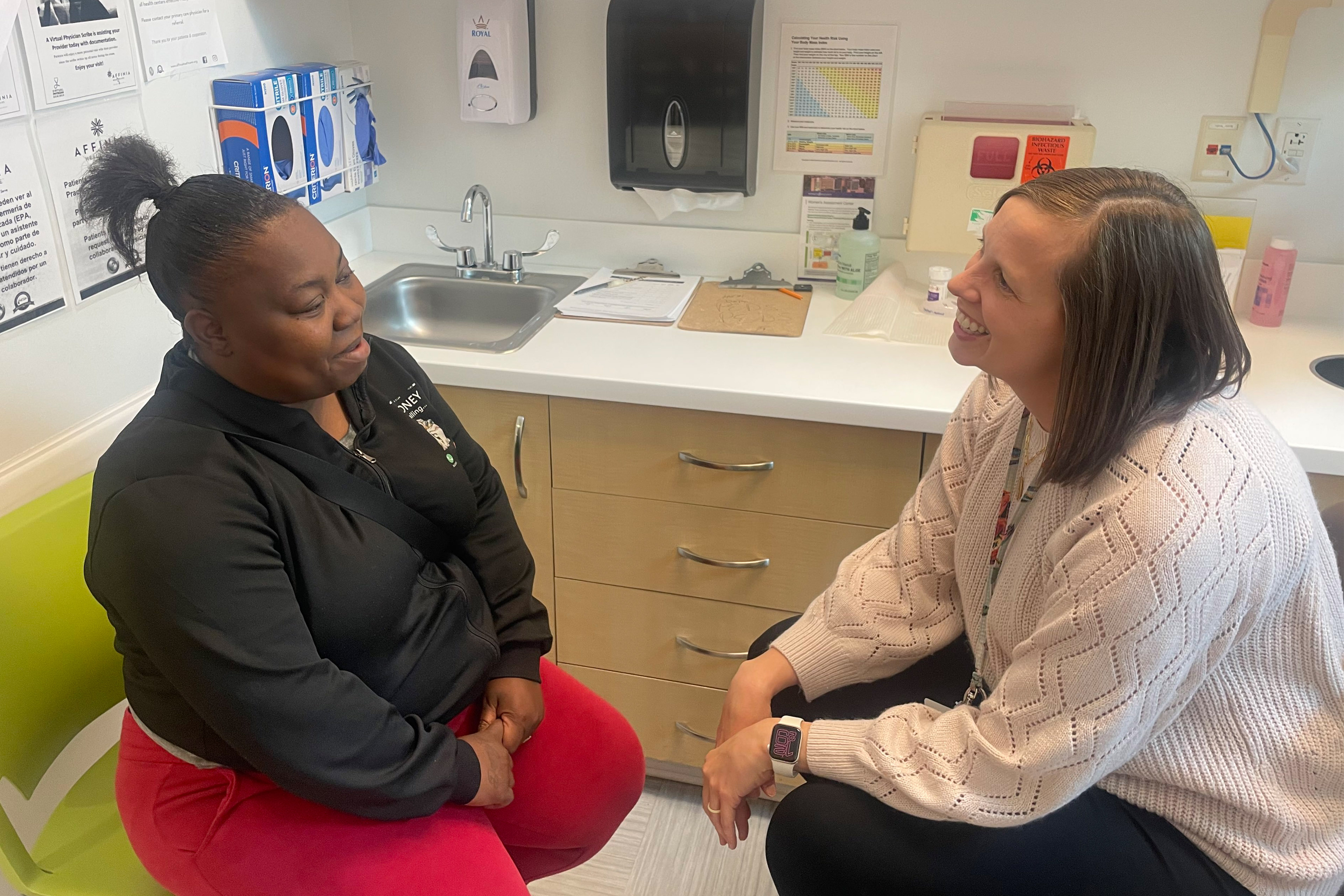
A doctor sits on the right, speaking to her patient, seated on the left side of the frame.
Norton speaks with patient Candis Quinn on April 7. Norton fears women will bear the brunt of new Medicaid work requirements because they’re often performing unpaid labor. (Samantha Liss/KFF Health News)

Nearly two-thirds of adults ages 19 to 64 on Medicaid already work, according to KFF. The reason many of the remaining adults on Medicaid are not working is that they are retired, serving as a caregiver, or too sick, KFF has found.

Some states are not only setting the strictest requirements but also blocking out the optional leniency built into the federal rules.

For example, states may adopt additional exemptions from work rules, such as allowing people to claim a “short-term hardship,” designed to provide continued Medicaid coverage to people with medical conditions that prevent them from working.

Missouri lawmakers are seeking a constitutional amendment to bar their state from offering such optional exemptions. But patient advocates warn these limits would harm the state’s vulnerable residents when they need coverage the most, particularly Missouri’s rural cancer patients.

Often, rural Missouri patients must travel to Kansas City or St. Louis for treatment, disrupting their ability to work, Emily Kalmer, a lobbyist for the American Cancer Society’s advocacy arm, testified at the January hearing. Recognizing this, the federal law provides certain exemptions for this kind of scenario.

But this short-term hardship exemption would be off the table in Missouri.

Time is “very important in the life of a cancer patient or a cancer survivor,” Kalmer said.

KFF Health News is a national newsroom that produces in-depth journalism about health issues and is one of the core operating programs at KFF—an independent source of health policy research, polling, and journalism. Learn more about KFF.

This <a target="_blank" href="https://kffhealthnews.org/insurance/federal-medicaid-work-rules-one-three-months-indiana-missouri/">article</a&gt; first appeared on <a target="_blank" href="https://kffhealthnews.org">KFF Health News</a> and is republished here under a <a target="_blank" href="https://creativecommons.org/licenses/by-nc-nd/4.0/">Creative Commons Attribution-NonCommercial-NoDerivatives 4.0 International License</a>.<img src="https://kffhealthnews.org/wp-content/uploads/sites/8/2023/04/kffhealthnews-icon.png?w=150&quot; style="width:1em;height:1em;margin-left:10px;">

<img id="republication-tracker-tool-source" src="https://kffhealthnews.org/?republication-pixel=true&post=2228139&amp;ga4=G-J74WWTKFM0&quot; style="width:1px;height:1px;">

from Health Industry Archives - KFF Health News

Related Posts:

Democrats Demand Trump Administration Halt Plan To Collect Federal Workers’ Health Data

Democratic lawmakers are demanding that the Trump administration halt plans to collect sensitive medical records for millions of federal workers and retirees, as well as their family members.

The Office of Personnel Management has asked 65 insurance companies to provide monthly reports with detailed medical and pharmaceutical claims data of more than 8 million people enrolled in federal health plans, KFF Health News reported earlier this month. The request, which could dramatically expand the personally identifiable medical information OPM can access, alarmed health ethicists, insurance company executives, and privacy advocates.

Now, OPM Director Scott Kupor has two letters on his desk — one from 16 U.S. senators and another led by Rep. Robert Garcia, the top Democrat on the House Oversight Committee — asking him to drop the agency’s proposal.

“The collection of broad, personally identifiable data regarding medical care and treatment raises concerns that OPM could target certain federal employees seeking vital health care services that the Administration disagrees with on political grounds,” the Democratic House members wrote to Kupor April 17, citing KFF Health News.

The letters from congressional Democrats alone are unlikely to reverse OPM’s plans. Republicans — who control Congress and, ultimately, any oversight activities — have not weighed in on OPM’s notice.

OPM did not immediately respond to a request for comment on the letters. The agency, which said in its notice that it will use the data for oversight and to manage the federal health plans, has not publicly addressed written concerns about its proposal.

The notice, posted and sent to insurers in December, states that insurers are legally permitted to disclose “protected health information” to OPM and does not provide instructions to redact identifying information, such as names or diagnoses, from the claims.

That data could be used to implement cost-saving measures, health policy experts told KFF Health News earlier this month. But it would also give the Trump administration — which has laid off or fired tens of thousands of federal workers — access to a vast trove of personal information.

In the letters, Democratic lawmakers lay out a number of concerns about potential consequences of OPM’s obtaining detailed medical claims for millions of federal workers.

The letter from Senate Democrats — led by Adam Schiff of California and Mark Warner of Virginia — argues that OPM is not equipped to safeguard such sensitive data and that the administration could share the records across government agencies, as it has done with personal information on millions of Medicaid enrollees.

They also assert that the agency does not have a legal right to the data and that insurers’ sharing the information with OPM would “violate the core principles of the Health Insurance Portability and Accountability Act.” HIPAA requires certain organizations that maintain identifiable health information — such as hospitals and insurers — to protect it from being disclosed without patient consent. The proposal, the senators warn, threatens patients’ relationships with their clinicians, especially “sensitive disclosures regarding mental health, chronic illness, or other deeply personal conditions.”

“For these reasons, we strongly urge you to cease any further consideration of this proposal,” states the letter, which was sent to Kupor on April 19.

The American Federation of Government Employees, the largest union for federal employees, responded with alarm to KFF Health News’ reporting. The union noted in a statement from its national president, Everett Kelley, that OPM’s proposal “comes in the context of coordinated attacks on federal employees and repeated stretching of the legal boundaries for sharing sensitive personal data across government agencies.

“The question of what this administration intends to do with eight million Americans’ most private health information is not academic,” the AFGE statement read. “It is urgent.”

In an emailed statement, Kelley applauded the congressional letters.

“We are pleased that Democratic lawmakers on the Hill are just as outraged as we are over this administration’s blatant attempt to breach the privacy of millions of Americans across the country,” Kelley wrote. “We share their concerns regarding potential misuse of the information to continue illegally targeting workers and their demand for OPM to withdraw this proposal.”

KFF Health News is a national newsroom that produces in-depth journalism about health issues and is one of the core operating programs at KFF—an independent source of health policy research, polling, and journalism. Learn more about KFF.

USE OUR CONTENT

This story can be republished for free (details).


from Health Industry Archives - KFF Health News

Related Posts:

Cae la inscripción de inmigrantes en Medi-Cal y expertos lo atribuyen a las políticas de Trump

Durante meses, un clima de mucho miedo se ha instalado en la comunidad inmigrante de San Bernardino, California. Esto ha hecho más difícil el trabajo de María González como promotora de salud en esta ciudad donde casi una cuarta parte de los habitantes nació en el extranjero.

La situación comenzó a agravarse durante el verano, impulsada por las noticias sobre redadas migratorias en todo el sur de California, los planes de la administración Trump de compartir datos de Medicaid con el Servicio de Inmigración y Control de Aduanas (ICE) y la aprobación de restricciones estatales y federales sobre el derecho de los inmigrantes a acceder a Medicaid.

Luego, en noviembre, el gobierno federal publicó una nueva propuesta sobre la “carga pública” que, de aprobarse, podría impedir que determinados inmigrantes obtuvieran la residencia legal permanente si ellos o sus familiares han utilizado beneficios públicos, incluido Medicaid.

Muchos de los pacientes de González y sus hijos, que a menudo son ciudadanos estadounidenses, todavía califican para el programa Medicaid de California, conocido como Medi-Cal, que brinda cobertura de salud a más de 14 millones de residentes con bajos ingresos o discapacidades. Pero, cada vez más, esas personas prefieren no inscribirse ni renovar su cobertura.

“Muchos no quieren solicitar la cobertura”, afirmó González. “Hay quienes dicen que ni siquiera se atreven a salir a regar sus plantas”.

Datos de Medi-Cal sugieren que lo que algunos defensores de inmigrantes llaman una “pandemia de miedo” ha comenzado a reducir la inscripción en el programa de Medicaid más grande del país. Un análisis de KFF Health News encontró que, de junio a diciembre, el mes más reciente para el que hay datos disponibles, casi 100.000 inmigrantes sin estatus legal salieron del programa. Representan alrededor de una cuarta parte de todas las bajas de Medi-Cal, aunque este grupo constituye aproximadamente solo el 11% de los inscritos.

Esto marca un cambio de rumbo respecto del aumento constante en la inscripción de inmigrantes sin estatus legal en el estado. Hasta julio, las inscripciones de este sector habían aumentado cada mes desde que, en enero de 2024, el estado abrió Medi-Cal a todos los residentes de bajos ingresos sin que importara su estatus migratorio.

Tessa Outhyse, vocera del Departamento de Servicios de Atención Médica (DHCS), que supervisa Medi-Cal, afirmó que no hay evidencia de que los inmigrantes se estén dando de baja del programa en mayor proporción que otros grupos. En general, la inscripción en Medi-Cal ha disminuido en alrededor de 1,6 millones desde su punto más alto en mayo de 2023.

Outhyse atribuyó la caída a la reanudación de las verificaciones anuales de elegibilidad, que se suspendieron durante la pandemia de covid-19. California es uno de los 14 estados que, junto con Washington, D.C., financian cobertura de salud para, al menos, algunos inmigrantes que no califican para Medicaid o el Programa de Seguro de Salud para Niños bajo las reglas federales.

Pero dos investigadores, Leonardo Cuello, del Centro para Niños y Familias de la Universidad Georgetown, y Susan Babey, del Centro de Investigación de Políticas de Salud de UCLA, cuestionaron esa explicación. Señalaron que California y la mayoría de los otros estados ya habían reanudado completamente las verificaciones de elegibilidad a mediados de 2024.

Sin embargo, Tony Cava, vocero del DHCS, aseguró que esas revisiones continuaron reduciendo la inscripción hasta 2025.

Cuello agregó que los cambios federales aprobados por los republicanos en la ley One Big Beautiful Bill Act, que se espera provoquen más bajas, no entran en vigor hasta dentro de algunos meses.

“Tenemos muchos factores importantes que aún no han ocurrido y que provocarán la pérdida de cobertura”, explicó Cuello. “Pero la pérdida de cobertura que está ocurriendo ahora parece estar en gran medida relacionada con el miedo de los inmigrantes”.

Encuestas dan algunas pistas

Una encuesta de KFF/New York Times encontró que, en todo el país, los adultos inmigrantes, especialmente los que son padres, están evitando cada vez más incluirse en programas gubernamentales que ayudan a pagar alimentos, vivienda o atención médica para no llamar la atención sobre su estatus migratorio o el de algún familiar. Esto incluye a residentes con estatus  y a ciudadanos naturalizados.

Cuello dijo que la tendencia a evitar estos programas por parte de los padres es especialmente preocupante porque aproximadamente 1 de cada 4 niños en EE.UU. tiene al menos un padre inmigrante. Aunque la mayoría de esos niños haya nacido en el país.

También opina que esa decisión de las familias puede explicar una disminución nacional de casi 3% en la inscripción en Medicaid y el Programa de Seguro de Salud para Niños durante los primeros 10 meses del año pasado, incluida una caída de 5,6% en la inscripción de niños en California, según datos recopilados por investigadores de Georgetown.

Los patrones de inscripción durante la primera administración Trump también ofrecen pistas. Por ejemplo, el presidente amplió los criterios de carga pública para incluir el uso de Medicaid y asistencia para alimentos y vivienda. Esto llevó a muchas familias inmigrantes, incluidos niños ciudadanos y personas no afectadas por la regla, a renunciar a Medicaid y otros programas para los que eran elegibles. Algunos continuaron evitando estos programas incluso después de que varios tribunales bloquearon su implementación y el presidente demócrata Joe Biden revocó la regla.

“La medida generó un alto nivel de confusión”, señaló Louise McCarthy, presidenta y directora ejecutiva de la Asociación de Clínicas Comunitarias del condado de Los Ángeles, que representa a unos 70 centros de salud en la zona. “El personal de los centros de salud comunitarios aún está trabajando para revertir los efectos de la primera regla”.

Ahorros estimados

Actualmente, solo las personas que dependen de programas de asistencia en efectivo o de atención institucional a largo plazo financiada por el gobierno pueden ser consideradas un riesgo de carga pública cuando solicitan una visa para entrar al país o gestionan la residencia permanente legal.

Pero bajo la propuesta de la administración Trump, Medicaid y otros programas sin entrega directa de dinero, así como el uso de beneficios por parte de familiares, podrían usarse para evaluar si es posible que una persona termine dependiendo del estado. Los oficiales de inmigración también tendrían mayor autoridad para decidir cuáles factores convierten a alguien en carga pública.

La propuesta del Departamento de Seguridad Nacional (DHS) indica que los cambios son necesarios porque las reglas actuales limitan la capacidad de la agencia para evaluar el riesgo de que un inmigrante dependa de recursos gubernamentales. El período de comentarios públicos terminó en diciembre.

El DHS no respondió a una pregunta respecto de cuándo tomará una decisión final sobre la norma. La propuesta indica que “estaría en línea con una política de larga data: según la cual los extranjeros en Estados Unidos deben ser autosuficientes y los beneficios estatales no deben incentivar la inmigración”.

La agencia calculó que esa modificación podría ahorrar a los gobiernos federal y estatales casi $9 mil millones al año gracias a personas que se den de baja o decidan no inscribirse en programas públicos.

En una carta en apoyo a esa iniciativa, el Center for Immigration Studies, una organización conservadora que promueve restricciones migratorias, describió la regla actual de carga pública como demasiado limitada y dijo que impide a los funcionarios de inmigración considerar “toda la información relevante”.

“El concepto de negar la entrada a personas que probablemente dependerán de la asistencia gubernamental no es nuevo”, escribió Elizabeth Jacobs, directora de asuntos regulatorios del grupo, en una publicación de diciembre.

La propuesta federal también admite que estas modificaciones podrían  provocar una pérdida de ingresos para economías estatales y locales, incluidos proveedores de salud como hospitales, supermercados, agricultores y arrendadores que participan en programas de vivienda financiados por el gobierno federal.

Un análisis de KFF estimó que la norma que impulsa el gobierno podría llevar a que entre 1,3 y 4 millones de personas abandonen Medicaid o el Programa de Seguro de Salud para Niños, incluidos hasta 1,8 millones de niños ciudadanos.

“Claramente se está usando para generar miedo y ansiedad”, dijo Benyamin Chao, gerente supervisor de políticas de salud y beneficios públicos del California Immigrant Policy Center. El funcionario calificó la iniciativa como parte de un “ataque a inmigrantes con residencia legal, a ciudadanos estadounidenses que son familiares, y a la comunidad en general”.

Es posible que el temor a la carga pública también haga que menos personas participen en iniciativas contra el hambre, como el Programa de Asistencia Nutricional Suplementaria, conocido en California como CalFresh. Mark Lowry, director del Banco de Alimentos del condado de Orange, dijo que esto — junto con las bajas relacionadas con la ley One Big Beautiful Bill Act — podría saturar los bancos de alimentos, ya que los programas federales de nutrición representan la mayor parte de la ayuda alimentaria.

“No hay forma de que el sistema de alimentos de emergencia tenga la capacidad ni los recursos para cubrir esas necesidades”, dijo.

Necesidades de atención médica

El temor a inscribirse en Medi-Cal no afecta a todos los inmigrantes. Juana Zaragoza dirige un programa en Oxnard que ayuda principalmente a trabajadores agrícolas indígenas de México a anotarse en Medi-Cal. Allí, la inscripción y reinscripción se han mantenido estables en los últimos meses. Ni ella ni las comunidades a las que atiende conocen mucho sobre la propuesta de carga pública, explicó.

A menudo, las preocupaciones se ven superadas por la necesidad inmediata de atención médica.

“Nos encontramos con muchas personas que están evaluando qué los beneficia ahora y qué los beneficiará después”, dijo. “Algunos solo quieren cubrir sus necesidades en el momento”.

KFF Health News is a national newsroom that produces in-depth journalism about health issues and is one of the core operating programs at KFF—an independent source of health policy research, polling, and journalism. Learn more about KFF.

USE OUR CONTENT

This story can be republished for free (details).


from Health Industry Archives - KFF Health News

Related Posts: