Advertisements Promising Patients a ‘Dream Body’ With Minimal Risk Get Little Scrutiny

Lenia Watson-Burton, a 37-year-old U.S. Navy administrator, expected that cosmetic surgery would get rid of stubborn fat quickly and easily — just as the web advertising promised.

Instead, she died three days after a liposuction-like procedure called AirSculpt at the San Diego office of Elite Body Sculpture, a cosmetic surgery chain with more than 30 offices across the U.S. and Canada, court records show.

Cosmetic surgery chains setting up shop in multiple states depend heavily on advertising to attract customers: television, print, social media influencers, even texts hawking discounted holiday rates. The pitches typically promise patients life-changing body shaping with minimal pain and a quick recovery.

Yet there’s no federal requirement that surgery companies post evidence supporting the truth and accuracy of these marketing claims. No agency tracks how frequently patients persuaded by sales pitches sustain painful complications such as infections, how effectively surgeons and nursing staff follow up and treat injuries, or whether companies selling new aesthetic devices and methods have adequately trained surgeons to use them safely.

In 2023, Watson-Burton’s husband and six children and stepchildren sued Elite Body Sculpture and plastic surgeon Heidi Regenass for medical malpractice, alleging that the thin cannula the surgeon used to remove fat perforated Watson-Burton’s bowel, causing her death.

The suit also accused Elite Body Sculpture of posting false or misleading advertising on its website, such as describing the clinic’s branded procedure AirSculpt as “gentle on the body” and stating: “Our patients take the fewest possible risks and get back to their regular routine as soon as 24-48 hours post-operation.”

Watson-Burton was one of three patients who died after having liposuction and fat transfer operations performed by Regenass from October 2022 to February 2023, court records state. Families of all three women sued the surgeon, who denied wrongdoing in legal filings. The parties settled the Watson-Burton family case in 2024. Two other wrongful death cases are pending, including a suit by an Ohio woman who alleges her mother relied on promises on Regenass’ website that the operation in California would be safe with a quick recovery.

Neither Regenass nor her attorneys responded to repeated requests for comment. Emails and phone calls to Elite Body Sculpture’s Miami headquarters were not returned.

State and federal authorities do have the power to prohibit false or misleading medical advertising of all types, though enforcement is spotty, particularly when promotions pop up online. That means patients must do their own homework in evaluating cosmetic surgery marketing pitches.

“While consumers should be able to trust that ad claims are substantiated because the law requires them to be, the reality is that it pays for consumers to bring a skeptical eye,” said Mary Engle, an executive vice president at BBB National Programs.

‘Up a Cup’

Founded by cosmetic surgeon Aaron Rollins, Elite Body Sculpture says in Securities and Exchange Commission filings that it offers a “premium patient experience and luxurious, spa-like atmosphere” at its growing network of centers. The publicly traded company, based in Miami Beach and backed by private equity investors, markets AirSculpt as being “much less invasive than traditional liposuction” and providing “faster healing with superior results.” The ads say that AirSculpt “requires no scalpel, or stitches, and only leaves behind a freckle-sized scar!” and that patients “remain awake the whole time and can walk right out of their procedure, enjoying dramatic results!” Some risks are disclosed.

Rollins, who recently made headlines for putting his Indian Creek mansion on the market for $200 million, did not respond to repeated requests for comment. A lawyer for Rollins, Robert Peal, responded to an email but didn’t comment. On Nov. 4, the company announced that Rollins had resigned as executive chairman of the board of directors of AirSculpt Technologies and as a member of the board.

Many AirSculpt patients opt to have fat that is removed from their stomachs or other places injected into their buttocks, often called a Brazilian butt lift. Others use the fat to enhance their breasts, a procedure the company brands as “Up a Cup.” Since March 2023, at least seven patients have filed lawsuits accusing Elite Body Sculpture of running misleading advertising or misrepresenting results, arguing, among other things, that they felt more pain or healed much more slowly than the ads led them to believe they would, court records show. One of the lawsuits has been dismissed, and the company has denied the allegations in others.

The Watson-Burton family argued in their lawsuit that some marketing claims about AirSculpt were simply not true.

For instance, Elite Body Sculpture’s website stated that AirSculpt has “automated technology” set to “turn off” before the cannula penetrates the body too deeply and possibly causes serious injury, according to the suit. That feature didn’t protect Watson-Burton, who paid $12,000 for the operation, hoping for a “quick and timely recovery” before a scheduled U.S. Navy deployment, according to the lawsuit.

Rather than being gentle on the body, AirSculpt was “extremely painful, highly invasive, unsafe, required more than a short 24-hour recovery period and could and did damage internal organs,” according to the suit.

Watson-Burton called the San Diego center on Oct. 27, 2022, a day after the operation, to report “severe pain” in her upper abdomen, but staffers took no action to evaluate her, according to the suit. The next morning, an ambulance rushed her to a hospital, where emergency surgery confirmed the gravity of her injuries. Surgeons noted her injuries included three perforations of the small bowel and sepsis.

Watson-Burton died on Oct. 29, 2022. An autopsy report cited complications of the cosmetic surgery, ruling she died after becoming “septic following intraoperative small bowel perforation.” Her death certificate lists the cause as “complications of abdominoplasty.”

In court filings, Elite Body Sculpture said Watson-Burton had “experienced an uncommon surgical complication.” The company denied that it made any “specific guarantee or representation that injury to organs could not occur.” It denied any liability or that its ads made misrepresentations.

The dispute never played out fully in court. The parties settled the case in August 2024, when Elite Body Sculpture agreed to pay Watson-Burton’s family $2 million, the maximum under its insurance policy. Regenass, the surgeon, who did not carry liability insurance, agreed to pay $100,000 more, according to the settlement agreement.

Promises Not Kept

Social media pitches and web advertising also led Tamala Smith, 55, of Toledo, Ohio, to Regenass for liposuction and a fat transfer, court records state.

Smith was dead less than two weeks later, one of two other women who died following elective operations Regenass performed from December 2022 to February 2023, court records show. The surgeon operated on the two women at Pacific Liposculpture, which runs three surgery centers in Southern California, court records state.

The families of both women are suing Regenass, a board-certified plastic surgeon, and the surgery center. In both cases, which are pending in California courts, Regenass and the surgery center have denied the allegations and filed dismissal motions that deny responsibility for the deaths.

Smith was a traveling registered nurse working the overnight shift at a hospital in Los Angeles. She chose Regenass after viewing the doctor’s Instagram page, according to a lawsuit filed by Smith’s daughter, Ste’Aira Ballard, who lives in Toledo.

The ads described the surgeon as an “awake liposuction and fat transfer specialist,” while her website assured patients they would feel minimal pain and be “back to work in 24-48 hours,” according to the suit.

During the three-hour operation on Feb. 8, 2023, at Pacific Liposculpture’s Newport Beach office, Regenass removed fat from Smith’s abdomen and flanks and redistributed it to her buttocks, according to the suit. Smith called the office at least twice in subsequent days to report pain and swelling, but a staffer told her that was normal, according to the suit. Smith never spoke to the surgeon, according to the suit.

When Ballard couldn’t reach her mother, she called the hospital only to learn Smith hadn’t turned up for her overnight shift for two days. The hospital called police and asked for a welfare check at the extended-stay hotel in Glendale, California, where Smith had been living.

An officer discovered her body on the bed “surrounded by towels and sheets that are stained with brown and green fluids,” according to a coroner’s report in the court file. A countertop in the room was “covered in medical paperwork detailing post-operative instructions from a liposuction clinic,” according to the report. Ballard said she learned of her mother’s death when she called Smith’s cellphone; a police officer answered and delivered the devastating news.

“Oh, my God, I fell to the floor,” Ballard said in an interview with KFF Health News and NBC News. Ballard said she still has not gotten over the shock and grief. “It bothers me because how does someone that dedicated their life to save other people’s lives end up deceased in a hotel, as if her life didn’t matter?” she asked.
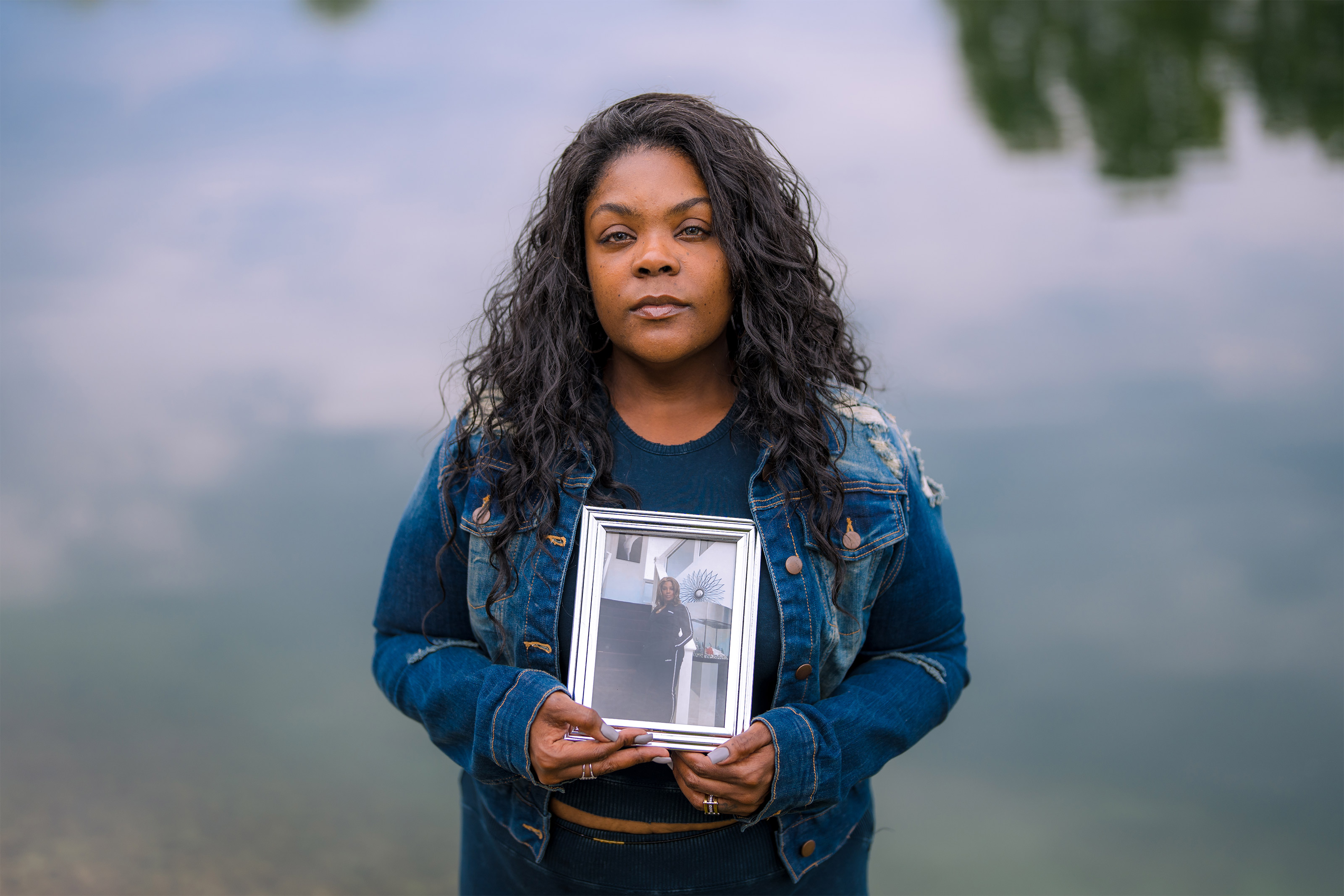
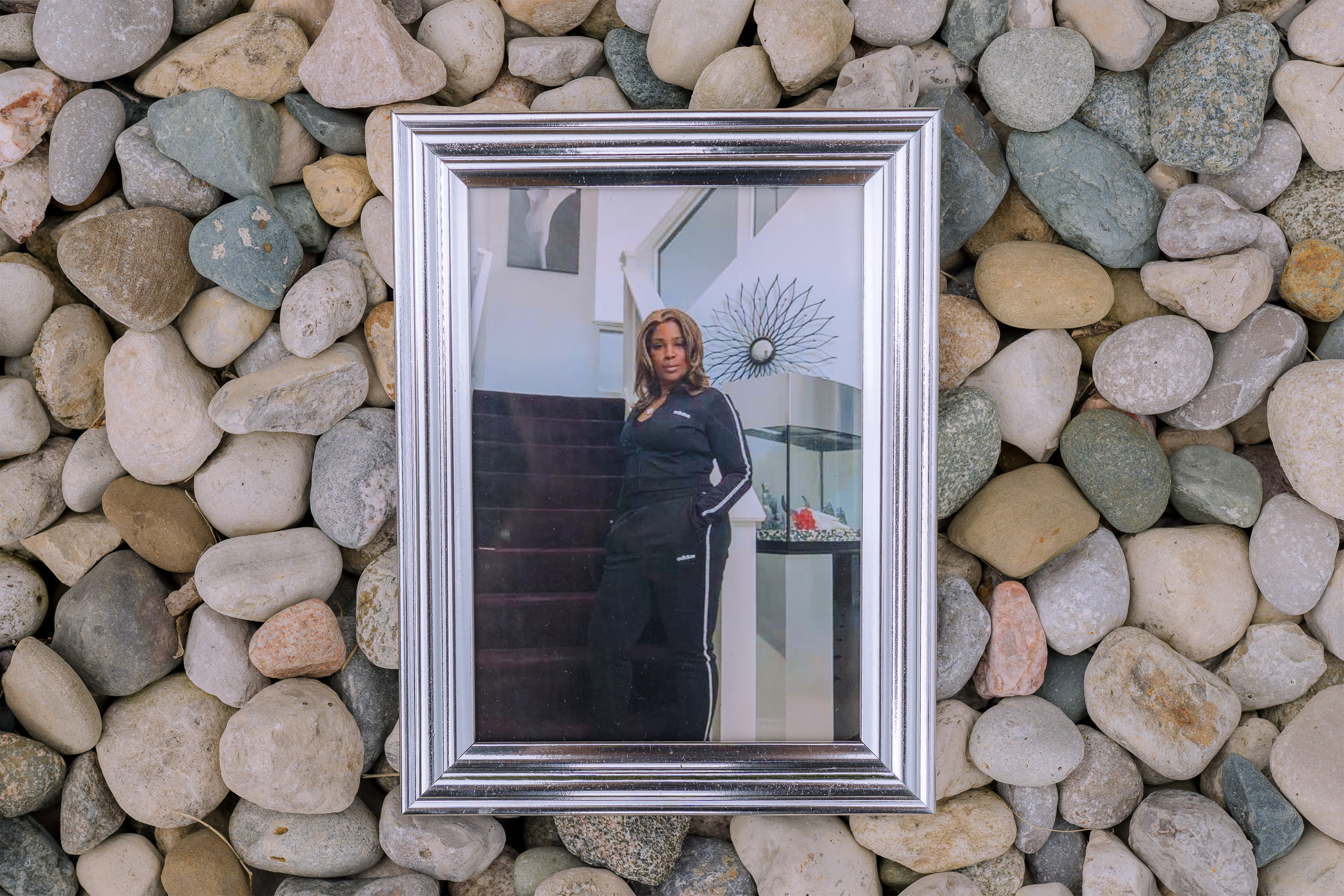
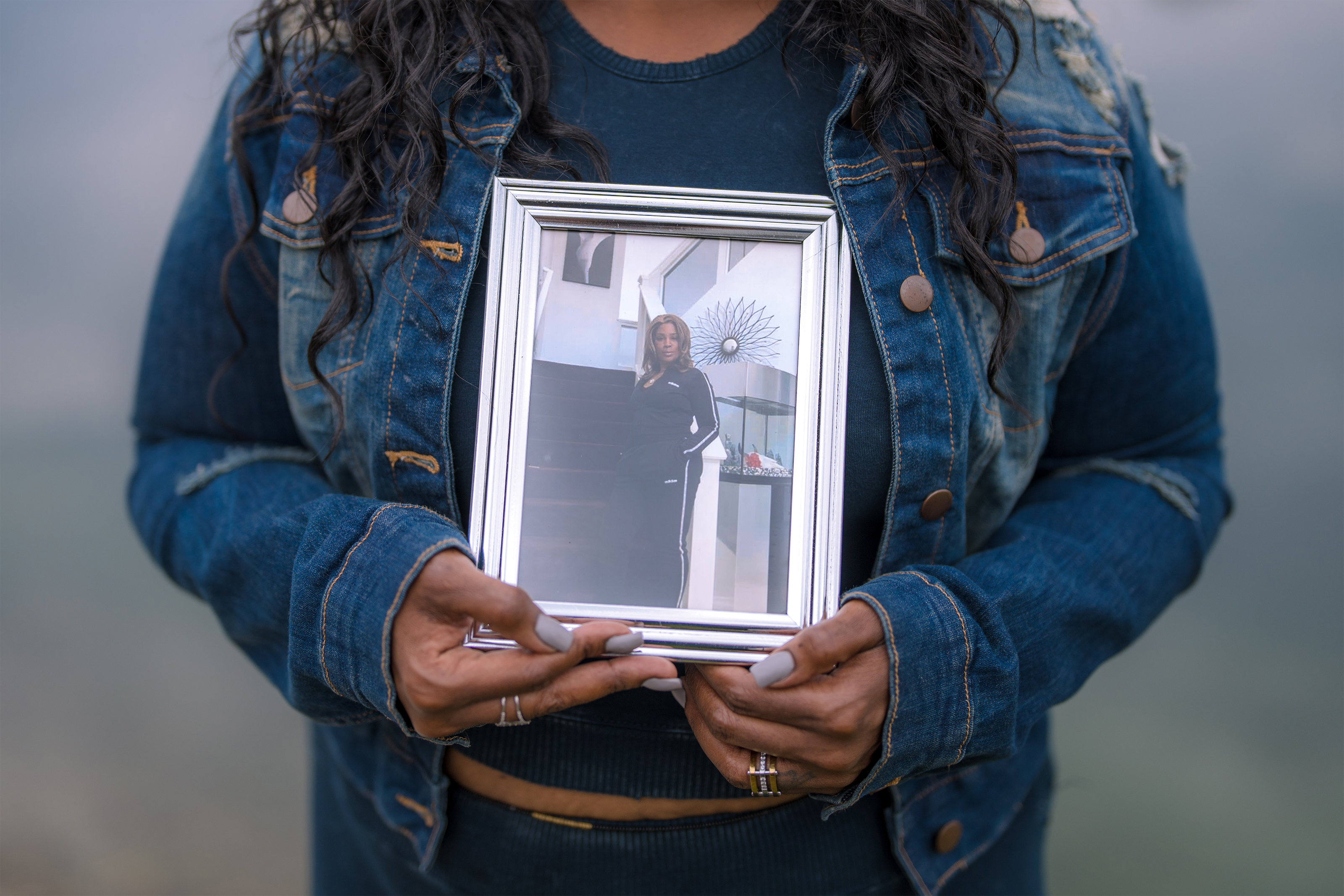
Ballard said her mother trusted Regenass based on her web persona. She believes her mother, a registered nurse, would not have gone to the surgeon had she known someone had died after an operation Regenass performed at the Pacific Liposculpture San Diego office. Terri Bishop, 55, a truck driving instructor who lived in Temecula, California, died on Dec. 24, 2022, about three weeks after undergoing liposuction and fat transfer at Pacific Liposculpture, a company with a history of run-ins with state regulators.

Pacific Liposculpture did not respond to requests for comment. In court filings, the company has denied that the operations played a role in either patient’s death and moved to dismiss the cases. The company also argued that Ballard waited too long to file suit.

Bishop, who had a history of smoking, diabetes, and high blood pressure, died from “arteriosclerotic cardiovascular disease aggravated by viral pneumonia (Influenza A H1 2009),” according to a Riverside County medical examiner’s report made part of the court record. The family disagrees and is arguing that Bishop died from blood clots, a known complication of surgery. A trial is set for June 2026.

In Smith’s case, the Los Angeles County medical examiner ruled the nurse died of “renal failure of unknown cause.” The autopsy report noted: “This is a natural death since an injury directly from the surgery cannot be identified.”

Ballard is demanding further investigation to get to the bottom of what happened to her mother.

“I don’t think they were straightforward with the risk and complications that could occur,” Ballard said. “I think they are promising people stuff they can’t deliver.”

Ballard filed a complaint against Regenass with the California Medical Board, which the board is investigating, according to documents she provided to KFF Health News and NBC News. She believes regulators need to be more transparent about the backgrounds of surgeons who offer services to the public. She also hopes the investigation will shake loose more details of what happened to her mother.

“I just don’t understand how she came back to me in a body bag,” she said.

“I think they are promising people stuff they can’t deliver.”

Ste’Aira Ballard
‘Buyer Beware’

Concerns about sales pitches for cosmetic surgery date back decades.

Witnesses testifying at a June 1989 congressional hearing held by a subcommittee of the House Small Business Committee in Washington heard a litany of horror stories of patients maimed by surgeons with dubious training and credentials. Subcommittee Chairman Ron Wyden (D-Ore.) said patients were victimized by deceptive and false ads that promised a “quick, easy and painless way to change your life — all through the cosmetic surgery miracle.”

Calling for reform, Wyden added: “So, cosmetic surgery consumers are largely on their own. It’s back to a buyer beware market, and it smacks more of used car sales than medicine.” Wyden now represents Oregon in the U.S. Senate.

All these years later, there’s far more territory to police: an onslaught of web advertising, such as splashy “before and after” photos, online posts, and podcasts by social media influencers and others courted by surgery companies in a costly effort to attract business. Elite Body Sculpture, for instance, spent $43.9 million in “selling expenses” in 2024. That came to $3,130 per “customer acquisition,” according to the company’s SEC filings.

Under Federal Trade Commission guidelines, medical advertising must be “truthful, not deceptive, and backed up by competent and reliable scientific evidence,” according to Janice Kopec of the agency’s Bureau of Consumer Protection.

Any claims that are “suggested or reasonably implied” by ads also must be accurate. That includes the “net impression” conveyed by text and any charts, graphs, and other images, according to the FTC. The agency declined to elaborate.

Medical businesses are free to decide what documentation, if any, to share with the public. Most cosmetic surgery sites offer little or no such support for specific claims — such as recovery times or pain levels — on their websites.

“There is no requirement that the substantiation be made available to consumers, either on a website or upon demand,” Engle, who is also a former FTC official, said in an email.

The law permits “puffery,” or boastful statements that no person would likely take at face value, or that can’t be proved, such as, “‘You’ve tried all the rest, now try the best,’” Engle said.

Where to draw the line between acceptable boasts and unverified claims can be contentious.

Athēnix, a private equity-backed cosmetic surgery chain with locations in six cities, defended its use of terms such as “safer” and “better results” as puffery in response to a false advertising lawsuit filed against the company by Orange County District Attorney Todd Spitzer in California in August 2022.

Spitzer argued that Athēnix touted its “micro-body-contouring” technique as “safer” than traditional liposuction and offered “outstanding results with less pain and downtime” without backing that up, according to the suit.

“There is no study or evidence to support these statements and no scientific consensus about the use of these new techniques,” Spitzer argued.

The parties settled the case in July 2023 when Athēnix agreed to pay $25,000 without admitting wrongdoing, court records show. Before the settlement, Athēnix argued that its use of terms such as “safer” and “better results” was “subjective” and “puffery” — and not false advertising.

While there’s little indication that local or state authorities are stepping up scrutiny of cosmetic surgery advertising, federal authorities have signaled they intend to crack down on dubious advertising claims made by drug manufacturers.

In a letter sent to drug companies in September, FDA Commissioner Marty Makary wrote that “deceptive advertising is sadly the current norm” on social media platforms and that the agency would no longer tolerate these violations.

‘Bad Advice’

To prove medical negligence, injured patients generally must show that their care fell below what a “reasonably prudent” doctor with similar training would have provided. In their defense, surgeons may argue that complications are a risk of any operation and that a poor outcome doesn’t mean the doctor was negligent.

Some lawsuits filed by injured patients add allegations that advertisements by surgery chains misled them, or that surgeons failed to fully explain possible risks of injuries, a requirement known in medical circles as informed consent.

Caitlin Meehan had such a case. She underwent a $15,000 AirSculpt procedure at Elite Body Sculpture’s clinic in Wayne, Pennsylvania, outside Philadelphia. She agreed to the surgery in March 2023, she said, because the company’s website described it as “Lunch Time Lipo,” according to a lawsuit she filed in late August. The suit alleges that the doctor she discussed the procedure with “maintained that there are no serious, life-threatening, lasting and/or permanent complications,” according to the suit.

During the procedure, however, gases became trapped beneath her skin, causing a widespread swelling called subcutaneous emphysema, according to the suit. Meehan was shocked to see her face, neck, and upper body severely swollen, causing her shortness of breath.

A friend who drove her to the appointment asked the staff to call an ambulance, but staff members said that wasn’t necessary, according to the suit. After an hour’s drive home, Meehan said her skin felt like it was burning and she called 911. She spent four days in the hospital recovering and remains scarred, according to the suit. The suit is pending, and the company has yet to file an answer in court.

Scott Hollenbeck, immediate past president of the American Society of Plastic Surgeons, said recovering from liposuction in a day “seems unrealistic” given the bruising and swelling that can occur.

“The idea that you could return to work 24 hours after effective liposuction seems like extremely bad advice,” Hollenbeck said.

‘I Felt Horrible’

Ads that promised patients minimal discomfort also have come under attack in patient lawsuits.

More than 20 other medical malpractice cases reviewed by KFF Health News made similar allegations of unexpected pain during operations at cosmetic surgery chains using lidocaine for pain relief in “awake liposuction.”

One patient suing Elite Body Sculpture in Cook County, Illinois, alleged she “was crying due to [the] severe pain” of an operation in September 2023. She alleged the doctor said he couldn’t give her any more local anesthetic and pressed on with the procedure. The defendants have not filed an answer in court. The practice didn’t respond to a request for comment.

Engle, the former FTC official, said that while claims of discomfort are somewhat subjective, they still must be “truthful and substantiated,” such as supported by a “valid, reliable clinical study of patients’ experience.”

NBC News producer Jason Kane contributed to this report.

KFF Health News is a national newsroom that produces in-depth journalism about health issues and is one of the core operating programs at KFF—an independent source of health policy research, polling, and journalism. Learn more about KFF.

USE OUR CONTENT

This story can be republished for free (details).


from Health Industry Archives - KFF Health News

Related Posts:

After Outpatient Cosmetic Surgery, They Wound Up in the Hospital or Alone at a Recovery House

Lisa Farris worried that a nasty infection from recent liposuction and a tummy tuck was rapidly getting worse. So she phoned the cosmetic surgery center to ask if she should head to the emergency room, she alleges in a lawsuit.

The nurse who took the call at the Sono Bello center in Addison, Texas, told her she “absolutely should not” go to the ER — even though Farris “had a large gush of foul fluid” leaking from the incision, according to records in the malpractice case she filed against the cosmetic surgery chain in 2024.

The nurse told Farris she “only needed to reinforce her dressing to collect the fluid drainage and give it time,” filings in the lawsuit alleged.

“Thankfully, Ms. Farris did go to the ER where she was diagnosed with sepsis from her surgery complications,” a medical expert for her legal team wrote in a court filing. Left untreated, sepsis can lead to death.

Sono Bello officials declined to discuss malpractice cases filed against the company, citing patient privacy laws. But in court filings, the company has disputed Farris’ claims. The case is set for trial early next year.

The Farris lawsuit is one of dozens of medical malpractice cases filed over the past three years that accuse cosmetic surgery chains of failing to provide adequate care for patients in the days and weeks after their procedures — in many cases by allegedly neglecting to promptly treat painful infections and other serious complications — including for four patients who died, a KFF Health News investigation found.

In some cases, patients who traveled hundreds of miles or more for seemingly routine surgeries allegedly suffered painful complications while recuperating in hotel rooms or unlicensed “recovery homes,” which they said lacked adequate medical staff and supervision, according to court filings.

While complications, such as infections, can occur after any surgical procedure, problems related to postoperative care are blamed for contributing to injuries in over two-thirds of the cosmetic surgery cases KFF Health News reviewed.

The surgery companies involved — some, like Sono Bello, financed by private equity investors — offer elective procedures such as liposuction and “Mommy Makeovers” to patients who pay thousands of dollars out-of-pocket or on credit. Ads promise life-changing body reshaping techniques with minimal risk and quick recovery times.

Medical malpractice lawsuits have trailed behind the growth of these companies. Suits have accused the chains of hiring doctors who lacked adequate training or had troubled pasts, and of using high-pressure sales tactics and misleading advertising pitches that downplay safety risks, court records show. The companies dispute these allegations and have won dismissal of some suits.

Patrick Schaner, a plastic surgeon and a Sono Bello medical director, stressed that the company has performed more than 300,000 cosmetic operations with minimal complications. “That context is very important,” he said in an interview.

Schaner said Sono Bello surgeons are “good at what they do” because of the large numbers of procedures they perform. “We do a great job of getting safety protocols in place,” he said.

Many patients who file lawsuits blame disfiguring injuries on what happened after their operations, such as office visits in which medical staff allegedly didn’t recognize, or dismissed, evidence of worsening surgical complications, court records show.

A nurse at a Sono Bello center outside Chicago allegedly failed to alert doctors when Mary Anne Garcia, a patient who had had liposuction at the center about three weeks earlier, showed up there with her aunt. Garcia was dizzy and so weak she required a wheelchair to get back to the car, according to a lawsuit her estate filed in September.

Rather than tell Garcia to go to an emergency room, the Sono Bello nurse told her to “drink more fluids and try to eat something,” according to the complaint.

Garcia died the next day from cardiac arrest, according to the lawsuit. Sono Bello has yet to file a response to the lawsuit in court.

‘It Was Horrifying’

Susan Easley, 59, a veteran U.S. Agency for International Development executive who spent two decades working on AIDS projects in Africa, died in a Washington, D.C., short-term apartment last year.

Her son Gavin found her body May 13, 2024, four days after she had an AirSculpt liposuction and fat transfer operation at Elite Body Sculpture in nearby Vienna, Virginia, according to a lawsuit filed in November.

“It was horrifying,” Gavin Easley told KFF Health News in an interview. “My mother was the definition of kind, caring, and unconditionally loving. She was the most incredible woman I’ve ever known,” said Easley, 29, who runs an organic farm in Arkansas with his wife.

The suit alleges that surgeon Dare Ajibade gave Easley an excessive amount of the anesthetic lidocaine during the 6½-hour procedure and failed to recognize persistent vomiting afterward as a sign of toxicity. She called the clinic to report her condition, but her concerns were dismissed, the suit alleges.

When she called to report complications, they didn’t take it seriously,” said Virginia attorney Peter Anderson, who filed the suit. He said Easley presented “clear signs and symptoms” of problems.

AirSculpt is a brand of Elite Body Sculpture, a Miami Beach-based chain founded by cosmetic surgeon Aaron Rollins. The company, which is financed by private equity investors, has about 30 branches across the country. Neither the company nor Rollins responded to repeated requests for comment on patient lawsuits. In court filings, the company has denied the allegations.

Ajibade has since relocated to Texas, where he works for Sono Bello in San Antonio, according to the company. Neither the surgeon nor the Virginia surgery office, which is also a defendant in the case, returned calls for comment. The defendants have yet to file an answer in court.

A Booming Business

Sono Bello, with more than 100 centers nationwide, bills itself as “America’s #1 Cosmetic Surgery Specialist.”

Patients filed seven malpractice cases against Sono Bello in September — each in a different state. In an interview, Marcy Norwood Lynch, a Sono Bello executive vice president and chief legal officer, speculated that the spurt in cases was related to reporting by KFF Health News and NBC News about the company. There “could be alignment” between the coverage and the filing of the suits, she said. The company has denied the allegations in court.

KFF Health News reviewed a sample of more than 100 medical malpractice cases filed against multistate surgery chains from the start of February 2023 through November 2025. Malpractice suits do not by themselves prove substandard care, though many medical authorities and licensing boards consider them a tool for helping to judge medical quality.

Heather Faulkner, a plastic surgeon and associate professor at Emory University School of Medicine in Atlanta, said surgeons must quickly recognize signs of infection before they progress and become serious, even life-threatening conditions.

At Emory, she said, surgeons must attend their patients’ first visit after cosmetic surgery. “Ultimately, the physician is the one responsible,” she said. “The patient has to be seen by the person who did the operation and knows how to recognize something is wrong,” Faulkner said in an interview.

Patients suing cosmetic surgery chains often argue that they were seen by nurses or other staff members who, they allege, lacked the training to recognize and deal with problems before they required emergency wound care.

Schaner, the Sono Bello medical director, said the company has a phone messaging system that ensures patients can get in touch with their surgeon or other company physicians. While nurses see some patients, the “ultimate decision-making is passed to the surgeon,” he said.

Five patients treated at Sono Bello centers who sued the company during 2025 alleged that surgical wound complications were dismissed after medical staff, including surgeons, viewed pictures of the injuries, court records show. The cases are pending.

Schaner said Sono Bello sometimes has patients submit photos of wounds but the images are “not the sole means of triage” of patient injuries or complications.

Joshua Kiernan sued Sono Bello after having liposuction on May 28, 2024, at the branch in Columbia, South Carolina. On June 8, 2024, he stumbled and fell in a gym parking lot, causing drainage around the incision in his stomach, according to the suit. On June 17, 2024, Kiernan visited the office complaining of “redness and pain” around the incision, according to his suit.

The surgeon, Stancie Rhodes, didn’t examine him in person but had an office staff member take a picture “so that she could view it from another part of the office,” according to the complaint.

The surgeon sent back word that the photo “looked fine,” and Kiernan was told to take Tylenol for the pain and follow up at the office a week later, the complaint alleged.

Two days before his appointment, Kiernan required emergency hospital treatment for “abdominal hematoma and infection,” according to the suit.

Kiernan underwent six surgical procedures and ran up medical bills of more than $325,000 to treat his condition, according to the suit. In court filings, Sono Bello denied the allegations.

“Surgical care does not end at the last stitch,” said Mark Domanski, a plastic surgeon in Virginia, who believes the chain clinics in general are more adept at marketing than providing patients with top-notch care. “It involves postoperative visits with the surgeon who did the procedure, who is there to respond to the patient’s concerns, questions, especially if things are not going well,” he said.

Recovery Houses

Many patients who travel for cosmetic surgery, either to save money or because services aren’t available in their area, can’t return home right away.

Yet there’s little agreement on where patients should recuperate, for how long, and what medical services should be readily available to them.

Scott Hollenbeck, immediate past president of the American Society of Plastic Surgeons, said laws or regulations in most states don’t spell out requirements.

“This can create a wide variation of oversight, staff qualifications, and available medical support,” he said.

The plastic surgery society has warned against a cottage industry of recovery houses that often charge patients hundreds of dollars a night while they recuperate, even though they may lack medical staff capable of handling possible surgical complications.

Court filings in Florida show patients staying in recovery houses and hotels have died or suffered untreated complications, mostly in South Florida, where officials have struggled for a decade or more to regulate unlicensed facilities. One local lawmaker recently filed a bill to rein them in.

Hollenbeck said patients who recuperate in a hotel or other facility need to find out in advance what “level of care” will be available. He said ads touting “luxury” accommodations or “conveniently located” do not make a hotel “clinically qualified to provide recovery care.”

Easley, whose mother died in Washington, D.C., said he is struggling to understand what happened after a medical transportation service took her from the Virginia surgery center to a temporary apartment.

He said his mother, who was born in a small village in Uganda before emigrating to the U.S. as a teen and joining the U.S. Army, “had so many plans” for the future.

Susan Easley had been medically cleared for a new assignment in Africa. After that, she planned to retire and start a farm in Tanzania, among other things, according to her son.

The lawsuit alleges the surgery center discharged her prematurely given signs of a dangerous condition called local anesthetic systemic toxicity caused by an overdose of lidocaine.

Susan Easley called the surgery center that day and reported “multiple instances of nausea and vomiting,” but there’s “no evidence” that anyone told her to head to an emergency room, according to the suit.

“I don’t know what they said to her,” Gavin Easley said. “It’s a horrifying thought for me. I have no idea how to get to the bottom of that mystery.”

‘Preventable Death’

Some lawsuits take aim at decisions made by support staff members, who help monitor patients after surgery.

That’s a critical issue in the case of Mary Anne Garcia, the Illinois woman who died after her aunt drove her to the Sono Bello office in Oakbrook Terrace, Illinois, on June 4, 2024.

Garcia “was feeling sluggish, dizzy, and nauseated,” according to the suit. She also had a rapid heartbeat and low blood pressure, according to the complaint. But registered nurse Lucia Raddatz did not notify the surgeon or urge Garcia to seek emergency care even though Raddatz had to help her back to the car in a wheelchair due to Garcia’s “severely weakened condition,” according to the suit.

Filed on behalf of Garcia’s estate, the suit names Raddatz and Sono Bello as defendants. An emergency room physician hired as an expert in the case opined that had Garcia gone to the emergency room on June 4, “she would have received care which would have avoided her death,” court records state. Sono Bello had no comment and has yet to file an answer in court.

Established plastic surgeons say they are often called upon to treat patients who arrive in the emergency room with complications because surgeons working for the chains may lack local hospital privileges or are otherwise not available for consultations.

“There is not one colleague of mine who has not dealt with the complications of these types of facilities or med spas on more than one occasion,” said Charles Pierce, president-elect of the New Jersey Society of Plastic Surgeons.

‘Angry and Betrayed’

Doctors at an Austin, Texas, hospital expressed such frustration while caring for Anna Palko, a 33-year-old mother of four, according to a malpractice suit she filed in November against surgeon Rambod Charepoo and his employer, Mia Aesthetics. The Miami-based cosmetic surgery company, which operates in about a dozen cities, including Austin, advertises that it delivers the highest quality of plastic surgery at affordable prices.

A doctor at St. David’s Medical Center in Austin wrote in Palko’s medical record: “Unfortunately patient has had postoperative complications from a physician who is well-known to our emergency department for similar post-op complications associated with cosmetic surgery through MIA (sic) Aesthetics,” according to the suit.

Palko is one of five Texas women who sued Charepoo and Mia Aesthetics for malpractice this year, between mid-July and the end of November, court records show.

Four women allege the surgeon and the company failed to adequately treat infections that developed after surgery, while the fifth alleged other complications. Mia Aesthetics was dismissed from one case. The surgeon and the company have denied the allegations in court filings, court records show.

Charepoo also has been the subject of a lengthy investigation by the Texas Medical Board, which licenses doctors.

In August 2021, the board alleged that the surgeon “failed to meet the standards of care” in treating six patients, including one he placed “at risk” by allowing the patient to leave the surgery center for the emergency room in a private vehicle after the person “experienced significant hypotension and hemorrhagic shock.”

In October 2024, the medical board found that Charepoo had failed to meet standards of care for five of the six patients. The board required him to have a surgical proctor oversee 20 of his operations per quarter for two years. The board also ordered him to take medical education courses, pass an exam, and pay a fine of $4,000.

Charepoo is fighting the order in court. Charepoo, Mia Aesthetics, and lawyers representing Charepoo and the company did not respond to requests for comment.

In January, he sued the Texas Medical Board, arguing the penalty is “both excessive and unjustified” and should be invalidated. The medical board declined to comment on the suit, which is pending in Travis County District Court.

Hearing of the surgeon’s problems came as a shock to patient Palko, who said she had chosen Mia Aesthetics because of ads promising high-quality doctors.

“I felt so disgusted, angry, and betrayed,” Palko said in an email sent through her attorney.

Have you had liposuction, a “Mommy Makeover,” a tummy tuck, a Brazilian butt lift, or another type of cosmetic surgery? We’d like to hear about your experience. Click here to contact our reporting team.

KFF Health News is a national newsroom that produces in-depth journalism about health issues and is one of the core operating programs at KFF—an independent source of health policy research, polling, and journalism. Learn more about KFF.

USE OUR CONTENT

This story can be republished for free (details).


from Health Industry Archives - KFF Health News

Related Posts:

State Exchange Directors Seeing Consumers’ Fears — In Real Time — About Obamacare Premium Hikes

I’ve been checking on the progress of the Affordable Care Act’s open enrollment season, which is happening as Congress continues to debate whether to extend the subsidies that have given consumers extra help paying their health insurance premiums. 

The story drew responses from readers facing large cost increases if these enhanced subsidies expire. They wrote about trying to find ways to squeeze hundreds of dollars a month out of family budgets, or even facing the possibility of going uninsured — and thus not being able to continue cancer or arthritis treatment. A few said they were waiting to see whether Congress would act, while others were enrolling but choosing less expensive plans with higher annual deductibles. 

Those cost increases could have serious political repercussions. 

According to a KFF poll released this month, about half of current enrollees who are registered to vote said that if their overall health care expenses — copays, deductibles, and premiums — increased by $1,000 next year, it would have a “major impact” on whether they vote in next year’s midterm elections or which party’s candidate they will support. 

As for enrollment, the Centers for Medicare & Medicaid Services on Dec. 5 released early figures showing 949,450 new sign-ups — people who did not have existing ACA coverage — across the federal and state marketplaces. That’s down a bit from approximately the same period last year, when there were 987,869 new enrollees. But CMS showed an increase in returning customers who had already selected a plan for next year, with the number up by more than 400,000 from the same time in 2024.  

Jessica Altman, executive director of California’s insurance marketplace, and Audrey Morse Gasteier, executive director of the exchange in Massachusetts, both said it’s too early to tell how final tallies will compare with 2025’s record 24 million sign-ups nationally.  

California reported a 33% drop in new enrollments through Dec. 6. And Altman said more people are opting for “bronze”-level plans, which have lower premium payments than most other ACA plans but higher deductibles. 

Both state exchange directors said they are hearing from scared consumers.  

“Our call centers are getting heartbreaking phone calls from people about how they can’t understand how they can possibly remain in coverage,” Gasteier said. 

If Congress does act, even in January, the states say they can update their websites to reflect changes, but those updates could take a week or two. In the meantime, people who sign up for coverage would pay their premiums based on the originally programmed information, which assumed the subsidies would expire at the end of the year.

KFF Health News is a national newsroom that produces in-depth journalism about health issues and is one of the core operating programs at KFF—an independent source of health policy research, polling, and journalism. Learn more about KFF.

USE OUR CONTENT

This story can be republished for free (details).


from Health Industry Archives - KFF Health News

Related Posts:

Judge in Nursing Home Bankruptcy Case Gives Families Fresh Hope of Compensation for Injuries, Deaths

A bankruptcy judge blocked an attempt by a nursing home chain’s primary investor to shield himself from settlement payments and liability in lawsuits alleging hundreds of patient injuries and deaths, encouraging those pursuing millions in damages.

Genesis HealthCare, once the nation’s largest nursing home chain, filed for Chapter 11 reorganization bankruptcy in July with a proposal to protect its controlling investor, Joel Landau, from legal liability. In court papers, Genesis had originally estimated all its settled and pending cases — which it said numbered nearly a thousand — would cost $259 million to resolve.

KFF Health News reported this month that in the years before filing for bankruptcy, Genesis had settled at least 155 patient injury and death lawsuits with provisions that allowed it to delay paying, sometimes for more than a year. As a result, when Genesis filed for bankruptcy in July, it still owed $41 million out of the $58 million promised in those settlements with families of current or former residents, according to the bankruptcy and case records KFF Health News reviewed.

In hearings Wednesday and last week in U.S. Bankruptcy Court in Dallas, Judge Stacey G.C. Jernigan said she would not approve a sale of the company’s assets that included legal releases from liability for Landau and a private equity associate, David Gefner. Landau, who was seeking to purchase the assets through another company he controlled, did not attend the bankruptcy hearings or respond to a subpoena, lawyers said in court.

“I’m very encouraged that someone is watching and paying attention to this,” said Erin Pearson, whose father, James Sanderson, died in 2018 after spending less than a month in a Genesis facility in Albuquerque. “And the guy who owns the most shares, not only did he not show up but doesn’t just get to move things around and rebuy” the nursing homes.

According to Pearson’s lawsuit, filed in 2019, Sanderson developed a bowel obstruction and sepsis while at the facility but was not sent to the hospital for more than a week.

Genesis did not pay Pearson the $500,000 it agreed to in a settlement, according to Pearson’s claim filed in bankruptcy court. “I don’t know if I’ll ever see that settlement, but I would like to be hopeful,” Pearson said in an interview Dec. 17.

Genesis, Landau, Gefner, and their attorneys did not immediately respond to requests for comment. In a public statement last week, David Harrington, the executive chairman of Genesis’ board of directors, praised Landau and his company’s investment in Genesis for helping it avoid bankruptcy in 2021. That “lifeline,” he said, enabled Genesis to transform into a “nimble, market-based model dedicated to prioritizing resident and patient care.”

Ian Norris, who represents 19 clients with lawsuits against Genesis — including four who have not been paid their settlements — said the judge’s ruling was “a huge win for all those who were confronting the possibility that they would not be able to recover the settlements that were promised to them by Genesis prior to the bankruptcy.”

According to Genesis’ bankruptcy filings, the company owes more than $1.6 billion in unpaid claims that are not secured by liens, including claims not only from former residents and their families but also from a pension fund; contractors that provided health services and equipment; and Pennsylvania, New Mexico, and West Virginia, which are owed provider taxes. Daniel Simon, a lawyer representing Genesis’ owners, said in court on Dec. 17 that $155 million would be available from the proceeds of the sale for these creditors under a bid for the nursing home assets from a new company controlled by Landau and Gefner.

Genesis last month held an auction for its assets and announced that Landau’s bid was the best, but the U.S. Trustee’s Office and creditors objected, saying Genesis had unfairly excluded one group from bidding and downplayed the value of another group’s bid that would have provided more money to creditors. Jernigan said there were too many irregularities in the auction for her to approve it and ordered it be redone under the watch of the U.S. Trustee’s Office.

“I am aware that there is huge concern about Mr. Landau, and he is not here,” Jernigan said last week. “There is no way I can approve these releases without him on the witness stand and me being convinced of his good faith.”

Sen. Elizabeth Warren (D-Mass.), who along with two Senate colleagues filed an amicus brief questioning the fairness of the auction, said in a media statement: “A private equity company tried to abuse the bankruptcy system to slither out of paying what they owe to neglected seniors in its nursing homes. This is a textbook case of why we need to get private equity out of health care altogether, and this decision is a good step forward in the fight to deliver relief for the victims of Genesis.”

In the Dec. 17 hearing, representatives of the company controlled by Landau and Gefner said they would bid again for the remains of Genesis without the promise of liability releases. The auction is expected to occur in January. Simon, the lawyer for Genesis, said at the hearing that the judge’s ruling “has humbled us.”

Lawyers for former and current Genesis residents said they hope to sue Landau and other parties that controlled the company and led it into bankruptcy. John Anthony, a Tampa attorney who represents 341 claimants, said, “The victims believe that Mr. Landau richly deserves his day in court, so he can explain to a jury of his peers how he has apparently gotten so rich running all these supposedly insolvent facilities into the ground.”

KFF Health News is a national newsroom that produces in-depth journalism about health issues and is one of the core operating programs at KFF—an independent source of health policy research, polling, and journalism. Learn more about KFF.

USE OUR CONTENT

This story can be republished for free (details).


from Health Industry Archives - KFF Health News

Related Posts:

Oregon Hospital Races To Build a Tsunami Shelter as FEMA Fights To Cut Its Funding

ASTORIA, Ore. — Residents of this small coastal city in the Pacific Northwest know what to do when there’s a tsunami warning: Flee to higher ground.

For those in or near Columbia Memorial, the city’s only hospital, there will soon be a different plan: Shelter in place. The hospital is building a new facility next door with an on-site tsunami shelter — an elevated refuge atop columns deeply anchored in the ground, where nearly 2,000 people can safely wait out a flood.

Oregon needs more shelters like the one that Columbia Memorial is building, emergency managers say. Hospitals in the region are likely to incur serious damage, if not ruin, and could take more than three years to fully recover in the event of a major earthquake and tsunami, according to a state report.

Columbia Memorial’s current facility is a single-story building, made of wood a half-century ago, that would likely collapse and sink into the ground or be swallowed by a landslide after a major earthquake or a tsunami, said Erik Thorsen, the hospital’s chief executive.

“It is just not built to survive either one of those natural disaster events,” Thorsen said.

At least 10 other hospitals along the Oregon coast are in danger as well. So Columbia Memorial leaders proposed building a hospital capable of withstanding an earthquake and landslide, with a tsunami shelter, instead of relocating the facility to higher ground. Residents and state officials supported the plans, and the federal government awarded a $14 million grant from the Federal Emergency Management Agency to help pay for the tsunami shelter.

The project broke ground in October 2024. Within six months, the Trump administration had canceled the grant program, known as Building Resilient Infrastructure and Communities, or BRIC, calling it “yet another example of a wasteful and ineffective FEMA program … more concerned with political agendas than helping Americans affected by natural disasters.”

Molly Wing, director of the expansion project, said losing the BRIC grant felt like “a punch to the gut.”

“We really didn’t see that coming,” she said.

This summer, Oregon and 19 other states sued to restore the FEMA grants. On Dec. 11, a judge ruled that the Trump administration had unlawfully ended the program without congressional approval.

The administration did not immediately indicate it would appeal the decision, but Department of Homeland Security spokesperson Tricia McLaughlin said by email: “DHS has not terminated BRIC. Any suggestion to the contrary is a lie. The Biden Administration abandoned true mitigation and used BRIC as a green new deal slush fund. It’s unfortunate that an activist judge either didn’t understand that or didn’t care.” FEMA is a subdivision of DHS.

Columbia Memorial was one of the few hospitals slated to receive grants from the BRIC program, which had announced more than $4.5 billion for nearly 2,000 building projects since 2022.

Hospital leaders have decided to keep building — with uncertain funding — because they say waiting is too dangerous. With the Trump administration reversing course on BRIC, fewer communities will receive help from FEMA to reduce their disaster risk, even places where catastrophes are likely.

More than three centuries have passed since a major earthquake caused the Pacific Northwest’s coastline to drop several feet and unleashed a tsunami that crashed onto the land in January 1700, according to scientists who study the evolution of the Oregon coast.

The greatest danger is an underwater fault line known as the Cascadia Subduction Zone, which lies 70 to 100 miles off the coast, from Northern California to British Columbia.

The Cascadia zone can produce a megathrust earthquake, with a magnitude of 9 or higher — the type capable of triggering a catastrophic tsunami — every 500 years, according to the U.S. Geological Survey. Scientists predict a 10% to 15% chance of such an earthquake along the fault zone in the next 50 years.

“We can’t wait any longer,” Thorsen said. “The risk is high.”

Building for the Future

The BRIC program started in 2020, during the first Trump administration, to provide communities and institutions with funding and technical assistance to fortify their structures against natural disasters.

Joel Scata, a senior attorney with the environmental advocacy group Natural Resources Defense Council, said the program helped communities better prepare so they could reduce the cost of rebuilding after a flood, tornado, wildfire, or extreme weather event.

To qualify for a grant, a hospital had to show that the project’s benefits were greater than the future danger and cost. In some cases, that benefit might not be readily apparent.

“It prevents bad disasters from happening, and so you don’t necessarily see it in action,” Scata said.

Scata noted that the Trump administration has also stopped awarding grants through FEMA’s Hazard Mitigation Grant Program, which predates BRIC.

“There really is no money going out the door from the federal government to help communities reduce their disaster risk,” he said.

A recent KFF Health News investigation using proprietary data from Fathom, a global leader in flood modeling, found that at least 170 U.S. hospitals are at risk of significant and potentially dangerous flooding from more intense and frequent storms. That count did not include Columbia Memorial, as Fathom’s data did not account for tsunamis. It models flooding from rivers, sea level rise, and extreme rainfall.

In recent days, an atmospheric river — a narrow storm band carrying significant amounts of moisture — dumped more than 15 inches of rain on parts of Oregon and Washington, causing catastrophic flooding along rivers and the coast. In the Washington town of Sedro-Woolley, which sits along the Skagit River, the PeaceHealth United General Medical Center evacuated nonemergency patients.

High winds battered Astoria, leaving the city with some minor landslides, according to news reports. But flooding on the road to the nearby beach town of Seaside made the drive nearly impassable.

The Trump administration is leaning on states to take greater responsibility for recovering from natural disasters, Scata said, but most states are not financially prepared to do so.

“The disasters are just going to keep on piling up,” he said, “and the federal government’s going to have to keep stepping in.”

A Hospital at Risk

Columbia Memorial is blocks from the southern shore of the Columbia River, near the Washington border, where the area’s natural hazards include earthquakes, tsunamis, landslides, and floods. A critical access hospital with 25 beds, it opened in 1977 — before state building codes addressed tsunami protections.

Thorsen said the new facility and shelter would be a “model design” for other hospitals. Design plans show a five-level hospital built atop a foundation anchored to the bedrock and surrounded by concrete columns to shield it from tsunami debris.

The shelter will be on the roof of the second floor, above the projected maximum tsunami inundation. It will be accessible via an outdoor staircase and interior staircases and elevators, with enough room for up to 1,900 people, plus food, water, tents, and other supplies to sustain them for five days.

With most patient care provided on the second and third levels, generators on the fourth level, and utility lines underground, the hospital is expected to remain operational after a natural disaster.

Thorsen said an earthquake and tsunami threaten not only vast flooding but also liquefaction, in which the ground loosens and causes structures above it to collapse. Deep foundations, thick slabs, and other structural supports are expected to protect the new hospital and tsunami structure against such failure.

Through the years, hospital administrators and civic leaders in Astoria have sought other locations for Columbia Memorial. But relocation wasn’t economical. Columbia Memorial committed to invest in a new hospital and tsunami shelter to protect not only patients and staff but also nearby residents.

“Your community should count on your hospital to be a safe haven in a natural disaster,” Thorsen said.

Fighting To Restore Funds

The estimated construction budget for Columbia Memorial’s expansion is $300 million, mostly financed through new debt from the hospital. The tsunami shelter is budgeted at about $20 million, for which FEMA’s BRIC program awarded nearly $14 million, with a $6 million matching grant from the state, which has maintained its support.

The shelter and the building’s structural protections — featuring reinforced steel, deeper foundations, and thicker slabs — are integral to the design and cannot be removed without compromising the rest of the structure, said Michelle Checkis, the project architect.

“We can’t pull the TVERS [tsunami vertical evacuation refuge structure] out without pulling the hospital back apart again,” she said. “It’s kind of like, if I was going to stack it up with Legos, I would have to take all those Legos apart and stack it up completely differently.”

Columbia Memorial has sought help from Oregon’s congressional delegation. In a letter to Department of Homeland Security Secretary Kristi Noem and former FEMA acting administrator David Richardson, the lawmakers demanded that the agencies restore the hospital’s grant.

The hospital’s leadership is seeking other grants and philanthropic donations to make up for the loss. As a last resort, Thorsen said, the board will consider removing “nonessential features” from the building, though he added that there is little fat to trim from the project.

The lawsuit brought by states in July alleged that FEMA lacks the authority to cancel the BRIC program or redirect its funding for other purposes.

The states argued that canceling the program ran counter to Congress’ intent and undermined projects underway.

In their response to the lawsuit, the Trump administration said repeatedly that the defendants “deny that the BRIC program has been terminated.”

The lawsuit cites examples of projects at risk in each state due to FEMA’s termination of the grants. Oregon’s first example is Columbia Memorial’s tsunami shelter. “Neither the County nor the State can afford to resume the project without federal funding,” the lawsuit states.

In response to questions about the impact of canceling the grant on Astoria and the surrounding community, DHS spokesperson Tricia McLaughlin said BRIC had “deviated from its statutory intent.”

“BRIC was more focused on climate change initiatives like bicycle lanes, shaded bus stops, and planting trees, rather than disaster relief or mitigation,” McLaughlin said. DHS and FEMA provided no further comment about BRIC or the Astoria hospital.

Preparing for a Tsunami Disaster

Located near the end of the Lewis & Clark National Historic Trail, Astoria sits on a peninsula that juts into the Columbia River near the Pacific Ocean.

Much of the city is not in the tsunami inundation area. But Astoria’s downtown commercial district — where gift shops, hotels, and seafood restaurants line the streets — is nearly all an evacuation zone.

Two hospitals — Ocean Beach Health in nearby Washington, and Providence Seaside Hospital in Oregon — are about 20 miles from Columbia Memorial. Both are 25-bed hospitals, and neither is designed to withstand a tsunami.

Ocean Beach Health regularly conducts drills for mass-casualty and natural disasters, said Brenda Sharkey, its chief nursing officer.

“We focus our planning and investments on areas where we can make a real difference for our community before, during, and after an event — such as maintaining continuity of care, ensuring rapid triage, and coordinating with regional emergency partners,” Sharkey said in an email.

Gary Walker, a spokesperson for Providence Seaside, said in a statement that the hospital has a “comprehensive emergency plan for earthquakes and tsunamis, including alternative sites and mobile resources.”

Walker added that Providence Seaside has hired “a team of consultants and experts to conduct a conceptual resilience study” that would evaluate the hospital’s vulnerabilities and recommend ways to address them.

Oregon’s emergency managers advise residents and visitors in coastal communities to immediately seek higher ground after a major earthquake — and not to rely on tsunami sirens, social media, or most technology.

“There may not even be cellphone towers operating after an event like this,” said Jonathan Allan, a coastal geomorphologist with the Oregon Department of Geology and Mineral Industries. “The earthquake shaking, its intensity, and particularly the length of time in which the shaking persists, is the warning message.”

The stronger the earthquake and the longer the shaking, he said, the more likely a tsunami will head to shore.

A tsunami triggered by a Cascadia zone earthquake could strike land in less than 30 minutes, according to state estimates.

Many of Oregon’s seaside communities are near high-enough ground to seek safety from a tsunami in a relatively short time, Allan said. But he estimated that, to save lives, Oregon would need about a dozen vertical tsunami evacuation shelters along the coast, including in seaside towns that attract tourists and where the nearest high ground is a mile or more away.

Willis Van Dusen’s family has lived in Astoria since the mid-19th century. A former mayor of Astoria, Van Dusen stressed that tsunamis are not a hypothetical danger. He recalled seeing one in Seaside in 1964. The wave was only about 18 inches high, he said, but it flooded a road and destroyed a bridge and some homes. The memory has stayed with him.

“It’s not like … ‘Oh, that’ll never happen,’” he said. “We have to be prepared for it.”

KFF Health News correspondent Brett Kelman contributed to this report.

KFF Health News is a national newsroom that produces in-depth journalism about health issues and is one of the core operating programs at KFF—an independent source of health policy research, polling, and journalism. Learn more about KFF.

USE OUR CONTENT

This story can be republished for free (details).


from Health Industry Archives - KFF Health News

Related Posts:

Readers Make Their Wish Lists, Checking Up on Health Care

Letters to the Editor is a periodic feature. We welcome all comments and will publish a selection. We edit for length and clarity and require full names.

How To Excise Politics From Health Care

More than a decade after the Affordable Care Act took effect, we’re still trapped in a confusing and costly health care maze (“Readers Take Congress to Task and Offer Their Own Health Policy Fixes,” Nov. 12). The ACA expanded coverage and protected people with preexisting conditions, but it also layered subsidies, narrow networks, and rising premiums on top of an already fragmented system. Millions still face deductibles so high that “coverage” often means financial anxiety instead of security.

The problem isn’t our doctors or hospitals — it’s the structure. America spends nearly twice as much per person on health care as other developed countries, yet our life expectancy is shorter and our outcomes worse. We’ve allowed a tangle of private insurers, billing rules, and monopoly pricing to replace coordination with chaos.

We don’t need “socialized medicine.” We need organized medicine that guarantees coverage, controls costs, and cuts red tape. Other nations have done it — efficiently, fairly, and without eliminating private choice.

Here’s what would work (with a little help from my friend ChatGPT):

1. Universal, automatic coverage. Everyone should be enrolled from birth or residency, independent of job or income. Basic care would be guaranteed, while private insurance could supplement it.

2. Rational pricing. Hospitals, doctors, and drugmakers should follow transparent, regulated price schedules — like the all-payer systems used abroad — ending the markups and cost-shifting that drive U.S. prices sky-high.

3. Streamlined administration. We spend five times as much on billing and insurance overhead as our peers. A single set of rules and electronic standards would save billions and free doctors from paperwork.

4. Invest in primary and mental health care. Paying for outcomes instead of volume would improve health and reduce preventable hospitalizations.

5. Protect families from financial ruin. National catastrophic and long-term care coverage would stop medical bills from destroying lives.

These reforms aren’t radical — they’re what nearly every successful country already does. The obstacle isn’t feasibility; it’s politics. Every dollar saved is a dollar someone currently earns, and entrenched lobbyists fight to preserve that status quo.

The ACA was a step forward, but it left us with a patchwork of subsidies, mandates, and unaffordable premiums. America already spends enough to cover everyone. The challenge now is to spend it wisely — through a rational, universal, and efficient system that works for people, not paperwork.

— Luis Alnisu, Warrenton, Virginia

Beating Back Mold

There are only three ingredients to mold: spores, cellulose, and water (“A Hidden Health Crisis Following Natural Disasters: Mold Growth in Homes,” Nov. 19). The spores are floating in the air when construction is taking place. No exceptions. Cellulose is in paper and wood. Its most damaging use is in drywall or gypsum board (gyp board). A single drop of water, from a roof leak or plumbing/sewer pipe, is all that’s needed to start the mold process.

The use of drywall after World War II to build housing quickly is a primary culprit. USG and similar manufacturers make an alternative product without paper sheathing that will not react with water. USG calls it “Mold Tough,” and it uses fiberglass mat instead of paper.

As an architect, I have a simple solution: Stop the use of drywall with paper sheathing.

— Marc Brewster, Bastrop, Texas

Help Is Still Wanted

I am writing in response to the article “Help Wanted: California Looked to Them To Close Health Disparities, Then It Backpedaled” (July 28), in which Vanessa G. Sánchez explained the issues regarding health disparities among immigrant populations — such as chronic diseases, a high uninsured rate, and the more dire fact that the community health workers who do their best to support these people are paid very little for a crucial job. They offer assistance and trust to those who may not be as comfortable asking for it or are unaware that it exists because they are not from here.

She also wrote about a path opening up with the professionalization of these community health workers — how certification programs were opening up, and funding was going to increase. But it has been cut because of the budget cuts going on during this Trump administration, and programs have been slashed or abandoned.

I want to thank you for shedding light on this issue. These community health workers serve as the middle stop for health care for so many people who face immigration and language barriers. This is the workforce they appeal to and go to, and that in and of itself is honorable work that needs to be done and should be paid at a higher rate than it currently is. One could even argue it’s as important as a doctor’s visit, because even to go to the doctor, you need insurance. And who helps you with that and then sends you to the doctor? The community health workers, exactly!

I am part of the Hispanic community and care about the health disparities that exist within it, such as diabetes, and am also very aware of the language barrier that exists in the hospital field. Working together, is there a way to reinstate some certifications or training to promote higher wages and improve health for all Hispanics/immigrants?

— Avelino Cortes, San Leandro, California

Where To Draw the Line on ‘Urgent’ Care?

As a pediatric emergency medicine physician who regularly works shifts in a community hospital, I read the article on a short “nonurgent” but expensive ambulance ride for a child with interest and horror (“Bill of the Month: Not Serious Enough To Turn on the Siren, Toddler’s 39-Mile Ambulance Ride Still Cost Over $9,000,” Nov. 25). I would not have come close to guessing that an Advanced Life Support, or ALS, ambulance would cost over $9,000. Often, patients’ costs vary based on which ambulance company arrives, their insurance plan, whether they are uninsured, etc. We, at least as doctors, rarely have that information at our disposal.

I try to have parents drive their children to the referral hospital when it is safe and feasible, but this is not always possible. What risk of your child dying would you accept if you went by car? 10%? 1%? 0.1%? 0.01%? Just because no treatment was administered during this ambulance ride does not mean that the ambulance was not needed.

What makes us good at our jobs in medicine is worrying about the worst-case scenarios. Do providers sometimes overreact and send kids by ambulance who don’t need it? Absolutely. But there are also too many cases in which children die or become critically ill because someone didn’t recognize how sick the child was or the risks. If we send you in an ambulance, or admit you to the intensive care unit, because we are worried you are at risk of something like shock or respiratory failure, it doesn’t mean you will definitely need intensive care. But, if you go into shock or stop breathing while in your parents’ car, you are much less likely to survive than if we are watching for it and treat it right away. The same way that when we tell you it is a virus, after doing lots of tests, it doesn’t mean we didn’t need to do those tests. The absence of needing treatment doesn’t mean the admission or testing we recommend was unnecessary.

Perpetuating the impression that it is wasteful treatment just because everything works out well is a luxury you have when you don’t regularly see how quickly kids can go from looking relatively well to critically ill and at risk of dying. Those of us who are good at what we do know when to worry and when not to worry. Please don’t disparage our caution or treatment without even asking for our rationale. Ask this doctor why he said the baby absolutely had to go by ambulance. Maybe he didn’t have a good reason. But maybe he did. Maybe if a similar child had been sent by car and the child had gone into shock, this article would instead be talking about how incompetent he was in missing the risk of sepsis and causing the child’s death by letting the parents drive him to the hospital.

We are doing our best to provide good care in a broken, overloaded system. If we are going to work together to fix it, we all must work to understand one another’s points of view. Thank you for helping us understand these unexpected and incredibly burdensome costs our patients face. Please try to understand that caution may not be us dismissing the burden or cost but knowing the risks.

— Samantha Rosman, Boston

Investing in Your Own Health Care

About 20 years ago, I switched to a high-deductible health plan and a health savings account. It was the best decision I ever made for health care for my family (“Trump’s Idea for Health Accounts Has Been Tried. Millions of Patients Have Ended Up in Debt,” Dec. 9).

Today, after years of contributions (compounded with investment gains), the dividends and gains return a higher amount than our health care withdrawals. We’re also still contributing the max family amount per year.

We’re in the process of retiring now, and we’ll continue to select an HDHP and max out our HSA contributions. Once on Medicare, our premium payments can be made with our HSA account. Also, it’s another form of IRA once we reach age 65. It’s a double-tax-advantage account.

I don’t understand the resistance to switching to an HDHP and an HSA. The more you insure yourself, the more money you save. Long-term, it compounds into serious money. At my workplace, I try to talk as many people as possible into choosing an HDHP. They’re all so thankful years later.

I believe people are just afraid of change — not realizing it can seriously be the best health care decision they ever made.

— Tim Eckel, Toledo, Ohio

KFF Health News is a national newsroom that produces in-depth journalism about health issues and is one of the core operating programs at KFF—an independent source of health policy research, polling, and journalism. Learn more about KFF.

USE OUR CONTENT

This story can be republished for free (details).


from Health Industry Archives - KFF Health News

Related Posts:

An Arm and a Leg: How To Pick Health Insurance — In the Worst Year Ever

As health insurance premiums skyrocket in both employer-based plans and Affordable Care Act marketplaces, millions face worse choices than ever during this open enrollment.

The team behind “An Arm and a Leg” examines their own limited options, walking through how they approached reading the fine print to weed out the worst choices — and potentially save thousands of dollars.

Plus, KFF Health News senior correspondent Julie Appleby explains what could happen if Congress changes course and extends the enhanced premium tax credits for Obamacare enrollees that are due to expire at the end of the year. And a listener wonders: Is paying for health insurance even worth it at this point?

Dan Weissmann @danweissmann Host and producer of "An Arm and a Leg." Previously, Dan was a staff reporter for Marketplace and Chicago's WBEZ. His work also appears on All Things Considered, Marketplace, the BBC, 99 Percent Invisible, and Reveal, from the Center for Investigative Reporting.

Credits

Emily Pisacreta Producer Claire Davenport Producer Adam Raymonda Audio wizard Ellen Weiss Editor Click to open the Transcript Transcript: How to pick health insurance — in the worst year ever

Note: “An Arm and a Leg” uses speech-recognition software to generate transcripts, which may contain errors. Please use the transcript as a tool but check the corresponding audio before quoting the podcast.

Dan hosting: Hey there. As we started writing up this episode, the U.S. government was starting to re-open, after the longest shutdown ever. ?Eight Democratic Senators had made a deal.

News anchor: But this deal has Democrats divided. It does not include an extension for Obamacare subsidies, which is what the party was holding out for.

Dan hosting: And people were pissed. Here’s a couple examples from our social-media feeds… 

TikTok user hunteralexanderpowell: eight Democrats caved and betrayed the American people tonight

TikTok user shaneechchi: The Democrats caved. The Democrats caved! What? I have tried to calm down so many times to record this video, but Senate Democrats…

Dan hosting: Those Democrats did extract one sliver of a concession: A promise from Republican Senate Majority Leader John Thune to schedule a vote on extending the subsidies for early December. Which lots of people found… unsatisfying. One more from our feed here. There’s some strong language in this one: 

TikTok user 2rawtooreel: After 40 days of fighting for our subsidies, we got a pinky promise. What a gut punch. The eight Dems caved and then they fucked our families. And that’s the way they all became the bitch-ass bunch. The bitch-ass bunch.

Dan hosting: Yeah. News reports pretty much all say: That vote will fail.

But even if they’re wrong, even if some unexpected deal gets made, expect nightmares. Logistical nightmares. Tech nightmares. Julie Appleby is a reporter with our pals at KFF Health News.

She talked to folks who run the Obamacare exchanges in a bunch of states and asked them: Hey, if Congress makes a deal, what happens next?

They were like: Well, we’d have to take our websites down to plug in the new numbers. 

Julie Appleby: And that could take maybe up to a week.

Dan: Yeah, a week. Julie says that took her by surprise.

Julie Appleby: I guess I mistakenly assumed, naively assumed that, oh, it’d be pretty easy. Let’s just, you know, program these numbers in. It might take a couple hours or whatever, but no, it’s not just a simple let’s throw a switch and change all this stuff…

Dan hosting: And there’s a ticking clock: If you want an Obamacare plan that starts covering you on January first, you have to sign up by… December 15. And again, IF there’s a vote to do any of this, it’s not supposed to happen until December. Tick-tock… 

So look: Nobody can predict the future, but if you’re looking at Obamacare for 2026: Don’t count on those extra subsidies being there.

Meanwhile, premiums are going up — both for Obamacare plans and for employer-based insurance.

We’re gonna spend the rest of this episode looking at: OK, now what? It’s the worst ever year to choose insurance. What do you do? We’ll hear from a listener who wrote to us asking for advice, and we’ll look at what next year looks like for ourselves — for me and my colleague Emily Pisacreta. 

There are folks who have it worse than we do. Millions of people just won’t be able to afford insurance at all for next year. But our stories give a sketch, a little sample — and some lessons and tools that I hope will come in handy for anyone asking the same questions we are.

Like a lot of our stories — like our whole beat– there’s no happy ending here. This absolutely sucks.

We’re talking about choosing the LEAST crappy option here. Which, even when all the options are crap, is STILL WORTH DOING. Because some options are so much crappier than others. But sorting out which ones means learning to read some fine print. So let’s get to it.

This is An Arm and a Leg, a show about why health care costs so freaking much, and what we can maybe do about it. I’m Dan Weissmann. I’m a reporter, and I like a challenge. So the job we’ve chosen here is to take one of the most enraging, terrifying, depressing parts of American life, and bring you a show that’s entertaining, empowering, and useful.

Let’s pick up where we left off a couple of months ago: With this show’s senior producer, Emily Pisacreta. 

Dan hosting: Hey Emily.

Emily hosting: Hey Dan.

Dan hosting: So, let’s recap… 

Emily hosting: Yeah, so before… I had insurance from another part-time job. But that job ended over the summer.

Dan hosting: And An Arm and a Leg has always been so tiny, I never thought about budgeting for anybody else’s health insurance.

Emily hosting: So I had to look for Obamacare. And I ended up getting help from the absolute best person: Elisabeth Benjamin. She’s Vice President of Health Initiatives at the Community Service Society of New York. 

Dan hosting: She has been one of our go-to sources for years–  because her fights to protect New Yorkers from medical debt are epic.

Emily hosting : And as it happens, she’s also a navigator for Obamacare — she helps people choose and sign up. She invited me over to look at my options.

Elisabeth Benjamin: Ok, so ready?…

Emily hosting: The good news: I qualified for a subsidy.

The bad news: That was gonna come to a screeching halt come January. She suggested we meet again in November to look at my 2026 options.

So, last week, we did– just a couple days after those Senate Democrats had folded on the enhanced subsidies. 

Elisabeth Benjamin: It’s quite clear that the enhanced premium tax credits are gonna sunset. Right?

Emily: Yeah.

Elisabeth Benjamin: Yeah. Which is really horrible for patients.

Emily: Are you surprised or did you sort of see the writing on the wall?

Elisabeth Benjamin: I find understanding Congress and the federal government and what they’re gonna do really challenging. I would’ve thought people would’ve wanted to do something, but it’s, it’s hard when people aren’t getting SNAP benefits and planes aren’t flying. And for me I would’ve thought that they would’ve been able to come up with a compromise, but they didn’t. So…

Emily: Yeah. 

Elisabeth Benjamin: So, you know, I don’t know. All right. Lemme show you your thing. 

Emily: You wanna share your screen? 

Elisabeth Benjamin: Okay. Um, so here’s your account. Here’s your eligibility. You know, this is what you have right now. Your tax credit is $385 a month. Your income, if it’s unchanged, means you will be eligible for no tax credit next year.

Emily hosting: So we kinda knew this was coming. I make a little more than 400 percent of the federal poverty level, which means I don’t qualify for that enhanced premium tax credit anymore. 

Elisabeth Benjamin: You are being impacted by the expiration, like you are going from. Spending whatever it was, 400, $400 a month to $800 a month.

Emily hosting: Actually it’s going from $496 to $867. And all this for what’s called a Silver Plan. You know, not platinum, not gold. 

Elisabeth Benjamin: You’re not talking about Cadillac coverage here. You have a big deductible.

Emily hosting: Yeah… that’s $2500 before I can afford to see a doctor in person. A doctor who’s in-network. In an itty bitty network. I kinda wondered what I would get if I leveled up. 

Elisabeth Benjamin: So you wanna do the cheapest gold or like a mid price

Emily: Yeah. Let’s just see what the cheapest golds look like.

Elisabeth Benjamin: So the cheapest is 1100. $1,100. So that’s a lot. 

Emily hosting: Yeah so that was out of the question. And we looked at a slightly cheaper silver plan, too. But the deductible was a lot higher and the ER coverage was pitiful.

Elisabeth Benjamin: Just walking into an emergency room in New York City is like $10,000. So you’d be basically paying your whole emergency room visit. Whereas right now you have real protection, you only have $500…

Emily hosting: And anyway for all its holes, my current plan — like of these New York state marketplace plans — does actually have a big advantage over every other health insurance plan I’ve ever had. Zero dollar copays for my absolute do or die stuff — my insulin and my continuous glucose monitor.

Dan hosting: Yeah. That’s just one way where you live really matters.

Emily hosting: Yeah and I’m never leaving, I’m like the worst kind of New York chauvinist. But the cost of living here means this premium increase is gonna really hurt. I’m gonna need another job.

Dan hosting: Yeah, but I wanna keep you in this one. And we are working on a plan there. We’ll come back to it later. 

Emily hosting: Mmhm.

Dan hosting: Meanwhile, you’ve given us a snapshot of Obamacare.

Obamacare plans aren’t the only place where costs are going up. According to a survey of 1,700 businesses, the rate hikes on employer plans are the biggest in 15 years.

And you know who’s on an employer plan? My family. My wife and I both have small little businesses, and we’ve been able to buy small-group coverage for ourselves that way — which means we do get to choose from plans that aren’t on the Obamacare exchange. 

So, here’s a little heartwarming scene from my house — me showing my wife Devorah what our health insurance is going to cost for next year.

Devo: All right.

Dan: Make sure we’re recording. Let’s see. Yep. Here we go. Alright, so let me just show you what I have been looking at. 

Devo: Alright.

Dan:  And be aware that it super sucks. 

Devo: Alright.

Dan hosting: And here’s what I showed her: Our insurance plan is going up by 500 dollars a month in January. Six thousand dollars a year. 

Devo: I’m not allowed to say bad words, right? 

Dan: You’re totally allowed to say, are you kidding me? Bad words are very appropriate. 

Devo: Bad words are forming in the thought bubble over my head. 

Dan: You can say them all you want 

Devo: Okay. Fuck. 

Dan hosting: Absolutely fair. The new total for our plan is terrifying.. And — for reasons I’ll get to — that plan still looks like our best option.

Meanwhile, we’d heard from a listener — Jess lives in Indiana. She asked us to just use her first name, to protect her family’s privacy.

And she wrote to ask: Have you ever done a show about whether having health insurance is even worth it? A perfectly understandable question. We talked in early November.

Jess: Does it ever make sense to just, if you feel relatively healthy, like if I take what I’m paying for a premium and put into the bank account is, does that make more sense than just giving over this huge percentage of money? It feels like there’s not an answer.

Dan hosting: In her case, it looked like insurance for her and her husband would go up a couple hundred bucks a month, for the same crummy, bare-bones plan they already have. That could still leave them on the hook for like 17 thousand dollars in medical bills.

Jess: Obviously I feel really lucky that like we don’t work through the federal government or any number of folks who are dealing with much more this year than we are. But then at the end of the day, it’s really hard to press the button, and sign up for something that you’re like, well, I know I’m not gonna get great care because the one plan I chose like really limits the amount of doctors I can go to.

Dan hosting: And she says that limited list of doctors, it’s got a lot of turnover.

Jess: So like, we’ve been through how many doctors in the past five years? Then I know that if anything bad does actually happen, I still gotta come up with like $17,000 to like pay those bills, on top of everything else. So sometimes I’m just wondering like where, like with a system that doesn’t make any sense, where’s the line where for… I just feel like a lot of people are gonna be thinking about this, this year. Like, what? I’m gonna keep the money, I’m gonna put it in the bank and with people losing their jobs and stuff too, like maybe it’s time to just bulk up your savings. I don’t know.

Dan hosting: Jess and her husband run a small business. It hasn’t been a great year, and next year could be kind of dicey. On the other hand, her dad survived a major bout with cancer earlier this year. That experience had already been noodging her toward pressing the button: paying the extra for insurance. And then a little after she wrote to me.  

Jess: I was like visiting dad, this fall, So it had been long enough that he actually got the like ex– like I think it’s probably the explanation of benefits or whatever…

Dan hosting: Yep, explanation of benefits: That’s the insurance paperwork that shows the total chargesfor all that cancer treatment, and what the insurance company paid.

Jess: And he’s like, do you wanna know how much that cost? it was a million dollars. And I was like, okay, I guess I’m getting health insurance again this year. 

Dan: Oh my God. Wow.

Dan hosting: She and her husband *can* find the extra couple hundred dollars a month. And they will. But it still feels unresolved. 

Jess: I really love, like really trying to understand a problem I’m trying to solve and making sure I’ve like, I feel like that’s the, that’s the hard thing with this is that like every year I’m like, have I thought of everything?

Have I considered all the parameters? Have I I done the right research?

And just kind of feeling like on your own with it, even though, you know, everyone’s going through the same thing.

Dan: For sure. For sure.

Jess: It sucks.

Dan hosting: Here’s what’s coming next: 

We’re gonna come back to Emily’s story– and mine. There’s a POSSIBLE less-sucky option for Emily — it’s gonna take some doing — and in every case: 

We’re looking closely at the options we DO have. Going through all that paperwork is not fun, but the details we found buried there are gonna make a HUGE difference  

We knew where to find them because we’ve been doing this — looking at the puzzle of shopping for health insurance — for a lot of years now. 

We’ll walk you through some of what we did, and recap some of what we’ve learned over all this time.

That’s coming right up.

This episode of An Arm and a Leg is produced in partnership with KFF Health News — that’s a nonprofit newsroom covering health issues in America. These folks are incredible journalists — their work wins all kinds of awards, every year. We are honored to work with them.

Let’s go back to my house for starters. As you may recall, our plan for next year is gonna cost about 500 dollars more every month. That’s 6 thousand dollars for the year.

And Devorah and I were processing.

Devo: I mean… 

Dan: It’s a lot.

Devo: That’s a lot of money. 

Dan: It’s a lot of money. 

Devo: And that’s just like additional money. Like we’re already hemorrhaging money on health insurance, like before it goes up $6,000. 

Dan: Right? Right. We’re already paying a lot. We’re already paying a lot, and so we’re looking at adding $6,000 to that and… 

Devo: Can I have a different timeline?

Dan: Yeah, we’d all like that. Right now there are alternatives. Um, they’re not great. 

Devo: Okay. 

Dan hosting: Our broker had sent us a couple other plans to look at. And they were a little less: Instead of 2600 dollars a month,

Dan: …They take it down to about 2300.

Devo: Okay. 

Dan: But by paying $300 less, we pay more for things like office visits, which we use a fair amount of, um, to see therapists and stuff like that.

Dan hosting: I mean, look: ?You think I could make a show like this without some serious support for my mental health?

One reason we’re looking at these super-expensive plans is: our therapists accept them. The co-pays to see them for the “less-expensive” plans were much higher — it ate up all the savings. I had a whole little spreadsheet.

And I was hoping Devorah would be like, “Wow, you’re so good at math!” But she was looking at those totals for the full year and doing her own math.

We’ve got a kid who’ll be applying to college next year, and Devorah’s been using a tool called the “net price calculator” — looks at a bunch of factors, and gives an estimate of what we’d probably pay after any financial aid. 

Devorah was mentally comparing what she’d seen there to what my spreadsheet said we’d be paying for health care next year.

Devo: Do you know that this looks exactly like what the net price calculator says we might pay for college in a year? No, I’m serious. 

Dan: I know you’re serious. 

Devo: I’m like writing the net price calculator with our income and it’s coming out with like almost the exact number you’re saying we could pay on healthcare.

Dan: Yes, that’s right. And this is… 

Devo: that’s insane. 

Dan: And this, right. Well, and this is, the big number to look at next is deductible. And that’s where things get very different. 

Dan hosting: Especially because all of these plans — the “cheaper” ones and our current one–had a feature I’d never noticed before: *family* deductibles. A kind of safety valve where if one person’s expenses passes a certain point, insurance kicks in for the whole family. 

On the quote-unquote “cheaper” plans, those family deductibles were five thousand, even ten thousand dollars more.

I mean, I hope we don’t end up in that kind of territory. The deductibles on our current plan are already in the thousands of dollars. But if we ever got there, I’d sure want to stop the bleeding five thousand dollars sooner.

Devo: I kind of am leaning towards 

Dan: Yeah. Keeping what we have. 

Devo: Keeping what we have.

Dan: Right? Yeah. It’s weird because I’m like, wow, but that’s 

Devo: $6,000 more a year. Okay. Okay. I’m gonna go take some deep breaths now. 

Dan: Yeah, 

Devo: I don’t like it. 

Dan: No, me either. Sorry. Thank you for joining me with this. I’m sorry. Super sucks.

Dan hosting: It does — and six thousand dollars is a LOT of money for us. But it turns out, those “alternative” plans don’t save us any money, and they leave us potentially on the hook for thousands and thousands of dollars more.

So I am taking this as a win. And it’s the lesson: If there’s ANY way to look beyond the monthly premium, you gotta do it. 

Read the fine print! If you’ve got ongoing health care stuff — or stuff you’re GONNA do next year, like, I dunno, have a kid? — price it out for any plan you’re considering.

Learn the stupid vocabulary: Deductible. Out of pocket max. This time around, I actually learned a new one: FAMILY deductible.

And then we get back to Emily’s case. Which actually has a happier side to it. Especially after we read some fine print.

Emily, we left you with Elisabeth Benjamin. She had a couple of options for you.

Emily hosting:  Yeah. I could either re-enroll in what I have now for 867 dollars a month. Or get a plan with a slightly cheaper premium with even crummier coverage. No matter what, I’m looking at paying a way bigger percentage of my income on health insurance.

Dan hosting: Yeah, because you’d lose the subsidy you have now. But my guy Kurt, my insurance broker, 

Emily hosting: Kurt! 

Dan hosting: He says there’s another way: If I can bring you on at 30 hours a week — versus now you’re at 20 hours — then Blue Cross of Illinois would consider you a full-time employee, eligible for ben efits with An Arm and a Leg. And.. you, know, I’m working on it…

Emily hosting: I know. I know you are.

Dan hosting:  Yeah so, toward that end, Kurt has sent me a couple of plans that you could enroll in. And like even if you had to pay the whole premium, they’re less than these New York plans. One’s like six hundred, the other is about six-ninety.

But the question is: Does that really save you money? It depends on what they  cover. I dug up the spreadsheet Kurt had sent me.? And we looked at it together on Zoom last week. 

I’ll put it in the chat.

Emily: Okay

Dan: so the first number is, let’s just look

Emily: Wait I’m putting I gotta put Zoom on, uh, 200% here.

Dan: Yeah, yeah. You for sure. 

Emily: …cuz they’re little. Okay, okay. 

Dan: So. This number really pops out at me, what is the overall deductible? It seems to say $850 deductible. 

Emily: Mm-hmm Mm-hmm .

Dan: Sounds pretty good. Sounds a little like, is that a typo?

Emily hosting: OK- lower premium, lower deductible. What about my copays? Remember – my New York marketplace options have zero dollar copays for insulin and diabetes supplies. 

Dan: This would be one where we would like, have to do a little more digging to figure out what your out OFP pocket would be.Let me see what I can find out. Lemme see what I can… 

Emily: Yeah I mean like the advice that we were giving people like— contact your HR department. It’s like, Dan are you the HR department? 

Dan: I am, I am. So I’m like, yeah, let’s do this. Let me, this is gonna take a 

Emily: Yeah yeah.

Dan hosting: Honestly, it took forever. We spent another twenty minutes on that call, trying to get information from my Blue Cross website, and then from Google. Which ended up sending us to Facebook group discussions and Reddit threads. 

Emily, you took some time on her own– OK a lot of time– you called your insurance, and your pharmacy, and I forget who else– and ultimately, with your incredible Google skills, you found the document we needed: The 2026 formulary for Illinois Blue Cross plans.

Emily hosting: Yes, the formulary. That’s an insurance company’s list of ALL THE DRUGS they cover–  and what you’d pay for each one. If you’re a First Aid Kit newsletter subscriber, you know we just wrote about them last week. Ok, so we started off looking for my continuous glucose monitor supplies.

At first, it looked like: They were gonna be kind of expensive. $60 a month. But there were little letters off to the side– one was CW, which seemed to stand for “cost waived.” We hit Control-F…

Dan: Okay. So that’s here. It says, uh, cost waived – CW –Medicines marked with a CW in the coverage requirements and limits column are mandated in the state of Illinois to have $0 member cost.

Emily: Hey.

Dan: Yeah, right. Yeah.

Emily hosting: Next… we looked up my insulins.And I do have a copay there – $85 a month, which is unfortunately pretty normal. And so this plan was still looking like a winner. Because of that lower deductible. And then — after we did one more round of due diligence — we figured out — it was even better than we initially thought.

Dan hosting: Yeah, we downloaded another set of paperwork. Every plan has a document called the Summary of Benefits and Coverage, so we grabbed those. With the New York plans, those documents confirmed: you would have to pay out that whole deductible before seeing a doctor. Then we looked at that same document for this Illinois plan. And found THIS:

Dan: If you visit a healthcare provider’s office, primary care to treat an injury or illness, deductible does not apply.

Emily: Hell yeah.

Dan: Yeah. Whew. All right. That seems like a good deal.

Emily: Yeah. Yep. Exactly.

Dan: All right, cool. This is excellent. Okay. So I think what we’ve found through our sleuthing, your sleuthing is, yeah, this is a better deal and it’s all in the fine, it’s all in the fine print.

Emily: It is, yeah.

Dan: Yeah. Alright. All right. Well this is good. I feel like we are like, now all you gotta do is raise money to bring you on for the extra hours and you know, but like we’ve done the hard part.

Emily: Yeah, yeah, exactly. Exactly. We’ve deciphered, um, insurance lingo…

Dan: Oh my God.

Emily: …and now we just have to pass a hat around, so.

Dan: Let’s do it. 

Dan hosting: So, OK, we have modeled some stuff for you here:

If there’s medical stuff you know you’re gonna need: Look beyond the monthly premium.

Look at that Summary of Benefits and Coverage. Look for the drug formulary. Read the fine print. Use Control-F. Make calls. 

And we have a ton of resources to help you keep the whole thing straight: We’ve covered this stuff before, in depth, in our First Aid Kit newsletter, and on the podcast — and we’ve collected the most-important, most-useful stuff, and organized it into a Starter Pack on our website.You’ll find a link wherever you’re listening to this.

And look: there are people for whom NONE of this gets you to something workable. The spikes in health insurance premiums, and the lower subsidies, they mean a lot of people are just stuck.

The folks at NPR talked with a woman last week who’s in the middle of cancer treatment. Her health insurance is scheduled to jump from three hundred some dollars a month to like 12 hundred dollars. Which she absolutely cannot afford.

There will be people looking to take advantage of this whole crunch: Pitching junk insurance plans and other “bargains” that don’t actually cover enough.

And there will be a lot of people facing bills they just cannot pay. Medical debt — and aggressive debt collections — all of that is gonna hit even more people.

Which, honestly, is why it’s so important for us to keep doing this work. Together. So many people are going to be in so much need in the coming year — years.

Everything we can learn about fighting unfair bills, applying for financial assistance, avoiding ripoffs, and HELPING EACH OTHER. We’ve gotta keep spreading it around.

And to do all of that: We need your support. For example: yes I want Emily to have more hours so she can have insurance, but I need more of her time because we’ve got so much work to do. 

So yeah, we need your help.

And this is the ABSOLUTE best time to help us. Through the end of the year, the NewsMatch campaign from the Institute for Nonprofit News is matching donations of up to a thousand dollars.

And if you’re catching this in November, well: Through the end of the month, because of a special matching fund from the Jonathan Logan Family Foundation, those donations are DOUBLE-matched. 

You give us a hundred dollars, and in November, it gets turned into three hundred dollars. 

And lots of you have been taking advantage of this opportunity in the last few weeks. It’s amazing.

And some of you have been adding notes. Kimberly from Texas wrote: “Thank you for all your hard work! I feel surrounded by support knowing you, your (tiny) team, and all your listeners are out there, caring so much.”

Kimberly, thank YOU so much.

OK: The place to go is arm and a leg show dot com, slash support.

Arm and a leg show dot com, slash, support.

We’ll have a link wherever you’re listening. Everything you give gets matched. Let’s do this now.

Thank you SO much. Arm and a Leg show dot com, slash, support.

We’ll be back with another episode soon. Till then, take care of yourself.

This episode of An Arm and a Leg was produced by Emily Pisacreta and me, Dan Weissmann, with help from Claire Davenport — and edited by Ellen Weiss. 

Adam Raymonda is our audio wizard.

Our music is by Dave Weiner and Blue Dot Sessions. 

Claire Davenport is our engagement producer.

Sarah Ballema is our Operations Manager. Bea Bosco is our consulting director of operations. 

An Arm and a Leg is produced in partnership with KFF Health News. That’s a national newsroom producing in-depth journalism about health issues in America and a core program at KFF, an independent source of health policy research, polling, and journalism.

 Zach Dyer is senior audio producer at KFF Health News. He’s editorial liaison to this show.

An Arm and a Leg is distributed by KUOW, Seattle’s NPR news station.

And thanks to the Institute for Nonprofit News for serving as our fiscal sponsor.

They allow us to accept tax-exempt donations. You can learn more about INN at INN.org.

Finally, thank you to everybody who supports this show financially.

You can join in any time at arm and a leg show, dot com, slash: support.

And in fact:  Here are the names of a few people who have pitched in for this year’s NewsMatch campaign. 

“An Arm and a Leg” is a co-production of KFF Health News and Public Road Productions.

For more from the team at “An Arm and a Leg,” subscribe to its weekly newsletter, First Aid Kit. You can also follow the show on FacebookInstagramLinkedIn, and Bluesky. And if you’ve got stories to tell about the health care system, the producers would love to hear from you.

To hear all KFF Health News podcasts, click here.

And subscribe to “An Arm and a Leg” on Spotify, Apple Podcasts, Pocket Casts, or wherever you listen to podcasts.

KFF Health News is a national newsroom that produces in-depth journalism about health issues and is one of the core operating programs at KFF—an independent source of health policy research, polling, and journalism. Learn more about KFF.

USE OUR CONTENT

This story can be republished for free (details).


from Health Industry Archives - KFF Health News
Related Posts: