California contrató a trabajadores de salud comunitarios para zanjar desigualdades, ahora da marcha atrás

A Fortina Hernández la llaman “la que lo sabe todo”.

Durante más de dos décadas, esta trabajadora de salud comunitaria ha ayudado a cientos de familias del sureste de Los Ángeles a inscribirse en programas de ayuda alimentaria, ha informado sobre seguros médicos asequibles y ha ayudado con medicamentos para sus afecciones crónicas. Su frase favorita: “más vale prevenir que curar”.

Pero sólo gana unos $20 la hora en una organización de salud comunitaria y tiene un segundo trabajo para poder llegar a fin de mes. “Nos pagan muy poco y esperan demasiado”, dijo. “Generamos confianza. Ofrecemos apoyo. Somos el hombro en el que muchos se apoyan, pero no recibimos un salario justo”.

California buscaba profesionalizar a miles de trabajadores de salud comunitarios como Hernández. La meta era mejorar la salud de las poblaciones inmigrantes, en particular los residentes hispanos, que a menudo padecen mayores tasas de enfermedades crónicas, son más propensos a no tener seguro médico y se enfrentan a más barreras culturales y lingüísticas para acceder a servicios.

Estudios demuestran que su trabajo puede reducir las hospitalizaciones, y las visitas a las salas de emergencias y a las clínicas de urgencias.

El estado siguió al pie de la letra una serie de recomendaciones de expertos publicadas en 2019 para estandarizar la formación y la certificación de estos profesionales. Así, poder integrarlos a las plantillas de trabajadores de salud y ofrecerles salarios justos, incluyendo reembolsos a través de Medi-Cal, el Medicaid estatal, para compensar el trabajo que tradicionalmente se ha realizado de forma voluntaria o con salarios bajos.

Pero seis años después, California ha dado marcha atrás en muchas de esas iniciativas.

El estado ha eliminado un programa de certificación y ha recortado casi toda la financiación para formar y ampliar esta plantilla, a pesar de que se había fijado el objetivo de contar con 25.000 trabajadores para este año.

Aunque Medi-Cal comenzó a cubrir sus servicios, los planes de salud participantes establecieron requisitos de facturación desiguales, lo que dificulta que los trabajadores obtengan el reembolso. Además, el estado no cumplió con el aumento salarial previsto.

Con los recortes de fondos federales recién aprobados y el foco del presidente Donald Trump en la deportación de inmigrantes, incluso compartiendo datos personales de Medicaid con el Departamento de Seguridad Nacional, los activistas temen que California abandone su iniciativa de equidad en la salud para los inmigrantes, las personas de color y las personas con bajos ingresos. En un momento en el que, aseguran, esa labor es más necesaria que nunca.

“Estamos en una situación muy grave en este momento”, afirmó Cary Sanders, directora en la California Pan-Ethnic Health Network, una organización estatal que aboga por la equidad en la salud.

Elana Ross, vocera del gobernador Gavin Newsom, dijo que “el estado ha tomado medidas difíciles pero necesarias para garantizar la estabilidad fiscal” y que la administración sigue dialogando con los trabajadores de salud comunitarios.

Ross agregó que el gobernador demócrata, posible candidato a la presidencia, sigue comprometido con la defensa de los inmigrantes perseguidos por la administración Trump.

“Nuestra oficina está en la calle”

Hay más de 60.000 trabajadores de salud comunitarios en todo el país, incluidos unos 9.200 en California, y se prevé que esta fuerza laboral crezca un 13% en la próxima década, tres veces más rápido que el conjunto de todas las profesiones, según datos de 2024 de la Oficina de Estadísticas Laborales de Estados Unidos.

Sin embargo, expertos afirman que estas cifras están subvaloradas, dada la variedad de títulos que poseen estos trabajadores y el hecho de que muchos no trabajan en el cuidado de salud propiamente dicho ni en instituciones gubernamentales.

“Trabajador de salud comunitario” es un término genérico que incluye a distintos tipos de trabajadores. A menudo conocidos como promotores, suelen ser mujeres que trabajan en clínicas, hospitales, departamentos de salud pública y organizaciones sin fines de lucro locales, en lugares en los que se les tiene confianza y donde conocen las necesidades más urgentes de su comunidad.

Además de ayudar a las personas a controlar afecciones crónicas como las cardiopatías y la diabetes, promueven la salud reproductiva, la salud infantil y la higiene bucal, y ayudan a las personas mayores con demencia a prevenir lesiones y manejar sus medicamentos.

Pueden hacer que las personas se sientan seguras al denunciar la violencia doméstica y otros abusos. También las conectan con servicios de asistencia para la vivienda y la alimentación. “El trabajador de salud comunitario no se sienta en un escritorio”, dijo Hernández. “Nuestra oficina está en la calle”.

En 2019, la California Future Health Workforce Commission recomendó integrar a estos trabajadores en el sistema de salud, y en 2022, el estado autorizó $281 millones durante tres años para el Departamento de Acceso e Información de Salud de California, que supervisa el desarrollo del personal de este sector, con el fin de reclutar, formar y certificar a estos trabajadores.

La agencia trató de estandarizar la formación y la certificación, pero algunos grupos comunitarios temían que eso creara barreras de acceso al no dar suficiente crédito a la experiencia y a la competencia cultural.

Pero el año pasado, justo cuando la agencia ofrecía más flexibilidad y permitía la formación basada en el trabajo comunitario, el estado recortó $250 millones en financiación debido a restricciones presupuestarias. Este año, el programa de certificación ha sido oficialmente eliminado.

El vocero Andrew DiLuccia señaló que la agencia establecerá un programa para acreditar a las organizaciones comunitarias en lugar de a los trabajadores individuales y que tiene previsto gastar los $12 millones restantes en asistencia técnica, desarrollo de la fuerza laboral y salarios para quienes trabajan con las comunidades inmigrantes.

Según la National Academy for State Health Policy, otros 32 estados ofrecen algún tipo de programa de certificación para trabajadores de salud comunitarios ya sea voluntario o bien obligatorio.

Algunos activistas afirman que California está perdiendo la oportunidad de establecer una trayectoria profesional para esta mano de obra. Muchos de los cursos que ofrecen hoy en día por organizaciones sin fines de lucro, condados y universidades requieren el pago de una cuota, un título, dominio del inglés o experiencia previa. La mayoría se concentran en el área de San Francisco o Los Ángeles, lo que crea desiertos de formación en gran parte del estado.

Lourdes Bernis, una dentista de Ecuador, es un ejemplo de cómo los trabajadores de salud comunitarios podrían integrarse en el sistema de salud. Comenzó como promotora voluntaria hace más de una década y en 2019 recibió formación gratuita del condado de Los Ángeles, lo que le permitió conseguir un trabajo a tiempo completo, con beneficios, en el Departamento de Salud Mental del condado para ayudar a mujeres hispanohablantes a gestionar la depresión y la ansiedad mientras se recuperan del consumo de drogas.

Bernis ahora quiere convertirse en especialista de apoyo entre pares en hospitales y clínicas. Mientras tanto, muchos de sus colegas con décadas de experiencia siguen atrapados en puestos mal pagados y no pueden permitirse costear cursos de formación para avanzar. “Hay promotoras que tienen entre 20 y 25 años de experiencia, pero siguen trabajando como voluntarias”, dijo Bernis.

El papel de Medi-Cal

Para pagar a los trabajadores de salud comunitarios, Medi-Cal comenzó a cubrir sus servicios en julio de 2022, pero California suspendió un aumento salarial previsto para ellos después que los votantes aprobaran la Proposición 35, que aumentaba los pagos a médicos, hospitales, clínicas comunitarias y otros proveedores.

Desde entonces, el estado aún no ha establecido un sistema uniforme sobre cómo los planes de salud deben contratar a las organizaciones que emplean a trabajadores de salud comunitarios.

“Tenemos que hacer malabares”, dijo María Lemus, directora ejecutiva de Visión y Compromiso, una organización sin fines de lucro con sede en Los Ángeles que representa a estos trabajadores. “Esto sólo causa caos, porque cada plan puede tener requisitos diferentes”.

Lemus agregó que la organización tardó casi seis meses en establecer el pago con un plan de salud.

Y aunque los reembolsos de Medi-Cal están vinculados a tareas individuales, que oscilan entre $9.46 y $27.54 por 30 minutos de trabajo, los activistas afirman que no se les compensa totalmente por el tiempo que dedican a ganarse la confianza de los pacientes y a hacer seguimiento.

Según los activistas, estos trabajadores deberían ganar al menos $30 por visita, con beneficios, pero muchos ganan unos $21 la hora, a menudo sin beneficios.

Lo que sorprende a los activistas es la poca frecuencia con la que se utilizan estos servicios en un programa que cuenta con 15 millones de californianos. Más de 16,000 afiliados a Medi-Cal utilizaron estos servicios durante el primer año, cifra que aumentó a 68,000 el año pasado, según datos del estado. “No creo que se haya alcanzado el potencial del que hablaba el gobernador y que todos imaginábamos que se podría alcanzar”, señaló Sanders.

Griselda Melgoza, vocera del Departamento de Servicios de Salud de California, dijo que la agencia, que administra Medi-Cal, ha observado “una tendencia constante al alza” y cree que los datos subestiman la utilización porque este beneficio a veces se incluye en otros servicios.

Este año se rechazó una propuesta de ley para evaluar si los planes de atención médica gestionada de Medi-Cal realizan la divulgación y educación suficiente entre los afiliados sobre los servicios de salud comunitarios.

Más crucial que nunca

Con los recortes a la financiación de la salud por parte de la administración Trump y la aprobación de la legislación fiscal y de gasto del Partido Republicano, los activistas temen que haya aún menos fondos y apoyo para estos puestos, lo que reduciría las plantillas que se ocupan de las desigualdades en materia de salud.

El Departamento de Salud Pública del condado de Fresno ya ha anunciado el recorte de más de la mitad de sus trabajadores comunitarios: pasarán de 49 puestos a 20.

Sin embargo, la divulgación es más crucial que nunca. Mientras la administración Trump continúa con las redadas de inmigración, que parecen haber tenido como objetivo al menos una clínica en el estado, los activistas y los investigadores advierten que los trabajadores de salud comunitarios podrían actuar como intermediarios para los pacientes inmigrantes que temen buscar atención médica en hospitales y clínicas.

Sin un programa de certificación estatal, sin aumentos salariales y con fondos de capacitación cada vez más escasos, el camino hacia la profesionalización es incierto, lo que hace que esta fuerza laboral se sienta abandonada.

“La comunidad confía en mí”, afirmó Hernández, una veterana trabajadora de salud comunitaria, “pero a nivel gubernamental aún queda mucho camino por recorrer antes de que este trabajo sea valorado y pagado como se merece”.

KFF Health News is a national newsroom that produces in-depth journalism about health issues and is one of the core operating programs at KFF—an independent source of health policy research, polling, and journalism. Learn more about KFF.

USE OUR CONTENT

This story can be republished for free (details).


from Health Industry Archives - KFF Health News
Related Posts:

Cosmetic Surgeries Led To Disfiguring Injuries, Patients Allege

A few days after a harrowing cosmetic surgery procedure, Erin Schaeffer said, she woke up with fluid leaking from an open wound in her stomach.

Schaeffer went on to spend a week in a Florida hospital battling a severe infection after a type of tummy tuck and liposuction at the Jacksonville branch of Sono Bello, a national cosmetic surgery chain.

More than a year later, scars remain on her lower body — and in a lawsuit she is accusing Sono Bello of using an inadequately trained obstetrician-gynecologist to remove her excess skin and fat, a procedure she says caused excruciating pain.

“I literally felt like I was skinned alive,” said the 37-year-old, who works as a training manager for United Parcel Service.

Schaeffer and her husband, Jonathan, are suing Sono Bello and Manuel Herrera in Duval County Circuit Court. The suit accuses Herrera, a board-certified OB-GYN, of “performing procedures that he was not trained or qualified to perform.”

Sono Bello and Herrera denied the allegations in a joint court filing. And in an interview with KFF Health News and NBC News, Robert Centeno, Sono Bello’s medical director for the East region, said its surgeons undergo “very rigorous training.”

Backed by private-equity financing, Sono Bello is the largest of a breed of cosmetic surgery chains vying for a slice of the growing body-contouring market in the U.S. One research firm estimated that the market, which includes procedures ranging from wrinkle removal to liposuction, topped $22 billion in 2024.

The chains sell an array of body-reshaping operations, such as “Mommy Makeovers” and liposuction, targeting customers willing to pay up to $20,000 out-of-pocket for a new figure, often on credit with steep interest rates from companies specializing in credit for elective medical procedures. Sono Bello boasts it is “America’s top cosmetic surgery specialist.”

But a joint investigation by KFF Health News and NBC News found that Sono Bello and other cosmetic surgery chains have been the target of scores of medical malpractice and negligence lawsuits alleging disfiguring injuries — including 12 wrongful death cases filed over the past seven years.

Injured patients have accused the chains of hiring doctors with minimal cosmetic surgery training, of failing to recognize and treat life-threatening infections and other dangerous surgical complications, and of high-pressure sales tactics that minimized safety risks, court records show. Sono Bello and the other companies have denied the allegations in court.

“These people promise to turn you into the fairest person in the land, and the risks aren’t often worth the reality,” said Sean Domnick, a Florida attorney who heads the American Association for Justice, a trial lawyers’ group.

Sono Bello’s Centeno disagrees. He said the company’s mission is to “help each and every one of our patients live their best lives now.” Sono Bello offers “life-changing transformations” that enhance a person’s “appearance as well as their quality of life,” said Centeno, a surgeon himself at the company’s Troy, Michigan, office.

The doctors who perform such surgeries, court records show, are sometimes paid more for taking on patients with a high body mass, as obesity raises the risk of devastating complications.

And as the chains grow, there’s little regulatory oversight. While the FDA maintains a database of complaints about drugs or medical devices, there’s nothing similar for cosmetic surgeries.

Schaeffer had liposuction at Sono Bello in January 2024 and was satisfied with the results. On the morning of March 29, 2024, she went in for more liposuction and a mini-tummy tuck that Sono Bello calls AbEX. The medical staff gave her Xanax, a tranquilizer, and the painkiller oxycodone in pill form, according to medical records Sono Bello turned over to Schaeffer’s attorney. During the procedure, she received an infusion of lidocaine to numb the area but remained awake. Sono Bello says the local anesthesia is safer and promotes faster healing with “minimal discomfort,” so patients may return to work or other normal activities within a week.

That didn’t happen for Schaeffer, who said she felt so much pain during the operation that she began to cry and “begged” the doctor to stop near the end.

“I said, ‘I don’t care what I look like,’” she said in an interview. “‘I can’t handle the pain.’”

Two days later, she spiked a fever, and a day after that her pubic area swelled up “severely,” she said. Sono Bello medical staff told her that was normal and that she was fine, she said. Two days later, however, blood and fluid spilled out of her stomach when she got up.

On one visit to the office, Herrera told her she required surgery at a hospital to treat her wounds. But, Schaeffer recounted, Herrera said he couldn’t arrange that because he was an obstetrician, not a plastic surgeon, and didn’t have hospital privileges locally. Herrera has hospital privileges in the Orlando area, about 140 miles southwest of Jacksonville.

“I was just in utter shock,” Schaeffer said.

Sono Bello spokesperson Mark Firmani said the company does not require its doctors to have local hospital privileges, though many do have them.

Centeno said Schaeffer’s painful experience is not common.

“The reality is that over 90% of our patients who have our procedures completed are extremely comfortable during the procedure and they do quite well,” he said. Patients of Sono Bello and some other clinics also have complained to the Better Business Bureau of unexpectedly painful procedures.

Centeno said that Herrera still works for the company, but the doctor’s name does not appear on the company’s Jacksonville website. Herrera runs an OB-GYN and aesthetics practice, which includes skin care treatments, in Winter Garden, Florida, near Orlando, and is board-certified by the American Board of Obstetrics & Gynecology.

Sono Bello has considered him a rising star; Herrera’s work in 2023 won Sono Bello’s annual “New Talent Award,” given to a company doctor who exhibits “exceptional technical skills, productivity, and off-the-charts brand loyalty.”

Herrera completed a Sono Bello fellowship program that teaches a “suite of aesthetic procedures” in a six- to eight-week course under the direction of a company surgeon. The company says the fellowship offers “patient-focused training in awake total body contouring and skin excision procedures.” Sono Bello allows physicians who have completed formal residencies in more than half a dozen types of surgery to apply for its fellowship.

In a post on a Sono Bello website, Herrera said that before taking the fellowship course, he “had been a skilled surgeon for over 13 years with extensive experience in other areas but limited knowledge on body sculpting.” Herrera did not respond to calls and emails requesting comment and directed Sono Bello to respond on his behalf. Company spokesperson Firmani said Herrera is still a member of the Sono Bello team.

Many established plastic surgeons who spoke with KFF Health News and NBC News worry that chain surgery groups may be inclined to spend more effort on marketing and sales than on making sure their doctors are properly credentialed and capable of handling any complications that arise.

Medical practices owned by private equity or investment firms have more money to spend drawing in patients and “the ability to operate and provide quality patient care is now less important,” said Mark Domanski, a plastic surgeon in Northern Virginia.

Doctor Entrepreneurs

Formed in 2008 by entrepreneurial physician Tom Garrison, Sono Bello now runs more than 100 centers nationwide. Private equity investors have pumped $816 million into the company, most of it since 2023, according to PitchBook, which tracks the industry. Sono Bello advertises widely on television and online, aimed at what one major investor termed the “everyday woman and man.” It has advertised having “150+ board-certified surgeons who have performed over 300,000 laser lipo & body contouring procedures.”

Sono Bello limits its offerings to services such as liposuction and its version of tummy tucks, which it believes its surgeons have mastered. It does not perform Brazilian butt lifts, or fat transfers, though many other cosmetic surgery chains do.

While Sono Bello boasts that the vast majority of its patients are satisfied, court records show that allegations of substandard medical care have trailed its rapid growth.

Sono Bello and its corporate affiliates and surgeons have defended more than 60 medical malpractice cases, including four suits involving patient deaths, since April 2013, court records show. Sono Bello has settled three of four wrongful death cases filed since May 2018, while one is pending, court records show.

Schaeffer’s suit in Jacksonville is among at least 19 filed since the start of March 2023. Many are pending in the courts, and the company has denied the allegations.

Other physicians who have extended their brands to multiple cities and relied heavily on social media and splashy websites to bring in patients have also faced lawsuits.

Mia Aesthetics, formed in 2017 by Texas surgeon Sergio Alvarez, runs a dozen cosmetic surgery clinics from Miami to Las Vegas. Mia Aesthetics provides “the highest quality plastic surgery at affordable prices proving that being beautiful and saving money are two realities that can exist simultaneously,” its website says. Alvarez is a board-certified plastic surgeon.

Patients filed at least 30 medical negligence cases against Mia Aesthetics and its affiliates from November 2020 through March of this year, court records show. A dozen suits target its Miami surgery center. The company has sought, and often won, dismissal of malpractice suits because patients signed contracts agreeing to arbitration of any disputes, court dockets show. Alvarez did not respond to requests for comment.

Owned by New York physician Sergey Voskin since 2016, Goals Aesthetics and Plastic Surgery has branched out from a small cosmetic surgery office in the Brooklyn borough of New York City to a network of a dozen surgery centers it manages in eight states.

Goals clinics and affiliated surgeons have been named as defendants in at least 40 malpractice suits filed from October 2018 through March, court records show. The Atlanta branch accounted for more than 20 such cases in Georgia courts from September 2022 through June 2024. Most are pending. Goals defended two lawsuits brought by the families of New York patients who died shortly after having liposuction procedures, court records show. Goals denied the allegations and won dismissal of some cases by invoking arbitration agreements, according to court dockets. The company says these agreements are commonly used throughout the medical industry.

Voskin declined to be interviewed. In a statement, Goals lawyer Joshua Lurie said the medical offices it manages have performed more than 10,000 procedures and have “one of, if not the highest track records of safety among similar types of medical practices.”

Lurie said the “vast majority” of malpractice claims are “meritless.” These “bad faith filings create an implication of risk when none exist and when, again, there is a very negligible negative outcome from surgery compared to the total procedures performed,” he wrote.

No Guarantees

Malpractice suits by themselves are not proof of wrongdoing. Nobody tracks the outcome of these lawsuits, which often are settled under confidential terms that keep key details out of public view and prohibit patients from discussing their experiences. Surgeons often argue that complications are a risk of surgery and that a poor outcome doesn’t mean the doctor was negligent. To prove negligence, injured patients generally must show their care fell below what a reasonably prudent doctor with similar training would have done.

That can be a challenge. Typically, the surgery chains fight back by arguing that complications are a risk of any surgical procedure and that they never guarantee results.

Before their procedures, patients must sign consent forms acknowledging that their expectations must be “realistic” and that complications or dissatisfaction with the result does not necessarily mean the surgeon botched the job. The American Society of Plastic Surgeons investigates ethics complaints against its members, but not allegations of competence or malpractice.

Some pre-surgery contracts allow for low-cost “revisions” for disgruntled patients. Sono Bello has offered a “satisfaction commitment,” which states: “If your surgeon’s evaluation determines your results to be deficient, we will touch up the area at no cost to you.”

Other contracts contain disclaimers, such as reminding patients that dramatic “before and after” photos widely shown in online advertisements and other solicitations may not reflect typical results.

I don’t care what I look like. I can’t handle the pain.

Erin Schaeffer

Demonstrating the influence of social media in driving sales, Goals once required patients to sign a non-disparagement clause. The contract stated that patients who bad-mouth the company on social media without first giving the company “an opportunity to remedy any alleged issues” agree to pay damages of $10,000 for each violation.

In a civil investigation of Goals’ marketing tactics, Georgia Attorney General Chris Carr alleged that policy, and others, violated state consumer protection laws. In September 2022, Goals agreed to stop using the non-disparagement clause and to pay the state $119,480 to settle the matter, without admitting any wrongdoing.

Both Goals and Mia Aesthetics have clauses in their service contracts that require arbitration of any disputes in lieu of court action, a process many consumer advocates believe favors the industry. These agreements are becoming more common among plastic surgeons. The arbitration clauses have prevented some aggrieved patients from getting their day in a courtroom.

That happened in a wrongful death case filed by the family of Angela Mendez, 57, who was found dead in her apartment a day after liposuction at a Goals office in New York City in March 2021. She died from a pulmonary thromboembolism, a blood clot in her lung, as a complication of cosmetic surgery, according to an autopsy report.

Her family sued the company alleging negligence. But, in June 2024, a judge ruled that Mendez had signed a form requiring the case to be heard in arbitration and the lawsuit was dismissed.

Attorney Gary Zucker, who represents the family, is appealing. “It’s been a one-two punch for the family,” Zucker said.

Goals attorney Lurie called arbitration “a common practice throughout the industry and many industries” that is “intended to speed the process to come to resolutions in a more expedited fashion.” In a 2023 deposition, Lurie said patients can opt out of the arbitration agreement, which “has happened multiple times.”

‘A Hard Sell’

When Erin Schaeffer first visited Sono Bello, a sales agent told her she was a “perfect candidate” for a tummy tuck procedure, she said in an interview with KFF Health News and NBC News.

Though she wanted to think about it and talk it over with her family, she said, the salesperson persuaded her to go ahead. Because cosmetic surgery is elective, insurance doesn’t cover it. Schaeffer made a down payment and signed up for a credit plan through outside companies to repay most of the $19,838 bill over a five-year period, according to her medical records. She said she’s now paying $420 a month.

“I definitely felt like it was a hard sell,” Schaeffer said. “She didn’t want me to leave out of there without putting money down on it.”

Schaeffer said she didn’t meet the doctor until about a week before the procedure, and only briefly. Some patients suing other companies have argued in court filings that they didn’t meet the surgeon until the day of their operations, a practice that draws sharp criticism from more traditional surgeons.

Scott Hollenbeck, president of the American Society of Plastic Surgeons, said patients need time with their doctor to fully understand the pros and cons of surgery and shouldn’t be pressured into quick decisions.

“It is not possible to do that when you see the doctor an hour before surgery for the first time,” he said. “You should have time to process what they told you, think about it, and make a decision.”

“That is best done with a surgeon, not a marketer,” Hollenbeck said.

Good Candidates

Many plastic surgeons discourage people with obesity from undergoing liposuction and other cosmetic procedures because of an elevated risk of infections and other serious medical complications. Candidates are considered obese at a body mass index of 30 or above. Sono Bello patients have an average BMI of 31, according to Centeno. At the time of her surgery, Schaeffer had a BMI of 36.

But there’s no consensus over who should be turned away because of their size — and policies vary.

Sono Bello says its AbEX tummy tuck can be done safely with a body mass index as high as 42, well beyond the body mass limits for a traditional abdominoplasty done using general anesthesia. The AbEX removes loose and sagging skin around the stomach “to achieve a more toned and sculpted look,” according to the company.

Centeno said that high BMI “does confer additional risk, which can be managed.” But he said it would be “discriminatory, unethical, and inappropriate for Sono Bello or any other medical practice to deny care to a patient based solely on their BMI.”

Yet high BMI patients have alleged they suffered devastating complications, according to KFF Health News’ review of the court cases filed against Sono Bello and other companies.

One patient is Marissa Edwards, then 45, a California medical receptionist with three children. At 5 feet 3 inches tall, she weighed 237 pounds, with a body mass index of 41.

She had AbEX and liposuction at a Sono Bello clinic in San Diego on Oct. 11, 2022, according to court filings. During an office visit eight days later, she complained of swelling and pain in her abdomen, but a nurse “dismissed her complaints,” according to the suit. On Nov. 4, Edwards noticed the incision was opening, while a rash formed around her belly button. In a text to Sono Bello, she attached a photo of her wound which, the suit alleges, should have alerted the staff that it needed “immediate evaluation by a qualified medical professional.”

On Nov. 5, she woke up “feeling extremely hot,” and “nearly fainted,” according to her complaint. Her husband drove her to an urgent care center, which diagnosed her with sepsis and rushed her to a hospital by ambulance.

When she awoke the next morning, her bedsheets were soaked with body fluid. As she stood up, “fluid began to pour out of her stomach and hit the floor,” according to the complaint. She spent six days in the hospital.

Edwards alleges in her lawsuit that Sono Bello’s medical staff failed to recognize and respond to early signs of trouble.

“I have sepsis and could have died,” she texted to Sono Bello’s office line, according to court documents. “I am very upset.”

In one text that was included in her lawsuit, she wrote: “So I would appreciate some type of empathy from you!! If you only knew what I have been through and you went through this I’m sure you wouldn’t be giving me this snotty attitude.”

Sono Bello denies any negligence. In a court filing, the company noted that infections are a risk of surgery, and that Edwards had signed a consent form that stated in part: “The practice of medicine and surgery is not an exact science and results are not guaranteed.” Sono Bello filed a motion for summary judgment that argued her care was not negligent and “not a substantial factor” in causing her alleged injuries. The case was settled earlier this month under confidential terms.

Value Units

While patients with high BMI are riskier, they also are more lucrative for Sono Bello surgeons, court records show.

The company pays its surgeons for procedures based in part on the patient’s BMI, using a formula it calls a “surgical value unit.”

The compensation plan surfaced in a lawsuit filed in December 2023 by Shirley Webb, then a 79-year-old Nevada woman. Hoping to slim down for a dream cruise, she paid $14,703 for an AbEX tummy tuck and liposuction of her stomach at the Sono Bello branch in Las Vegas.

Eighteen days after her operation, she was “oozing and bleeding” from her surgical wounds, and her son rushed her to a hospital, where doctors diagnosed “severe sepsis with shock,” according to the complaint. She spent several months in hospitals and rehabilitation care, running up medical bills of more than $2.6 million, her lawyer stated during a deposition.

Lloyd Krieger, a California plastic surgeon who served as a medical expert for Webb’s legal team, said the operations never should have happened because she was at “very high risk for multiple procedures given her advanced age and high BMI,” according to the suit.

In a court deposition, Sono Bello surgeon Charles Kim testified that operating on Webb earned him “surgical value units” that boosted his pay to about $2,000 for the procedure.

Sono Bello and Kim denied Webb’s negligence claims and the parties settled the case in early 2025 under confidential terms, court records show.

Centeno said Sono Bello surgeons are paid more for higher BMI patients because they “require additional work and additional complexity in terms of decision-making.” He added that “our high BMI patients routinely undergo our procedures safely with an extremely high patient satisfaction rate.”

Schaeffer said people hoping to reshape their bodies need to do a lot of research before plunging ahead with plastic surgery. She said she was hoping to get rid of excess skin and fat after dropping 100 pounds.

Instead, she missed seven weeks of work recovering from her tummy tuck in Jacksonville. “I went into this procedure to try to make myself feel better after losing the weight, and I came out with something even worse,” she said.

“I trusted. I believed in what they told me, which I think most people do,” Schaeffer said.

“Not anymore.”

Have you had liposuction, a “Mommy Makeover,” a tummy tuck, a Brazilian butt lift, or another type of cosmetic surgery? We’d like to hear about your experience. Click here to contact our reporting team.

KFF Health News is a national newsroom that produces in-depth journalism about health issues and is one of the core operating programs at KFF—an independent source of health policy research, polling, and journalism. Learn more about KFF.

USE OUR CONTENT

This story can be republished for free (details).


from Health Industry Archives - KFF Health News

Related Posts:

KFF Health News' 'What the Health?': Here Come the ACA Premium Hikes

The Host

Julie Rovner KFF Health News @jrovner @julierovner.bsky.social Read Julie's stories. Julie Rovner is chief Washington correspondent and host of KFF Health News’ weekly health policy news podcast, “What the Health?” A noted expert on health policy issues, Julie is the author of the critically praised reference book “Health Care Politics and Policy A to Z,” now in its third edition.

Much of the hubbub in health care this year has been focused on Medicaid, which faces dramatically reduced federal funding as the result of the huge budget bill signed by President Donald Trump earlier this month. But now the attention is turning to the Affordable Care Act, which is facing some big changes that could cost many consumers their health coverage as soon as 2026.

Meanwhile, changes to immigration policy under Trump could have an outsize impact on the nation’s health care system, both by exacerbating shortages of health workers and by eliminating insurance coverage that helps keep some hospitals and clinics afloat.

This week’s panelists are Julie Rovner of KFF Health News, Julie Appleby of KFF Health News, Jessie Hellmann of CQ Roll Call, and Alice Miranda Ollstein of Politico.

Panelists

Julie Appleby KFF Health News @julie_appleby Read Julie's stories. Jessie Hellmann CQ Roll Call @jessiehellmann @jessiehellmann.bsky.social Read Jessie's stories. Alice Miranda Ollstein Politico @AliceOllstein @alicemiranda.bsky.social Read Alice's stories.

Among the takeaways from this week’s episode:

  • Many Americans can expect their health insurance premiums to rise next year, but those rate hikes could be even bigger for the millions who rely on ACA health plans. To afford such plans, most consumers rely on enhanced federal government subsidies, which are set to expire — and GOP lawmakers seem loath to extend them, even though many of their constituents could lose their insurance as a result.
  • Congress included a $50 billion fund for rural health care in Trump’s new law, aiming to cushion the blow of Medicaid cuts. But the fund is expected to fall short, especially as many people lose their health insurance and clinics, hospitals, and health systems are left to cover their bills.
  • Abortion opponents continue to claim the abortion pill mifepristone is unsafe, more recently by citing a problematic analysis — and some lawmakers are using it to pressure federal officials to take another look at the drug’s approval. Meanwhile, many Planned Parenthood clinics are bracing for an end to federal funding, stripping money not only from busy clinics where abortion is legal but also from clinics that provide only contraception, testing for sexually transmitted infections, and other non-abortion care in states where the procedure is banned.
  • And as more states implement laws enabling doctors to opt out of treatments that violate their morals, a pregnant woman in Tennessee says her doctor refused to provide prenatal care, because she is unmarried.

Also this week, Rovner interviews Jonathan Oberlander, a Medicare historian and University of North Carolina health policy professor, to mark Medicare’s 60th anniversary later this month.

Plus, for “extra credit” the panelists suggest health policy stories they read this week that they think you should read, too: 

Julie Rovner: KFF Health News’ “Republicans Call Medicaid Rife with Fraudsters. This Man Sees No Choice but To Break the Rules,” by Katheryn Houghton.  

Julie Appleby: NPR’s “Many Beauty Products Have Toxic Ingredients. Newly Proposed Bills Could Change That,” by Rachel Treisman.  

Jessie Hellmann: Roll Call’s “Kennedy’s Mental Health Drug Skepticism Lands at FDA Panel,” by Ariel Cohen.  

Alice Miranda Ollstein: The Associated Press’ “RFK Jr. Promoted a Food Company He Says Will Make Americans Healthy. Their Meals Are Ultraprocessed,” by Amanda Seitz and Jonel Aleccia.  

Also mentioned in this week’s podcast:

Credits

Francis Ying Audio producer Emmarie Huetteman Editor

To hear all our podcasts, click here.

And subscribe to KFF Health News’ “What the Health?” on SpotifyApple PodcastsPocket Casts, or wherever you listen to podcasts.

KFF Health News is a national newsroom that produces in-depth journalism about health issues and is one of the core operating programs at KFF—an independent source of health policy research, polling, and journalism. Learn more about KFF.

USE OUR CONTENT

This story can be republished for free (details).


from Health Industry Archives - KFF Health News

Related Posts:

Republicans Call Medicaid Rife With Fraudsters. This Man Sees No Choice but To Break the Rules.

MISSOULA, Mont. — As congressional Republicans finalized Medicaid work requirements in President Donald Trump’s budget bill, one man who relies on that government-subsidized health coverage was trying to coax his old car to start after an eight-hour shift making sandwiches.

James asked that only his middle name be used to tell his story so that he wouldn’t lose health coverage or be accused of Medicaid fraud. He found his food service gig a few weeks into an addiction treatment program. The man in his late 30s said his boss “hasn’t been disappointed.”

“I’m a good worker,” he said with a grin.

James can get the prescription drugs that help him stabilize his life and hold down that job through Medicaid, the state-federal insurance program that covers people with low incomes or disabilities. Those drugs curb his desire for alcohol and treat long-standing conditions that exacerbate his addiction, including bipolar and insomnia disorders.

But he hasn’t qualified for the program in months, ever since his work hours increased and he received a raise of about $1 an hour. He exceeds his income eligibility limit of about $21,000 per year by roughly $50 a week.

James said that despite his raise, he’s struggling to cover routine expenses, such as keeping his car running and paying his phone bill. He said he can’t afford the care he needs even on the cheapest insurance plan available to him through the Affordable Care Act’s marketplace or through his job’s health insurance plan. Even paying $60 a month for his sleep medications — one of six prescriptions he takes daily — is too expensive.

“I only saw one option,” James said. “Fudge the numbers.”

James hasn’t reported his new income to the state. That puts him at odds with congressional Republicans who justified adding hurdles to Medicaid by claiming the system is rife with waste, fraud, and abuse. But James isn’t someone sitting on his couch playing video games, the type of person House Speaker Mike Johnson and other people said they would target as they sought work requirements.

Medicaid provides health coverage and long-term care to more than 70 million people in the United States. Those who study safety-net systems say it’s extremely rare for enrollees to commit fraud to tap into that coverage. In fact, research shows swaths of eligible people aren’t enrolled in Medicaid, likely because the system is so confusing. And nearly two-thirds of people on Medicaid in 2023 had jobs, according to an analysis by KFF, a health information nonprofit that includes KFF Health News.

Those transitioning off Medicaid may qualify for other subsidized or low-priced health plans through the Affordable Care Act’s marketplace. But, as in James’ case, such plans can have gaps in what care is covered, and more comprehensive private plans may be too expensive. So James and an unknown number of other people find themselves caught between working too much to qualify for Medicaid but earning too little to pay for their own health care.

James considers himself to be a patriot and said that people shouldn’t “use government funding to just be lazy.” He agrees with the Republican argument that, if able, people should work if they receive Medicaid. Hiding his hours on the job from the government bothers him, especially since he feels he must lie to access the medical care that enables him to work.

“I don’t want to be a fraud. I don’t want to die,” James said. “Those shouldn’t be the only two options.”

On July 4, Trump signed into law the major tax and spending bill that makes it harder for low-income workers to get Medicaid. That includes requiring beneficiaries to work or go to school and adding paperwork to prove every six months they meet a minimum number of hours on the job.

“It’s going to hurt people, whether they’re playing by the rules or not,” said Ben Sommers, a health economist at Harvard University. “We see this vilification of mostly very hard-working people who are really struggling and are benefiting from a program that helps them stay alive.”

James said he initially declined his raise because he worried about losing Medicaid. He had previously been kicked off the coverage about a month into his rehab program after finding work. To stay in the sober-living program he otherwise couldn’t afford, James said, he dropped just enough hours at work to requalify for Medicaid and then soon picked up hours again. If he didn’t earn more, he said, he had no chance of saving enough money to find housing after graduating from the treatment program.

“They’ll give you a bone if you stay in the mud,” James said. “But you have to stay there.”

That problem — becoming just successful enough to suddenly lose Medicaid — is common. It’s called a benefit cliff, said Pamela Herd, who researches government aid at the University of Michigan.

“It just doesn’t make any sense that someone gets a dollar pay raise and all of a sudden they lose all access to their health insurance,” Herd said.

She said a partial fix exists called continuous eligibility, which guarantees an individual’s Medicaid coverage for a specific period, such as a year or longer. The goal is to give people time to adjust when they do earn more money. Continuous eligibility also helps maintain coverage for low-income workers with unpredictable hours and whose pay changes month to month.

But Congress has moved in the other direction. Under the new law, policymakers limited windows of eligibility for able-bodied adults to every six months. That will put more people on the program’s eligibility cliff, Herd said, in which they must decide between losing access to coverage or dropping hours at work.

“It is going to be a nightmare,” Herd said.

Those federal changes will be especially difficult for people with chronic conditions, such as James in Montana.

Not that long ago, James wouldn’t have been breaking the rules to access Medicaid because his state had 12-month continuous eligibility. But in 2023, Montana began requiring enrollees to report any change in their income within 10 days.

James is proud of how far he’s come. About a year ago, his body was breaking down. He couldn’t hold a spoon to eat breakfast without whiskey — his hands shook too hard. He had alcohol-induced seizures. He said his memories from his unhealthiest times come in flashes: being put on a stretcher, the face of a worried landlord, ambulance lights in the background.

James recently graduated from his treatment program. He’s staying with a relative to save money as he and his girlfriend try to find an affordable place to rent — though even with Medicaid, finding housing feels like a stretch to him. He’s taking classes part-time to become a licensed addiction counselor. His dream is to help others survive addiction, and he also sees that career as a way out of poverty.

To James, all his progress rides on keeping Medicaid a bit longer.

“Every time I get a piece of mail, I am terrified that I’m gonna open it up and it’s gonna say I don’t have Medicaid anymore,” he said. “I’m constantly in fear that it’s gonna go away.”

As of mid-July, officials hadn’t noticed the extra $50 he makes each week.

KFF Health News is a national newsroom that produces in-depth journalism about health issues and is one of the core operating programs at KFF—an independent source of health policy research, polling, and journalism. Learn more about KFF.

USE OUR CONTENT

This story can be republished for free (details).


from Health Industry Archives - KFF Health News
Related Posts:

Cómo encontrar el servicio de rehabilitación adecuado

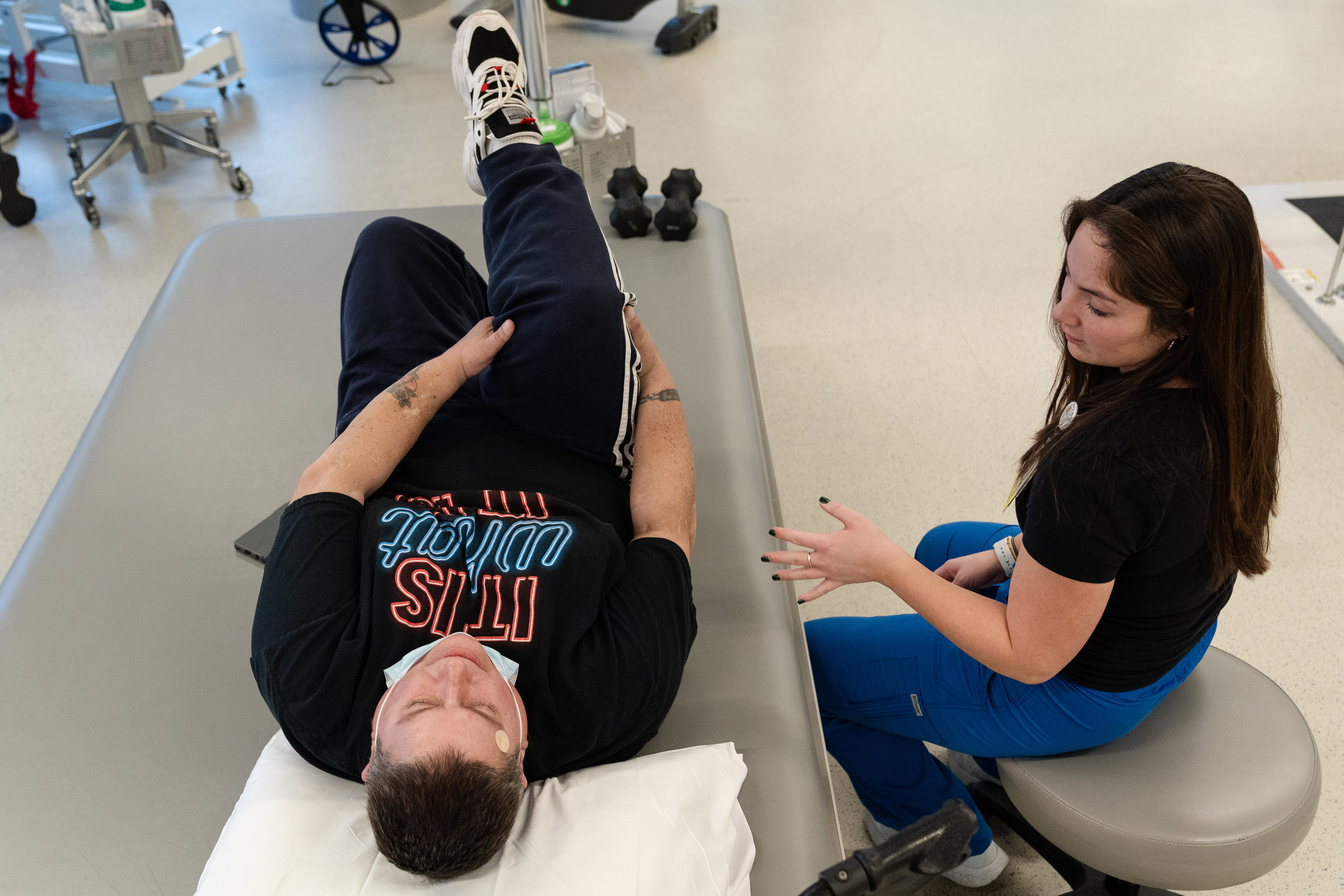
La terapia de rehabilitación puede ser una bendición después de una hospitalización por un derrame cerebral, una caída, un accidente, un reemplazo de articulación, una quemadura grave o una lesión de la médula espinal, entre otras afecciones.

La fisioterapia, la terapia ocupacional y la terapia del habla se ofrecen en diversos entornos: hospitales, residencias de adultos mayores, clínicas y a domicilio.

Es fundamental encontrar una opción segura y de alta calidad con profesionales con experiencia en el tratamiento de tu afección.

¿Qué tipos de terapia de rehabilitación podría necesitar?

La fisioterapia ayuda a los pacientes a mejorar su fuerza, estabilidad y movimiento, y a reducir el dolor, generalmente a través de ejercicios específicos.

Algunos fisioterapeutas se especializan en problemas neurológicos, cardiovasculares u ortopédicos. También hay especialistas en geriatría y pediatría. La terapia ocupacional se centra en actividades específicas (llamadas “ocupaciones”), que suelen requerir habilidades motoras finas, como cepillarse los dientes, cortar alimentos con un cuchillo o vestirse.

La terapia del habla y del lenguaje ayuda a las personas a comunicarse. Algunos pacientes pueden necesitar terapia respiratoria si tienen dificultad para respirar o necesitan que se les retire el respirador.

¿Los seguros cubren las sesiones de rehabilitación?

Medicare, las aseguradoras de salud, la compensación laboral y los planes de Medicaid en algunos estados cubren las terapias de rehabilitación, pero los planes pueden negarse a pagar en ciertos entornos y limitar la cantidad de sesiones.

Algunas aseguradoras pueden pedir una preautorización y otras cancelar la cobertura si no se mejora. Las aseguradoras privadas suelen establecer límites anuales para la terapia ambulatoria.

El Medicare tradicional suele ser el menos restrictivo, mientras que los planes privados Medicare Advantage pueden supervisar de cerca el progreso y limitar los lugares en dónde los pacientes pueden recibir terapia.

¿Debería buscar rehabilitación hospitalaria?

Los pacientes que aún necesitan atención médica o de enfermería, pero que pueden tolerar tres horas de terapia cinco días a la semana, podrían calificar para ser admitidos en un hospital de rehabilitación especializado o en una unidad que funcione dentro de un hospital general.

Los pacientes suelen necesitar al menos dos de los principales tipos de terapia de rehabilitación: fisioterapia, terapia ocupacional o terapia del habla. Las estadías duran un promedio unos 12 días.

¿Cómo elijo?

Busca un centro especializado en el tratamiento de personas con tu diagnóstico; muchos hospitales enumeran las especialidades en sus sitios de internet. Las personas con afecciones médicas complejas o graves podrían preferir un hospital de rehabilitación conectado a un centro médico académico a la vanguardia de los nuevos tratamientos, incluso si está a un vuelo de distancia.

“Verás a pacientes jóvenes con lesiones catastróficas”, como daño de la médula espinal, viajando a otro estado para recibir tratamiento, dijo Cheri Blauwet, directora médica de Spaulding Rehabilitation en Boston, uno de los 15 hospitales que el gobierno federal ha elogiado por su trabajo de avanzada.

Sin embargo, elegir un hospital cerca de familiares y amigos que puedan ayudar después del alta tiene sus ventajas. Los terapeutas pueden ayudar a capacitar a los que serán cuidadores en casa.

¿Cómo encuentro hospitales de rehabilitación?

El planificador de altas o el trabajador social del hospital de agudos debería ofrecerte opciones. Puedes buscar centros de rehabilitación para pacientes internados por ubicación o nombre en el sitio web Care Compare de Medicare. Allí puedes ver cuántos pacientes con tu misma afección ha tratado ese hospital; cuantos más, mejor.

Puedes buscar por especialidad a través de la Asociación Americana de Proveedores de Rehabilitación Médica, un grupo comercial que publica una lista de sus miembros.

Averigüa qué tecnologías especializadas tiene un hospital, como simuladores de manejo (un auto o camión que permite al paciente practicar subir y bajar de un vehículo) o una mesa de cocina con utensilios para practicar cocinar.

¿Cómo puedo saber si un hospital de rehabilitación es confiable?

No es fácil: Medicare no analiza al personal ni publica en su sitio de internet los resultados de las inspecciones de seguridad como sí lo hace con las residencias de adultos mayores. Puedes pedir a la agencia de salud pública de tu estado o al hospital que te proporcionen informes de inspección de los últimos tres años. Estos informes pueden ser técnicos, pero te ayudarán a comprender lo esencial. Si el informe indica que se declaró un “riesgo inmediato”, significa que los inspectores identificaron problemas de seguridad que ponen en peligro a los pacientes.

La tasa de pacientes readmitidos en un hospital general por una razón potencialmente prevenible es una medida de seguridad clave. En general, los centros de rehabilitación con fines de lucro tienen tasas de readmisión más altas que los que son sin fines de lucro, pero hay algunos con tasas de readmisión más bajas y otros con tasas más altas. Puede que no tengas otra opción cerca: hay menos de 400 hospitales de rehabilitación y la mayoría de los hospitales generales no cuentan con una unidad de rehabilitación.

Puedes encontrar las tasas de readmisión de un hospital en la sección de calidad de Care Compare. Las tasas inferiores al promedio nacional son mejores.

Otra medida de calidad es la frecuencia con la que los pacientes son lo suficientemente funcionales como para irse a casa después de terminar la rehabilitación en lugar de ir a una residencia de adultos mayores, un hospital o una institución médica. Esta medida se denomina “alta a la comunidad” y se encuentra en la sección de calidad de Care Compare. Las tasas superiores al promedio nacional son mejores.

Busca reseñas del hospital en Yelp y otros sitios web. Pregunta si los pacientes ven al mismo terapeuta casi todos los días o no. Y si tienen certificaciones en la especialidad que necesitas.

Si es posible, visita el hospital y observa cómo opera. Si es posible, observa si las enfermeras responden rápido a las luces de llamada, si parecen estar sobrecargadas con demasiados pacientes o están mirando sus celulares. Pregunta a los pacientes actuales y a sus familiares si están satisfechos con la atención.

¿Qué pasa si no puedo tolerar tres horas de terapia al día?

Una residencia de personas mayores que ofrece rehabilitación podría ser adecuada para pacientes que no necesitan la supervisión de un médico, pero que no están listos para irse a casa. Las instalaciones generalmente brindan atención de enfermería las 24 horas. La duración de la rehabilitación varía según el paciente. Hay más de 14.500 centros de enfermería especializada en el país, 12 veces más que los hospitales que ofrecen rehabilitación, por lo que una de estas residencias podría ser tu mejor opción.

Puedes buscarlas a través del sitio web Care Compare de Medicare.

¿Qué sucede si los pacientes son demasiado frágiles incluso para una residencia de adultos mayores?

Podrían necesitar un hospital de cuidados de largo plazo. Estos se especializan en pacientes en coma, con respiradores y con afecciones médicas agudas que requieren la presencia de un médico. Los pacientes permanecen allí al menos cuatro semanas, y algunos meses. Care Compare te ayuda a buscar. Hay menos de 350 hospitales de este tipo.

Si tengo la fuerza suficiente para ir a casa. ¿Cómo recibo terapia?

Muchos hospitales de rehabilitación ofrecen terapia ambulatoria. También puedes ir a una clínica o un terapeuta puede ir a tu domicilio. Puedes contratar una agencia de atención médica a domicilio o encontrar un terapeuta que reciba tu seguro y haga visitas a domicilio.

Tu médico u hospital podría derivarte a otros profesionales. En Care Compare, las agencias de atención médica a domicilio indican si ofrecen fisioterapia, terapia ocupacional o terapia del habla. Puedes buscar terapeutas certificados en el sitio web de la Asociación Americana de Fisioterapia (APTA).

Durante la rehabilitación, los pacientes a veces se trasladan del hospital a un centro de enfermería y luego a su hogar, a menudo por insistencia de sus aseguradoras. Alice Bell, especialista senior de la APTA, señaló que los pacientes deberían intentar limitar el número de traslados, por su propia seguridad.

“Cada vez que un paciente cambia de un entorno a otro se encuentra en una zona de mayor riesgo”, afirmó.

KFF Health News is a national newsroom that produces in-depth journalism about health issues and is one of the core operating programs at KFF—an independent source of health policy research, polling, and journalism. Learn more about KFF.

USE OUR CONTENT

This story can be republished for free (details).


from Health Industry Archives - KFF Health News

Related Posts:

$50B Rural Health ‘Slush Fund’ Faces Questions, Skepticism

https://kffhealthnews.org/wp-content/uploads/sites/2/2025/07/mp_20250718_seg_MMR_-_Rural_Health_64.mp3

The Rural Health Transformation Program calls for federal regulators to hand states $10 billion a year for five years starting in fiscal year 2026.

But the “devil’s in the details in terms of implementing,” said Sarah Hohman, director of government affairs at the National Association of Rural Health Clinics.

“An investment of this amount and this style into rural — hopefully it goes to rural — is the type of investment that we and other advocates have been working on for a long time,” said Hohman, whose organization represents 5,600 rural health clinics.

People who live in the nation’s rural expanses have more chronic diseases, die younger, and make less money. Those compounding factors have financially pummeled rural health infrastructure, triggering hospital closures and widespread discontinuation of critical health services like obstetrics and mental health care.

Nearly 1 in 4 people in rural America use Medicaid, the state and federal program for low-income and disabled people. So, as Senate Republicans heatedly debated Medicaid spending reductions, lawmakers added the $50 billion program to quell opposition. But health advocates and researchers doubt it will be enough to offset expected cuts in federal funding.

Senate Majority Leader John Thune, a Republican from South Dakota, which has one of the largest percentages of rural residents in the nation, led the push to pass the budget bill. His website touts support for strengthening access to care in rural areas. But his office declined to respond on the record to questions about the rural health program included in the bill.

Sen. Susan Collins, a Republican from Maine who introduced an initial amendment to add the rural program, also did not respond to a request for comment. On July 15, Sen. Josh Hawley, a Republican from Missouri, introduced a bill to reverse future cuts to Medicaid and add to the rural program.

Michael Cannon, director of health policy studies at the Cato Institute, a libertarian think tank headquartered in Washington, D.C., said the money was set aside because of politics and not necessarily for rural patients.

“As long as it’s a government slush fund where politics decides where the money goes, then there’s going to be a mismatch between where those funds go and what it is consumers need,” Cannon said.

The nonpartisan Congressional Budget Office estimates federal Medicaid spending will be reduced by about $1 trillion over the next decade.

“These dollar amounts translate to actual people,” said Fredric Blavin, a senior fellow and researcher at the Urban Institute, a Washington D.C.-based think tank that focuses on social and economic research.

Most states expanded their Medicaid programs to cover more low-income adults under the Affordable Care Act. That has lowered medical debt, improved health, and even reduced death rates, Blavin said.

By 2034, about 11.8 million people are expected to lose their health insurance from this bill, said Alice Burns, an associate director for KFF’s Program on Medicaid and the Uninsured. And she said the Medicaid rollback may have an outsize impact on rural areas.

In rural areas, federal Medicaid spending is expected to decline by $155 billion over 10 years, according to an analysis by KFF, a health information nonprofit that includes KFF Health News.

If the goal of the rural program was to transform rural health care, as its name suggests, it will fall short, Burns said. The $50 billion rural program distributed over five years won’t offset the losses expected over a decade of Medicaid reductions, she said.

In Kansas, Holton Community Hospital Chief Executive Carrie Lutz said she doesn’t “feel that the sky is falling right now.”

Lutz, whose 14-bed hospital is on the northern plains of the state, said she is bracing for the potential loss of Medicaid-covered patients and limits to provider taxes, which nearly all states use to get extra federal Medicaid money.

The reduction in provider taxes has been delayed until fiscal year 2028, Lutz said, but she still wants her state’s leaders to apply for a portion of the rural program funding, which is expected to be distributed sooner.

“Every little penny helps when you’ve got very negative margins to begin with,” Lutz said.

The program’s $50 billion will be spread over five years and may not be limited to bolstering rural areas or their hospitals. Half of the money will be distributed “equally” among states that apply to and win approval from the Centers for Medicare & Medicaid Services. The law’s current language “raises the possibility” that a small state like Vermont could receive the same amount as a large state like Texas, Burns said.

States are required to submit a “detailed rural health transformation plan” by the end of this year, according to the law.

The law says states should use the funds to pursue goals including improving access to hospitals and other providers, improving health outcomes, enhancing economic opportunity for health care workers, and prioritizing the use of emerging technologies.

Mehmet Oz, a Trump appointee leading Medicare and Medicaid, will determine how to distribute the other half, or $25 billion, using a formula based on states’ rural population and need. The law says the money is to be used for such things as increasing use of robotics, upgrading cybersecurity, and helping rural communities “to right size their health care delivery systems.”

Spokespeople for CMS did not respond to a list of questions.

Kyle Zebley, senior vice president of public policy at the American Telemedicine Association, said there is “a pretty significant degree of discretion” for the White House and the Medicare and Medicaid administrator in approving state plans.

“We will urge states to include robust telehealth and virtual care options within their proposals going up to the federal government,” Zebley said.

Alexa McKinley Abel, government affairs and policy director for the National Rural Health Association, said that while the law calls for states to create and submit plans, it’s unclear what state agencies will perform the task, McKinley Abel said.

“There are a lot of gaps around application and implementation,” she said, noting that an earlier version of the bill called for state plans to be developed in consultation with federally funded state offices of rural health.

But those offices are proposed to be eliminated in Trump’s federal budget, which will face congressional approval in the fall. McKinley Abel said her organization supports state offices of rural health helping develop the plans and working with states to disburse the money, “since they intimately know the rural health community.”

Hohman, with the rural health clinic association, said she is not sure money from the transformation program will even reach her members. About 27% of the patients treated at rural health clinics are enrolled in Medicaid, she said.

“There’s just some confusion about who actually gets this money at the end of the day,” Hohman said. “What is it actually going to be used for?”

KFF Health News senior correspondent Phil Galewitz contributed to this report.

KFF Health News is a national newsroom that produces in-depth journalism about health issues and is one of the core operating programs at KFF—an independent source of health policy research, polling, and journalism. Learn more about KFF.

USE OUR CONTENT

This story can be republished for free (details).


from Health Industry Archives - KFF Health News

Related Posts:

Medical Rehab Hospital Inspections Go Unpublicized by Federal Officials

Federal health officials do not inform consumers about severe safety violations in hospitals that specialize in physical rehabilitation. Nor does Medicare impose fines as it does for nursing homes, or provide easy-to-understand five-star ratings as it does for general hospitals, according to an investigation by KFF Health News and The New York Times

Medical rehab hospitals have become a highly lucrative niche within the health care industry, collectively generating profits of 10%, more than general hospitals, which earn about 6%, and far more than skilled nursing homes, which make less than 0.5%, according to the most recent data from the Medicare Payment Advisory Commission, an independent congressional agency known as MedPAC. 

But MedPAC and independent researchers have found that for-profit rehabs tend to have higher rates of patients being readmitted to general hospitals than nonprofits do. 

In 2023, stand-alone for-profit rehabilitation hospitals overtook nonprofits as the places where most annual patient admissions occur, a KFF Health News and New York Times analysis found. These facilities are required to provide three hours of physical, occupational, or speech therapy a day, five days a week. 

Congress has not authorized Medicare to fine rehab hospitals for violations uncovered during inspections, even ones that resulted in death, as it has done with nearly 8,000 nursing homes during the last three years, imposing average fines of about $28,000. 

The only option is to entirely cut off a rehab hospital’s reimbursement for all services by Medicare and Medicaid, which cover most patients. That step would most likely put it out of business and is almost never used. Even the most serious violations effectively carry no punishments so long as the hospital puts steps in place to avert future problems. 

The federal government’s overall quality oversight efforts are limited. Medicare docks payment to rehab facilities for patients readmitted to a general hospital during shorter-than-average rehab stays, but unlike at general hospitals, there are no financial penalties when recently discharged rehab patients are hospitalized for critical health issues. 

The Biden administration announced last year it intended to develop a rating scale of 1 to 5 stars for rehab facilities on its Care Compare website. The industry’s trade association, the American Medical Rehabilitation Providers Association, requested a delay in the creation of star ratings until the current quality measures were refined. The Trump administration has not determined whether it will continue the effort to rate rehab facilities. 

Also read our consumer guide to finding the right place to get physical, occupational or speech therapy.

KFF Health News is a national newsroom that produces in-depth journalism about health issues and is one of the core operating programs at KFF—an independent source of health policy research, polling, and journalism. Learn more about KFF.

USE OUR CONTENT

This story can be republished for free (details).


from Health Industry Archives - KFF Health News

Related Posts:

Insurers and Customers Brace for Double Whammy to Obamacare Premiums

Most of the 24 million people in Affordable Care Act health plans face a potential one-two punch next year — double-digit premium increases along with a sharp drop in the federal subsidies that most consumers depend on to buy the coverage, also known as Obamacare.

Insurers want higher premiums to cover the usual culprits — rising medical and labor costs and usage — but are tacking on extra percentage point increases in their 2026 rate proposals to cover effects of policy changes advanced by the Trump administration and the Republican-controlled Congress. One key factor built into their filings with state insurance departments: uncertainty over whether Congress allows more generous, covid-era ACA tax subsidies to expire at the end of December.

“The out-of-pocket change for individuals will be immense, and many won’t actually be able to make ends meet and pay premiums, so they will go uninsured,” said JoAnn Volk, co-director of the Center on Health Insurance Reforms at Georgetown University.

Especially if the higher subsidies expire, insurance premiums will be among the first financial pains felt by health care consumers after policy priorities put forward by President Donald Trump and the GOP. Many other changes — such as additional paperwork requirements and spending cuts to Medicaid — won’t occur for at least another year. But spiking ACA premiums, as the nation heads into key midterm elections, invites political pushback. Some on Capitol Hill are exploring ways to temper the subsidy reductions.

“I am hearing on both sides — more from Republicans, but from both the House and Senate” — that they are looking for levers they can pull, said Pennsylvania-based insurance broker Joshua Brooker, who follows legislative actions as part of his job and sits on several insurance advisory groups.

In initial filings, insurers nationally are seeking a median rate increase — meaning half of the proposed increases are lower and half higher — of 15%, according to an analysis for the Peterson-KFF Health System Tracker covering 19 states and the District of Columbia. KFF is a national health information nonprofit that includes KFF Health News.

That’s up sharply from the last few years. For the 2025 plan year, for example, KFF found that the median proposed increase was 7%.

Health insurers “are doing everything in their power to shield consumers from the rising costs of care and the uncertainty in the market driven by recent policy changes,” wrote Chris Bond, a spokesperson for AHIP, the industry’s lobbying group. The emailed response also called on lawmakers “to take action to extend the health care tax credits to prevent skyrocketing cost increases for millions of Americans in 2026.”

Neither the White House nor the Department of Health and Human Services responded to requests for comment.

These are initial numbers and insurance commissioners in some states may alter requests before approval.

Still, “it’s the biggest increase we’ve seen in over five years,” said analysis co-author Cynthia Cox, a KFF vice president and director of its Program on the ACA.

Premiums will vary based on where consumers live, the type of plan they choose, and their insurer.

For example, Maryland insurers have requested increases ranging from 8.1% to 18.7% for the upcoming plan year, according to an analysis of a smaller set of insurers by Georgetown University researchers. A much larger swing is seen in New York, where one carrier is asking for less than a 1% increase, while another wants 66%. Maryland rate filings indicated the average statewide increase would shrink to 7.9% from 17.1% — if the ACA’s enhanced tax credits are extended.

Most insurers are asking for 10% to 20% increases, the KFF report says, with several factors driving those increases. For instance, insurers say underlying medical costs — including the use of expensive obesity drugs — will add about 8% to premiums for next year. And most insurers are also adding 4% above what they would have charged had the enhanced tax credits been renewed.

But rising premiums are just part of the picture.

A bigger potential change for consumers’ pocketbooks hinges on whether Congress decides to extend more generous tax credits first put in place during President Joe Biden’s term as part of the American Rescue Plan Act in 2021, then extended through the Inflation Reduction Act in 2022.

Those laws raised the subsidy amounts people could receive based on their household income and local premium costs and removed a cap that had barred higher earners from even partial subsidy assistance. Higher earners could still qualify for some subsidy but first had to chip in 8.5% of their household income toward the premiums.

Across the board, but especially among lower-income policyholders, bigger subsidies helped fuel record enrollment in ACA plans.

But they’re also costly.

A permanent extension could cost $335 billion over the next decade, according to the Congressional Budget Office.

Such an extension was left out of the policy law Trump signed on July 4 that he called the “One Big Beautiful Bill.” Without action, the extra subsidies will expire at the end of this year, after which the tax credits will revert to less generous pre-pandemic levels.

That means two things: Most enrollees will be on the hook to pay a larger share of their premiums as assistance from federal tax credits declines. Secondly, people whose household income exceeds four times the federal poverty level — $84,600 for a couple or $128,600 for a family of four this year — won’t get any subsidies at all.

If the subsidies expire, policy experts estimate, the average amount people pay for coverage could rise by an average of more than 75%. In some states, ACA premiums could double.

“There will be sticker shock,” said Josh Schultz, strategic engagement manager at Softheon, a New York consulting firm that provides enrollment, billing, and other services to about 200 health insurers, many of which are bracing for enrollment losses.

And enrollment could fall sharply. The Wakely Consulting Group estimates that the combination of expiring tax credits, the Trump law’s new paperwork, and other requirements will result in ACA enrollment dropping by as much as 57%.

According to KFF, insurers added premium increases of around 4% just to cover the expiration of the enhanced tax credits, which they fear will lead to lower enrollment. That would further raise costs, insurers say, because people who are less healthy are more likely to grit their teeth and reenroll, leaving insurers with a smaller, but sicker, pool of members.

Less common in the filings submitted so far, but noticeable, are increases pegged to Trump administration tariffs, Cox said.

“What they are assuming is tariffs will drive drug costs up significantly, with some saying that can have around a 3-percentage-point increase” in premiums as a result, she said.

Consumers will learn their new premium prices only late in the fall, or when open enrollment for the ACA begins on Nov. 1 and they can start shopping around.

Congress could still act, and discussions are ongoing, said insurance broker Brooker.

Some lawmakers, he said, are consulting with the CBO about the fiscal and coverage effects of various scenarios that don’t extend the subsidies as they currently exist but may offer a middle ground. One possibility involves allowing subsidies for families earning as much as five or six times the poverty level, he said.

But any such effort will draw pushback.

Some conservative think tanks, such as the Paragon Health Institute, say the more generous subsides led people to fudge their incomes to qualify and led to other types of fraud, such as brokers signing people up for ACA plans without authorization.

But others note that many consumers — Democratic and Republican — have come to rely on the additional assistance. Not extending it could be risky politically. In 2024, 56% of ACA enrollees lived in Republican congressional districts, and 76% were in states won by Trump.

Allowing the enhanced subsidies to expire could also reshape the market.

Brooker said some people may drop coverage. Others will shift to plans with lower premiums but higher deductibles. One provision of Trump’s new tax law allows people enrolled in either “bronze” or “catastrophic”-level ACA plans, which are usually the cheapest, to qualify for health savings accounts, which allow people to set aside money, tax-free, to cover health care costs.

“Naturally, if rates do start going up the way we anticipate, there will be a migration to lower-cost options,” Brooker said.

KFF Health News is a national newsroom that produces in-depth journalism about health issues and is one of the core operating programs at KFF—an independent source of health policy research, polling, and journalism. Learn more about KFF.

USE OUR CONTENT

This story can be republished for free (details).


from Health Industry Archives - KFF Health News

Related Posts:

KFF Health News' 'What the Health?': The Senate Saves PEPFAR Funding — For Now

The Host

Julie Rovner KFF Health News @jrovner @julierovner.bsky.social Read Julie's stories. Julie Rovner is chief Washington correspondent and host of KFF Health News’ weekly health policy news podcast, “What the Health?” A noted expert on health policy issues, Julie is the author of the critically praised reference book “Health Care Politics and Policy A to Z,” now in its third edition.

The Senate has passed — and sent back to the House — a bill that would allow the Trump administration to claw back some $9 billion in previously approved funding for foreign aid and public broadcasting. But first, senators removed from the bill a request to cut funding for the President’s Emergency Plan for AIDS Relief, President George W. Bush’s international AIDS/HIV program. The House has until Friday to approve the bill, or else the funding remains in place.

Meanwhile, a federal appeals court has ruled that West Virginia can ban the abortion pill mifepristone despite its approval by the Food and Drug Administration. If the ruling is upheld by the Supreme Court, it could allow states to limit access to other FDA-approved drugs.

This week’s panelists are Julie Rovner of KFF Health News, Joanne Kenen of the Johns Hopkins Bloomberg School of Public Health and Politico Magazine, Shefali Luthra of The 19th, and Sandhya Raman of CQ Roll Call.

Panelists

Joanne Kenen Johns Hopkins University and Politico @JoanneKenen @joannekenen.bsky.social Read Joanne's bio. Shefali Luthra The 19th @shefali.bsky.social Read Shefali's stories. Sandhya Raman CQ Roll Call @SandhyaWrites @SandhyaWrites.bsky.social Read Sandhya's stories.

Among the takeaways from this week’s episode:

  • The Senate approved the Trump administration’s cuts to foreign aid and public broadcasting, a remarkable yielding of congressional spending power to the president. Before the vote, Senate GOP leaders removed President Donald Trump’s request to cut PEPFAR, sparing the funding for that global health effort, which has support from both parties.
  • Next Congress will need to pass annual appropriations bills to keep the government funded, but that is expected to be a bigger challenge than the recent spending fights. Appropriations bills need 60 votes to pass in the Senate, meaning Republican leaders will have to make bipartisan compromises. House leaders are already delaying health spending bills until the fall, saying they need more time to work out deals — and those bills tend to attract culture-war issues that make it difficult to negotiate across the aisle.
  • The Trump administration is planning to destroy — rather than distribute — food, medical supplies, contraceptives, and other items intended for foreign aid. The plan follows the removal of workers and dismantling of aid infrastructure around the world, but the waste of needed goods the U.S. government has already purchased is expected to further erode global trust.
  • And soon after the passage of Trump’s tax and spending law, at least one Republican is proposing to reverse the cuts the party approved to health programs — specifically Medicaid. It’s hardly the first time lawmakers have tried to change course on their own policies, though time will tell whether it’s enough to mitigate any political (or actual) damage from the law.

Plus, for “extra credit” the panelists suggest health policy stories they read this week that they think you should read, too: 

Julie Rovner: The New York Times’ “UnitedHealth’s Campaign to Quiet Critics,” by David Enrich.

Joanne Kenen: The New Yorker’s “Can A.I. Find Cures for Untreatable Diseases — Using Drugs We Already Have?” by Dhruv Khullar.

Shefali Luthra: The New York Times’ “Trump Official Accused PEPFAR of Funding Abortions in Russia. It Wasn’t True,” by Apoorva Mandavilli.

Sandhya Raman: The Nation’s “‘We’re Creating Miscarriages With Medicine’: Abortion Lessons from Sweden,” by Cecilia Nowell.

Also mentioned in this week’s podcast:

Credits

Francis Ying Audio producer Emmarie Huetteman Editor

To hear all our podcasts, click here.

And subscribe to KFF Health News’ “What the Health?” on SpotifyApple PodcastsPocket Casts, or wherever you listen to podcasts.

KFF Health News is a national newsroom that produces in-depth journalism about health issues and is one of the core operating programs at KFF—an independent source of health policy research, polling, and journalism. Learn more about KFF.

USE OUR CONTENT

This story can be republished for free (details).


from Health Industry Archives - KFF Health News

Related Posts: