Fast Action From Bystanders Can Improve Cardiac Arrest Survival. Many Don’t Know What To Do.

When a woman collapsed on an escalator at the Buffalo, New York, airport last June, Phil Clough knew what to do. He and another bystander put her flat on her back and checked her pulse (faint) and her breathing (shallow and erratic). Then she stopped breathing altogether. Realizing that she might be having a cardiac arrest, Clough immediately started doing chest compressions, pressing hard and quickly on the center of her chest, while others nearby called 911 and ran to get an automated external defibrillator. Within seconds of receiving a shock from the AED, the woman opened her eyes. By the time the airport rescue team arrived a few minutes later, she was conscious and able to talk with rescuers.

“I don’t want to ever feel helpless,” said Clough, who had flown to Buffalo that evening on a work trip for his engineering job in Denver. After an incident several years earlier in which he was unsure how to help a woman who collapsed at his gym, he took a college course to get certified as an emergency medical responder, who can provide basic life support interventions.

The woman who collapsed was lucky: She lost consciousness in a public place where bystanders knew how to help her. Most people aren’t so fortunate. In the United States, a lack of training and readiness to deal with this relatively common medical emergency contributes to thousands of deaths a year.

More than 350,000 cardiac arrests occur outside of a hospital setting in the United States annually, according to the American Heart Association. In 9 of 10 cases, the person dies because help doesn’t arrive quickly enough. Every minute that passes without intervention reduces the odds of survival by 10%. But if someone immediately receives cardiopulmonary resuscitation and an AED shock, if needed, their survival odds can double or even triple.

Fewer than half of people get that immediate help, according to the heart association. A cardiac arrest occurs when the heart stops suddenly, often because the heart’s electrical system malfunctions. About 70% of cardiac arrests occur at home. But even if someone collapses in a public place and an ambulance is called immediately, it takes roughly eight minutes, on average, for emergency personnel to arrive. In rural areas it can take much longer.

When someone has a cardiac arrest, they often require an electric shock from an AED to get their heart started again. These portable devices analyze the heart’s rhythm and instruct the user to deliver a shock, if necessary, through pads placed on the victim’s chest.

But although many states require that AEDs be available in public places such as airports, malls, and schools, they often aren’t easy to spot. A study of data from 2019 to 2022 found that after a cardiac arrest in a public place, bystanders used an AED 7% of the time and performed CPR 42% of the time.

The most comprehensive resource for identifying AEDs is a nonprofit foundation called PulsePoint, which has registered 185,000 AEDs in 5,400 communities in the United States, according to Shannon Smith, vice president of communications at PulsePoint. If requested, the organization will help a community build its AED registry and connect it to the area’s 911 service free of charge.

PulsePoint recently launched a national AED registry to further this effort.

Through a companion app, users trained in CPR can volunteer to be alerted to potential cardiac arrests within roughly a quarter-mile when calls come into a community’s emergency response dispatch service. The app also identifies registered AEDs nearby.

“PulsePoint is the closest thing we have to a national registry,” said Elijah White, president of the acute care technology division at Zoll, a leading AED manufacturer. The company has provided location information for all its AEDs to PulsePoint. Still, PulsePoint has registered only a fraction of AEDs in the country. “It’s just a start,” White said.

Other factors may also keep bystanders from stepping in to help. They may lack CPR training or confidence, or fear liability if something goes wrong.

Liability shouldn’t be a concern, in general. All 50 states and Washington, D.C., have “good Samaritan” laws that protect bystanders from legal liability if they intervene in a medical emergency in good faith.

But training can be a serious barrier. One study found that only 18% of people reported that they’d received CPR training within the previous two years, a key time frame for skills maintenance. Two-thirds of people reported having been trained at some point.

One way to boost training is to make it mandatory, and many states require that students receive CPR training to graduate. But even though 86% of high school students reported having received some training, only 58% said they knew how to apply their skills, and a similar proportion said they knew how to use an AED.

“We’ve got some work to do,” said Dianne Atkins, a pediatric cardiologist and longtime AHA volunteer, who said ensuring high school training is a top priority for the AHA.

Other countries have prioritized training their residents in AED use and CPR for many years, with some success.

In Denmark, such training has been required to get a driver’s license since the 2000s, and middle schoolers are also required to be trained. And in a survey, 45% of the population reported having received training through their workplace. In the study, 81% of respondents in the general public reported having been trained in CPR and 54% in how to use an AED.

Norway has provided first-aid training in primary schools since 1961 and mandates CPR training to receive a driver’s license. Ninety percent of the population reported they are trained in CPR.

In the United States,  many training courses are available, online and in person, that take only a few hours to complete. For someone who’s never learned basic life-support skills, the training can be eye-opening. This previously untrained reporter was taken aback to discover how forcefully and rapidly someone must press on a mannequin’s chest to do CPR correctly: 100 to 120 compressions a minute to a depth of at least 2 inches.

The most important thing is for ordinary people to know the basics well enough that “they would feel confident to call 911 and push hard and fast on someone’s chest,” said Audrey Blewer, an assistant professor of family medicine and community health at Duke University School of Medicine who has published numerous studies on bystander CPR and AED use. “That doesn’t require a certification card and recent training.”

During an emergency, 911 dispatchers can also play a crucial role in walking people through doing CPR and operating an AED, said David Hiltz, volunteer program director of the HeartSafe Communities program at the Citizen CPR Foundation, a nonprofit that works to improve cardiac arrest survival through training and education.

Phil Clough has stayed in touch with Rebecca Sada, the woman who collapsed at the Buffalo airport that June day as she was coming home from a trip to visit her daughter. Sada, who had no history of heart trouble before her cardiac arrest, now has an automated defibrillator implanted in her chest to stabilize a previously undiagnosed electrical problem with her heart. She and her husband have had Clough over for dinner, and they are friends for life, she said.

One other change that occurred as a result of Sada’s cardiac arrest: She and her husband got certified in CPR and AED.

“Now, if we needed to help someone down the road, we’d be able to,” Sada said.

KFF Health News is a national newsroom that produces in-depth journalism about health issues and is one of the core operating programs at KFF—an independent source of health policy research, polling, and journalism. Learn more about KFF.

USE OUR CONTENT

This story can be republished for free (details).


from Health Industry Archives - KFF Health News
Related Posts:

El costo humano de los recortes de Trump a los programas de tratamiento de adicciones

Cuando la administración Trump recortó a finales de marzo más de $11.000 millones en fondos estatales destinados a la era de covid-19, los programas de recuperación de adicciones sufrieron pérdidas rápidas.

Una organización de Indiana que emplea a personas en recuperación para ayudar a compañeros con trastornos por adicciones y afecciones mentales se vio obligada a despedir a tres trabajadores. Un servicio de apoyo digital en Texas para personas con las mismas problemáticas se preparó para cerrar su línea telefónica 24/7 en una semana. Un programa de Minnesota centrado en la adicción en la comunidad de África Oriental restringió su alcance a personas vulnerables que viven en las calles.

Aunque la asistencia federal se otorgó durante la pandemia de covid y algunos de los fondos apoyaron actividades relacionadas con enfermedades infecciosas, una parte considerable se destinó a programas de salud mental y adicciones.

Estas últimas son preocupaciones crónicas en Estados Unidos que se agravaron durante la pandemia y siguen afectando a millones de estadounidenses.

Colorado, por ejemplo, recibió más de $30 millones para estos programas y Minnesota casi $28 millones, según las agencias de salud y servicios humanos de esos estados.

En muchos casos, este dinero se destinó a servicios de recuperación de adicciones, que van más allá del tratamiento tradicional para ayudar a las personas con adicciones a reconstruir sus vidas. Estos programas realizan tareas que las aseguradoras a menudo no reembolsan, como llevar a las personas a citas médicas y audiencias judiciales, preparer currículums y capacitarlas para nuevos empleos, encontrarles alojamiento y ayudarlas a establecer vínculos sociales no relacionados con las drogas.

Un juez federal bloqueó temporalmente los recortes de la administración Trump, lo que permitió que, por ahora, los programas siguieran recibiendo fondos federales. Sin embargo, muchos de los afectados afirman que no pueden recontratar fácilmente a las personas que despidieron ni reactivar los servicios que redujeron.

Además, no están seguros de poder sobrevivir a largo plazo en un entorno de incertidumbre y temor, sin saber cuándo se revocará el fallo del juez o se recortará otra fuente de financiamiento.

La semana en que se recortaron drásticamente los fondos, la administración Trump también anunció una reorganización masiva del Departamento de Salud y Servicios Humanos (HHS), que incluye la consolidación de la principal agencia federal dedicada a los servicios de recuperación de adicciones. Sin una oficina independiente como la Administración de Servicios de Abuso de Sustancias y Salud Mental, muchos defensores temen que el trabajo de recuperación, y  el dinero para apoyarlo, ya no sea una prioridad.

Aunque fundaciones privadas y gobiernos estatales podrían intervenir, es poco probable que puedan igualar las sumas de financiación federal.

“El apoyo a la recuperación se considera opcional”, dijo Racquel García, fundadora de HardBeauty, una organización de recuperación de adicciones con sede en Colorado.

Los recortes federales ponen en riesgo una subvención de cerca de $75.000 que su equipo había recibido para atender a mujeres embarazadas con adicciones en dos condados rurales de Colorado.

“Es muy fácil tomar decisiones drásticas desde arriba por dinero, cuando no tienes que ser quien le diga a la madre: ‘No podemos ir hoy'”, dijo García. “Cuando nunca tienes que sentarte frente a la madre que realmente necesitaba que estuvieras allí”.

Las afecciones de salud mental, incluidos los trastornos por consumo de sustancias, son una de las principales causas de mortalidad materna en el país. Y, aunque las muertes por sobredosis a nivel nacional han disminuido recientemente, las tasas han aumentado en muchas comunidades afroamericanas y nativas americanas. A muchas personas en el campo de las adicciones les preocupa que estos recortes de fondos puedan revertir el progreso logrado con tanto esfuerzo.

Emily Hilliard, vocera del HHS, declaró a KFF Health News que el departamento se está reorganizando para mejorar la eficiencia, fomentar un enfoque más coordinado para la adicción y priorizar la financiación de proyectos que se alineen con la iniciativa presidencial Make America Healthy Again.

“Nuestro objetivo es optimizar los recursos y eliminar las redundancias, garantizando que los servicios esenciales de salud mental y tratamiento de adicciones se presten de forma más eficaz”, dijo en un comunicado.

Pero para Garcia, no se siente como una mejora. Se siente como abandonar a madres necesitadas.

Entre el momento en que se anunciaron los recortes y cuando el juez federal los suspendió, dos mujeres atendidas por el programa de García dieron a luz, contó. Aunque la financiación de su subvención estaba en el limbo, García le dijo a su empleada que estuviera presente junto a las madres.

La empleada hizo seguimiento con visitas diarias a las nuevas mamás, las conectó con servicios de tratamiento o vivienda cuando fue necesario y las ayudó a navegar por el sistema de servicios infantiles.

“Simplemente no puedo dejar a las madres sin servicios”, dijo García. “Simplemente no puedo hacerlo”.

Tampoco puede abandonar a esa empleada, agregó. Aunque la financiación federal proporcionó la mitad de su salario, García la ha mantenido trabajando a tiempo completo.

García dijo que emplea principalmente a mujeres que están en proceso de recuperación, muchas de las cuales pasaron años atrapadas en situaciones de abuso, dependiendo de los beneficios sociales. Ahora están sobrias y han encontrado un trabajo significativo que les permite mantener a sus familias, dijo. “Creamos nuestra propia fuerza laboral de mamás que ayudan a otras mamás”.

Este tipo de desarrollo de la fuerza laboral en recuperación parece estar alineado con los objetivos del Partido Republicano de lograr que más personas trabajen y reducir la dependencia de la beneficencia.

Las prioridades de la política de drogas de la administración Trump, publicadas a principios de abril, identificaron la creación de “una fuerza laboral calificada y lista para la recuperación” y el fortalecimiento de los servicios de apoyo entre pares para la recuperación como esfuerzos cruciales para ayudar a las personas a “encontrar la recuperación y llevar una vida productiva y saludable”.

Muchos programas de recuperación capacitan a personas para empleos manuales, lo que podría respaldar el objetivo de Trump de revivir la industria manufacturera.

Sin embargo, las acciones de la administración parecen entrar en conflicto con sus objetivos declarados, dijo Rahul Gupta, quien fue el zar antidrogas durante la administración Biden.

“No se puede tener manufactura si las personas no pasan una prueba de drogas en orina o continúan sufriendo adicciones o recaídas”, afirmó Gupta, quien ahora preside GATC Health, una empresa que utiliza inteligencia artificial para el desarrollo de fármacos.

Incluso si Vuelve a haber más empleos en las zonas rurales de Estados Unidos, recortar la financiación de los servicios de recuperación y de la principal oficina federal que supervisa estos esfuerzos podría significar que menos personas sean “empleables”, afirmó Gupta.

Las investigaciones sobre programas de recuperación, en particular los dirigidos por personas con experiencia personal en adicciones, sugieren que pueden aumentar la participación en el tratamiento ordenado por el tribunal, reducir la prevalencia de reincidencia, fomentar la asistencia a las citas de tratamiento y mejorar la probabilidad de reunificación y estabilización familiar.

Billy O’Bryan ve estos beneficios a diario. Como director estatal de la organización nacional sin fines de lucro Young People in Recovery, O’Bryan supervisa cerca de una docena de filiales en Kentucky que enseñan a personas en recuperación habilidades para la vida, como manejar una cuenta bancaria y presentarse a entrevistas de trabajo, y les muestran cómo divertirse en sobriedad, mediante caminatas en grupo y juegos de Ultimate Frisbee que brillan en la oscuridad.

Brindando servicios de recuperación “es cuando realmente invertimos en su futuro”, dijo O’Bryan, quien también está en recuperación.

Seis de sus capítulos se vieron afectados por los recortes de fondos federales. Por eso ha tenido que recurrir al fondo de emergencia de la organización para pagar al personal, y reducir los eventos comunitarios, incluyendo las jornadas de limpieza en las que los miembros del capítulo recogen jeringas usadas de la calle, distribuyen naloxona, el medicamento para revertir sobredosis, y hablan con personas que consumen drogas sobre la posibilidad de recuperarse.

Actualmente está explorando iniciativas de recaudación de fondos, pero no todos sus capítulos tienen la misma capacidad.

“En una ciudad como Louisville, recaudar fondos no es un problema”, dijo O’Bryan, “pero cuando uno llega a Grayson, Kentucky”, una zona rural en los Apalaches, “no hay muchas oportunidades”.

En Minnesota, Kaleab Woldegiorgis y sus colegas de la Niyyah Recovery Initiative solían pasar horas al día en comedores sociales, eventos comunitarios, mezquitas y en las calles de barrios musulmanes y África Oriental, intentando conectar con personas que consumen drogas. Hablaban somalí, amárico y suajili, entre otros idiomas.

Esas iniciativas de divulgación les permitieron encontrar personas que necesitaban servicios de recuperación y que no los buscaban por sí mismas, afirmó Woldegiorgis, quien anteriormente asistió a los grupos de apoyo de Niyyah cuando él mismo lidiaba con la adicción.

Tras construir relaciones con las personas, Woldegiorgis podía ayudarlas a conectarse con servicios de recuperación formales que facturan a sus seguros, explicó. Pero la ayuda no siempre podía esperar a un contrato.

Una tarde, poco antes de los recortes de fondos federales, Woldegiorgis y sus colegas hablaron con un hombre que comenzó a llorar, contando cómo había querido recibir tratamiento unos días antes, pero había perdido sus pertenencias, había vuelto a consumir drogas y había terminado en la calle.

Woldegiorgis dijo que ayudó al hombre a reconectarse con una hermana y a comenzar a explorar opciones de tratamiento.

Con los recortes, es posible que Niyyah ya no pueda apoyar este tipo de trabajo comunitario. Woldegiorgis teme que esto signifique que las personas no recibirán el mensaje de esperanza que puede surgir al interactuar con personas que pueden ser sus modelos de recuperación a seguir.

“La gente no recoge folletos para recibir estos mensajes. Y la gente no lee correos electrónicos ni mira mensajes publicitarios en ls calles y encuentra inspiración”, dijo. “La gente necesita gente”.

KFF Health News is a national newsroom that produces in-depth journalism about health issues and is one of the core operating programs at KFF—an independent source of health policy research, polling, and journalism. Learn more about KFF.

USE OUR CONTENT

This story can be republished for free (details).


from Health Industry Archives - KFF Health News
Related Posts:

When Hospitals Ditch Medicare Advantage Plans, Thousands of Members Get To Leave, Too

For several years, Fred Neary had been seeing five doctors at the Baylor Scott & White Health system, whose 52 hospitals serve central and northern Texas, including Neary’s home in Dallas. But in October, his Humana Medicare Advantage plan — an alternative to government-run Medicare — warned that Baylor and the insurer were fighting over a new contract. If they couldn’t reach an agreement, he’d have to find new doctors or new health insurance.

“All my medical information is with Baylor Scott & White,” said Neary, 87, who retired from a career in financial services. His doctors are a five-minute drive from his house. “After so many years, starting over with that many new doctor relationships didn’t feel like an option.”

After several anxious weeks, Neary learned Humana and Baylor were parting ways as of this year, and he was forced to choose between the two. Because the breakup happened during the annual fall enrollment period for Medicare Advantage, he was able to pick a new Advantage plan with coverage starting Jan. 1, a day after his Humana plan ended.

Other Advantage members who lose providers are not as lucky. Although disputes between health systems and insurers happen all the time, members are usually locked into their plans for the year and restricted to a network of providers, even if that network shrinks. Unless members qualify for what’s called a special enrollment period, switching plans or returning to traditional Medicare is allowed only at year’s end, with new coverage starting in January.

But in the past 15 months, the Centers for Medicare & Medicaid Services, which oversees the Medicare Advantage program, has quietly offered roughly three-month special enrollment periods allowing thousands of Advantage members in at least 13 states to change plans. They were also allowed to leave Advantage plans entirely and choose traditional Medicare coverage without penalty, regardless of when they lost their providers. But even when CMS lets Advantage members leave a plan that lost a key provider, insurers can still enroll new members without telling them the network has shrunk.

At least 41 hospital systems have dropped out of 62 Advantage plans serving all or parts of 25 states since July, according to Becker’s Hospital Review. Over the past two years, separations between Advantage plans and health systems have tripled, said FTI Consulting, which tracks reports of the disputes.

CMS spokesperson Catherine Howden said it is “a routine occurrence” for the agency to determine that provider network changes trigger a special enrollment period for their members. “It has happened many times in the past, though we have seen an uptick in recent years.”

Still, CMS would not identify plans whose members were allowed to disenroll after losing health providers. The agency also would not say whether the plans violated federal provider network rules intended to ensure that Medicare Advantage members have sufficient providers within certain distances and travel times.

The secrecy around when and how Advantage members can escape plans after their doctors and hospitals drop out worries Sen. Ron Wyden of Oregon, the senior Democrat on the Senate Finance Committee, which oversees CMS.

“Seniors enrolled in Medicare Advantage plans deserve to know they can change their plan when their local doctor or hospital exits the plan due to profit-driven business practices,” Wyden said.

The increase in insurer-provider breakups isn’t surprising, given the growing popularity of Medicare Advantage. The plans attracted about 54% of the 61.2 million people who had both Medicare Parts A and B and were eligible to sign up for Medicare Advantage in 2024, according to KFF, a health information nonprofit that includes KFF Health News.

The plans can offer supplemental benefits unavailable from traditional Medicare because the federal government pays insurers about 20% more per member than traditional Medicare per-member costs, according to the Medicare Payment Advisory Commission, which advises Congress. The extra spending, which some lawmakers call wasteful, will total about $84 billion in 2025, MedPAC estimates. While traditional Medicare does not offer the additional benefits Advantage plans advertise, it does not limit beneficiaries’ choice of providers. They can go to any doctor or hospital that accepts Medicare, as nearly all do.

Sanford Health, the largest rural health system in the U.S., serving parts of seven states from South Dakota to Michigan, decided to leave a Humana Medicare Advantage plan last year that covered 15,000 of its patients. “It’s not so much about the finances or administrative burden, although those are real concerns,” said Nick Olson, Sanford Health’s chief financial officer. “The most important thing for us is the fact that coverage denials and prior authorization delays impact the care a patient receives, and that’s unacceptable.”

The National Association of Insurance Commissioners, representing insurance regulators from every state, Puerto Rico, and the District of Columbia, has appealed to CMS to help Advantage members.

“State regulators in several states are seeing hospitals and crucial provider groups making decisions to no longer contract with any MA plans, which can leave enrollees without ready access to care,” the group wrote in September. “Lack of CMS guidance could result in unnecessary financial or medical injury to America’s seniors.”

The commissioners appealed again last month to Health and Human Services Secretary Robert F. Kennedy Jr. “Significant network changes trigger important rights for beneficiaries, and they should receive clear notice of their rights and have access to counseling to help them make appropriate choices,” they wrote.

The insurance commissioners asked CMS to consider offering a special enrollment period for all Advantage members who lose the same major provider, instead of placing the burden on individuals to find help on their own. No matter what time of year, members would be able to change plans or enroll in government-run Medicare.

Advantage members granted this special enrollment period who choose traditional Medicare get a bonus: If they want to purchase a Medigap policy — supplemental insurance that helps cover Medicare’s considerable out-of-pocket costs — insurers can’t turn them away or charge them more because of preexisting health conditions.

Those potential extra costs have long been a deterrent for people who want to leave Medicare Advantage for traditional Medicare.

“People are being trapped in Medicare Advantage because they can’t get a Medigap plan,” said Bonnie Burns, a training and policy specialist at California Health Advocates, a nonprofit watchdog that helps seniors navigate Medicare.

Guaranteed access to Medigap coverage is especially important when providers drop out of all Advantage plans. Only four states — Connecticut, Massachusetts, Maine, and New York — offer that guarantee to anyone who wants to reenroll in Medicare.

But some hospital systems, including Great Plains Health in North Platte, Nebraska, are so frustrated by Advantage plans that they won’t participate in any of them.

It had the same problems with delays and denials of coverage as other providers, but one incident stands out for CEO Ivan Mitchell: A patient too sick to go home had to stay in the hospital an extra six weeks because her plan wouldn’t cover care in a rehabilitation facility.

With traditional Medicare the only option this year for Great Plains Health patients, Nebraska insurance commissioner Eric Dunning asked for a special enrollment period with guaranteed Medigap access for some 1,200 beneficiaries. After six months, CMS agreed.

Once Delaware’s insurance commissioner contacted CMS about the Bayhealth medical system dropping out of a Cigna Advantage plan, members received a special enrollment period starting in January.

Maine’s congressional delegation pushed for an enrollment period for nearly 4,000 patients of Northern Light Health after the 10-hospital system dropped out of a Humana Advantage plan last year.

“Our constituents have told us that they are anticipating serious challenges, ranging from worries about substantial changes to cost-sharing rates to concerns about maintaining care with current providers,” the delegation told CMS.

CMS granted the request to ensure “that MA enrollees have access to medically necessary care,” then-CMS Administrator Chiquita Brooks-LaSure wrote to Sen. Angus King (I-Maine).

Minnesota insurance officials appealed to CMS on behalf of some 75,000 members of Aetna, Humana, and UnitedHealthcare Advantage plans after six health systems announced last year they would leave the plans in 2025. So many provider changes caused “tremendous problems,” said Kelli Jo Greiner, director of the Minnesota State Health Insurance Assistance Program, known as a SHIP, at the Minnesota Board on Aging. SHIP counselors across the country provide Medicare beneficiaries free help choosing and using Medicare drug and Advantage plans.

Providers serving about 15,000 of Minnesota’s Advantage members ultimately agreed to stay in the insurers’ networks. CMS decided 14,000 Humana members qualified for a network-change special enrollment period.

The remaining 46,000 people — Aetna and UnitedHealthcare Advantage members — who lost access to four health systems were not eligible for the special enrollment period. CMS decided their plans still had enough other providers to care for them.

KFF Health News is a national newsroom that produces in-depth journalism about health issues and is one of the core operating programs at KFF—an independent source of health policy research, polling, and journalism. Learn more about KFF.

USE OUR CONTENT

This story can be republished for free (details).


from Health Industry Archives - KFF Health News

Related Posts:

Montana Hospitals Preserve Medicaid Expansion, Fend Off Regulations

Hospitals have spent years amassing political influence at the federal and state levels. According to the nonprofit OpenSecrets, hospitals and nursing homes’ federal lobbying spending rose from $35 million in 2000 to more than $133 million last year, a 280% increase. 

They recently had a unique opportunity to flex some of that political muscle in Montana, where the state’s Medicaid expansion program was scheduled to expire in June unless legislators and the governor renewed it. 

Conservative lawmakers and groups saw an opportunity to terminate or narrow the Medicaid expansion program that cost about $1 billion in federal and state taxpayer money last year to cover tens of thousands of low-income adults. Ultimately, the conservative Republican lawmakers who occupy state House and Senate leadership positions sought to add requirements to the program or receive concessions from hospitals, such as a promise to bolster their community benefit spending, in return for continuing the program that provides them with revenue. 

What was expected to be one of the more contentious debates of the legislative session never happened. The Medicaid expansion renewal bill sailed through with little difficulty and few changes. 

The hospitals spent the last year working to form a coalition with businesses, health clinics, physician groups, insurers, and advocates for people with low incomes to push for extension of Medicaid expansion, which provides government health coverage to about 74,500 low-income, nondisabled Montanans. That work paid off when Democratic and moderate Republicans lawmakers joined forces to push the bill through. 

Hospital lobbyists, led by the Montana Hospital Association, not only helped steamroll Medicaid expansion through the legislature, but they also defeated nearly all attempts to add new requirements to the program and to place new regulations on the hospitals themselves. 

The hospitals’ political pull is acknowledged by frustrated conservative lawmakers who contend that the facilities, most of which are nonprofit organizations largely exempt from state and federal taxes, need more oversight and transparency. As Republican state Sen. Greg Hertz put it, “Hospitals don’t seem to want to come to the table to discuss anything, whether it’s transparency, controlling costs, or providing more information to the public on services.” 

Hospitals say they’re willing to debate ways to improve health care in Montana. But when it comes to regulations they regard as onerous — or lawmaker criticism that they are uncooperative — they aren’t shy about pushing back. “I think that we’ve demonstrated that we work on all kinds of health policies,” said Montana Hospital Association president and CEO Bob Olsen.

KFF Health News is a national newsroom that produces in-depth journalism about health issues and is one of the core operating programs at KFF—an independent source of health policy research, polling, and journalism. Learn more about KFF.

USE OUR CONTENT

This story can be republished for free (details).


from Health Industry Archives - KFF Health News

Related Posts:

Moms in Crisis, Jobs Lost: The Human Cost of Trump’s Addiction Funding Cuts

When the Trump administration cut more than $11 billion in covid-era funds to states in late March, addiction recovery programs suffered swift losses.

An Indiana organization that employs people in recovery to help peers with substance use disorders and mental illness was forced to lay off three workers. A Texas digital support service for people with addiction and mental illness prepared to shutter its 24/7 call line within a week. A Minnesota program focused on addiction in the East African community curtailed its outreach to vulnerable people on the street.

Although the federal assistance was awarded during the covid-19 pandemic and some of the funds supported activities related to infectious disease, a sizable chunk went to programs on mental health and addiction. The latter are both chronic concerns in the U.S. that were exacerbated during the pandemic and continue to affect millions of Americans. Colorado, for example, received more than $30 million for such programs and Minnesota received nearly $28 million, according to health and human services agencies in those states.

In many cases, this money flowed to addiction recovery services, which go beyond traditional treatment to help people with substance use disorders rebuild their lives. These programs do things that insurers often don’t reimburse, such as driving people to medical appointments and court hearings, crafting résumés and training them for new jobs, finding them housing, and helping them build social connections unrelated to drugs.

A federal judge temporarily blocked the Trump administration’s cuts, allowing the programs to continue — for now — receiving federal funding. But many of the affected programs say they can’t easily rehire people they laid off or resurrect services they curtailed. And they’re unsure they can survive long-term amid an environment of uncertainty and fear, not knowing when the judge’s ruling might be lifted or another funding source cut.

The week it slashed the funding, the Trump administration also announced a massive reorganization of the Department of Health and Human Services, including the consolidation of the main federal agency focused on addiction recovery services. Without a stand-alone office like the Substance Abuse and Mental Health Services Administration, many advocates worry, recovery work — and the funding to support it — will no longer be a priority. Although private foundations and state governments may step in, it’s unlikely they could match the tranches of federal funding.

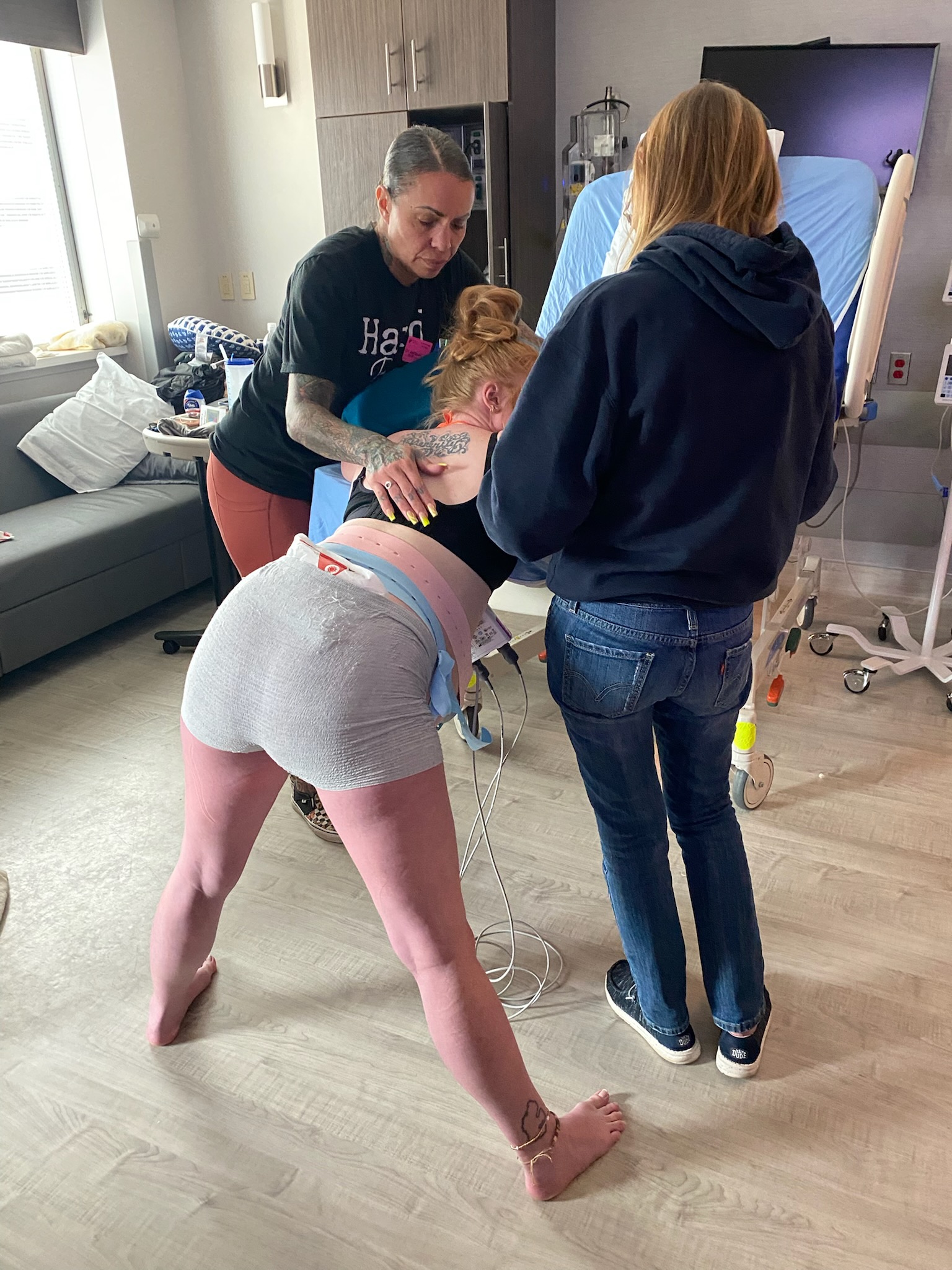
“Recovery support is treated as optional,” said Racquel Garcia, founder of HardBeauty, a Colorado-based addiction recovery organization.

The federal cuts put at risk a roughly $75,000 grant her team had received to care for pregnant women with substance use disorders in two rural counties in Colorado.

“It’s very easy to make sweeping decisions from the top in the name of money, when you don’t have to be the one to tell the mom, ‘We can’t show up today,’” Garcia said. “When you never have to sit in front of the mama who really needed us to be there.”

Mental health conditions, including substance use disorders, are a leading cause of maternal mortality in the U.S. And although national overdose deaths have decreased recently, rates have risen in many Black and Native American communities. Many people in the addiction field worry these funding rollbacks could reverse hard-earned progress.

U.S. Department of Health and Human Services spokesperson Emily Hilliard told KFF Health News that the department is reorganizing to improve efficiency, foster a more coordinated approach to addiction, and prioritize funding projects that align with the president’s Make America Healthy Again initiative.

“We aim to streamline resources and eliminate redundancies, ensuring that essential mental health and substance use disorder services are delivered more effectively,” she said in a statement.

But to Garcia, it doesn’t feel like streamlining. It feels like abandoning moms in need.

Between the time the cuts were announced and when the federal judge paused them, two women served by Garcia’s program gave birth, she said. Though her grant funding was in limbo, Garcia told her employee to show up at the bedside for both moms. The employee followed up with daily check-ins for the new moms, connected them to treatment or housing services when needed, and helped them navigate the child services system.

“I just can’t leave moms” without services, Garcia said. “I just can’t do it.”

Nor can she abandon that employee, she said. Although the federal funding provided half of that employee’s salary, Garcia has continued to keep her on full time.

Garcia said she primarily employs women in recovery, many of whom spent years trapped in abusive situations, relying on welfare benefits. Now they’re sober and have found meaningful work that allows them to provide for their families, she said. “We created our own workforce of mamas who help other mamas.”

This type of recovery workforce development seems to align with the Republican Party’s goals of getting more people to work and reducing reliance on welfare benefits. The Trump administration’s drug policy priorities, released in early April, identified creating “a skilled, recovery-ready workforce” and strengthening peer recovery support services as crucial efforts to help people “find recovery and lead productive, healthy lives.” Many recovery programs train people for blue-collar jobs, which could support Trump’s goal of reviving the manufacturing industry.

But the administration’s actions appear to conflict with its stated goals, said Rahul Gupta, the nation’s drug czar during the Biden administration.

“You can’t have manufacturing if people can’t pass a urine drug test or continue to suffer from addiction or relapse,” said Gupta, who is now president of GATC Health, a company using artificial intelligence for drug development.

Even if jobs return to rural America, cutting funding for recovery services and the main federal office overseeing such efforts could mean fewer people are employable, Gupta said.

Research on recovery programs, particularly those run by people with personal addiction experience, suggests they can increase engagement in court-ordered treatment, reduce the prevalence of rearrest, bolster attendance at treatment appointments, and improve the likelihood of families reunifying and stabilizing.

Billy O’Bryan sees these benefits daily. As a state director for the national nonprofit Young People in Recovery, O’Bryan oversees about a dozen chapters in Kentucky that teach people in recovery life skills, such as balancing a checkbook and interviewing for jobs, and show them how to have fun in sobriety, through group hikes and glow-in-the-dark Ultimate Frisbee games.

Providing recovery services “is when we really invest in their future,” said O’Bryan, who is in recovery too.

Six of his chapters were affected by the federal funding cuts. That has meant dipping into his organization’s rainy day fund to pay staff and cutting back on community events, including cleanup days in which chapter members gather used syringes off the street, pass out the overdose reversal medication naloxone, and talk to people using drugs about the possibility of recovery.

He’s exploring fundraising efforts now, but not all his chapters have the same ability.

“In a city like Louisville, fundraising is not a problem,” O’Bryan said, “but when you get out into Grayson, Kentucky” — a rural area in the Appalachian Mountains — “there’s not a lot of opportunities.”

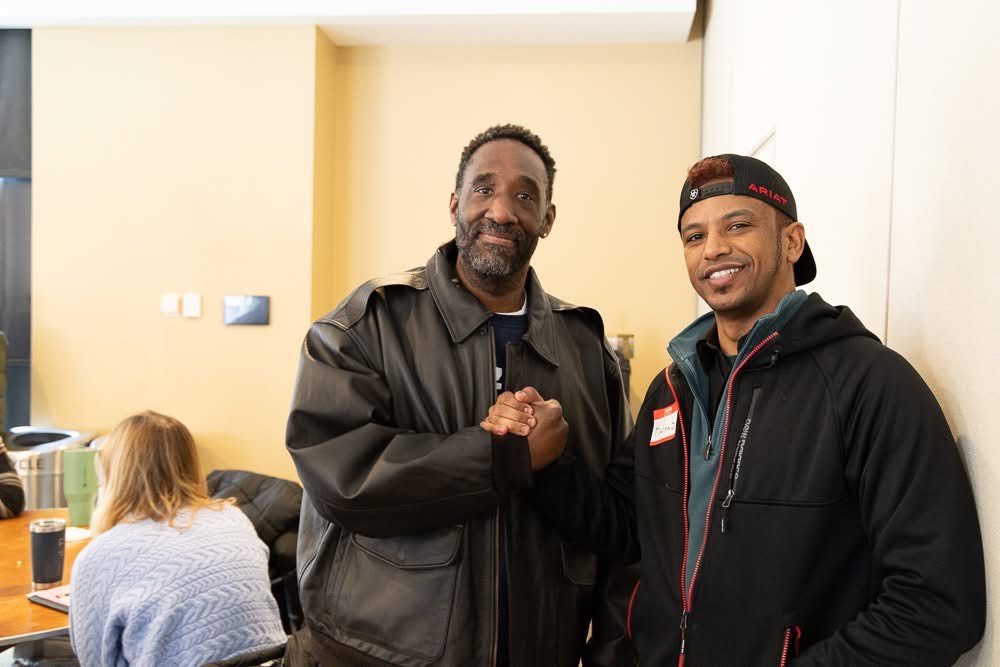
In Minnesota, Kaleab Woldegiorgis and his colleagues at Niyyah Recovery Initiative used to spend hours a day at soup kitchens, community events, mosques, and on the streets of East African and Muslim neighborhoods, trying to connect with people using drugs. They spoke Somali, Amharic, and Swahili, among other languages.

Those outreach efforts allowed them to “find individuals in need of recovery services” who “weren’t seeking it out themselves,” said Woldegiorgis, who previously attended Niyyah’s support groups when he was dealing with addiction.

After building relationships with people, Woldegiorgis could help them connect with formal recovery services that bill their insurance, he said. But help couldn’t always wait for a contract.

One afternoon shortly before the federal funding cuts, Woldegiorgis and his colleagues spoke with a man who began weeping, recounting how he had wanted to get treatment a few days earlier but had lost his belongings, returned to using drugs, and ended up on the street. Woldegiorgis said he helped the man reconnect with a sister and begin exploring treatment options.

With the federal funding cuts, Niyyah may no longer be able to support this type of outreach work. Woldegiorgis fears it means people won’t receive the message of hope that can come from interacting with role models in recovery.

“People don’t pick up pamphlets to receive these messages. And people don’t read emails and people don’t look at billboards and find inspiration,” he said. “People need people.”

KFF Health News is a national newsroom that produces in-depth journalism about health issues and is one of the core operating programs at KFF—an independent source of health policy research, polling, and journalism. Learn more about KFF.

USE OUR CONTENT

This story can be republished for free (details).


from Health Industry Archives - KFF Health News

Related Posts:

A Chicago Hospital Bows to Federal Pressure on Trans Care for Teens

He’s 17 and lives in the Chicago suburbs. He loves theater and recently helped direct a play at his high school. He takes competitive AP courses and is working on his Eagle Scout project.

And he’s been on a journey for four years.

Once a week, the transgender teen injects testosterone into his body. He’s had his eggs frozen in case he wants to have his own biological children one day. He talked with his parents and his psychologist and decided he was ready for the next step of treatment: top surgery to remove breast tissue.

“Getting this treatment isn’t fixing something that’s wrong with me,” the teen said. “It’s just helping me grow more into who I want to be and who I can feel most comfortable existing as.”

KFF Health News and NPR are not identifying the teen by name or using his mother’s last name because both are concerned he could be targeted for being transgender.

The teen’s mom, Jane, waited for a call to schedule the surgery at Ann & Robert H. Lurie Children’s Hospital of Chicago. Then, she received a voicemail from the hospital. She said she knew what the message would be even before she listened to it: The surgery wouldn’t happen.

She had already read on social media that Lurie Children’s, located near downtown Chicago, would pause gender-affirming surgeries for people younger than 19 in the wake of an executive order from President Donald Trump.

Jane called Lurie back to confirm that surgeries were on hold, then told her son when he got home from school that day.

“I said, ‘Hey, we are going to take care of you,'” she recalled. “‘We will make it through this.'”

It was devastating, Jane said.

“We are being threatened,” she said. “The trans community is being threatened, and parents are being threatened.”

Her son said he feels hurt and confused. His doctors told him after Trump was elected in November that they would fight as hard as they legally could to support him, he recalled. But then Lurie’s leaders decided to cancel pending surgeries and stop scheduling new ones.

“I know that it’s not like a personal thing, like they didn’t look at me directly and go, ‘Yeah, you don’t deserve that,'” the teen said. “But it kind of feels like it sometimes, especially when a lot of what the sentiment has been, in general, towards trans people in society.”

On Feb. 7, a Lurie Children’s spokesperson confirmed the hospital would pause gender-affirming surgeries.

KFF Health News and NPR spoke with 10 patients or their parents in the Chicago area about how this affects their lives. They described their disappointment, their loss of hope for one day having a procedure, and their anger at the timing, when they already feel threatened and marginalized by hateful rhetoric around the country.

These families fear that they eventually could lose access to all gender-affirming care, such as therapy, puberty blockers, and hormones. They’ve also questioned why Illinois officials who have vowed to protect transgender rights have been quiet on what’s happening at Lurie Children’s and elsewhere. Northwestern Memorial Hospital in Chicago has also stopped such surgeries for minors, families told KFF Health News and NPR.

Lurie Children’s decision came after Trump’s executive order on Jan. 28 threatened to cut federal funding to health care providers offering gender-affirming medical care.

“Across the country today, medical professionals are maiming and sterilizing a growing number of impressionable children under the radical and false claim that adults can change a child’s sex through a series of irreversible medical interventions,” according to Trump’s order. “This dangerous trend will be a stain on our Nation’s history, and it must end.”

Another patient, a 16-year-old boy from Chicago, had a surgery date for a double mastectomy procedure — until Lurie Children’s canceled it. KFF Health News and NPR are not identifying him because he fears for his personal safety.

The teen felt betrayed by the cancellation, he said. He has been binding his chest for more than five years, but doing so causes rib and back pain.

Every morning, he faces a choice: bind his chest to fully “pass” as male, or skip that and experience a day without pain. He avoids sports because he can’t breathe as well when his chest is bound. A large part of his gender dysphoria is centered on having breasts, he said.

Lurie Children’s deemed the teen’s surgery “medically necessary,” according to medical documents his family shared with KFF Health News and NPR.

“Lurie’s decision set a precedent not only for other care providers but also for their patients,” said the teen. “They have established that they are no longer the safe haven they have claimed to be for so many years.”

Many of Lurie Children’s patients were referred for surgery to Northwestern Memorial Hospital, a prominent research hospital nearby. Their initial Northwestern appointments were later canceled. A Northwestern spokesperson declined repeated requests to comment.

Parents whose transgender children are receiving other types of medical care at Lurie Children’s, such as hormone therapy, worry about what the hospital might stop providing next.

“If we can’t get estrogen in a year, what do we do?” says the mother of a 15-year-old transgender girl. KFF Health News and NPR are not naming her because she fears retaliation against her daughter if she is identified. “Parents with means are talking about leaving the country.”

The Politics of Pausing Surgeries

In a statement, physician Robert Garofalo said he hears and understands the frustration. He is the founding director of the Gender Development Program at Lurie Children’s.

“My life’s work has been devoted to these children, adolescents, and their families,” Garofalo wrote. “As someone who has spent his entire career at Lurie Children’s, I can assure you these kids and these families matter to this institution. It’s important to know that this decision was painstakingly difficult, and it was made amid unprecedented circumstances and external pressures.”

The hospital’s decision, Garofalo wrote, was based on the belief it could help safeguard most of the clinical services offered by his program.

Surgery among trans youth is rare, researchers have found.

After Trump’s executive order, Illinois Attorney General Kwame Raoul and 14 of his peers in other states vowed to protect access to treatment. In a statement, Raoul said the Illinois Human Rights Act prohibits health care providers from discriminating against patients because of their gender identity.

But recently he told KFF Health News and NPR that it would be hard to make a case that Lurie and Northwestern are violating state law.

“I don’t look at Lurie or Northwestern as a bad actor here,” Raoul, a Democrat, said after an event on April 1, at which he told a packed room of civic leaders in a restaurant near downtown Chicago to stand up against intimidation by the White House. It’s not discrimination, Raoul said, “when the federal government is holding a gun to your head.”

When KFF Health News and NPR asked whether Lurie Children’s is violating the Human Rights Act, Democratic Gov. JB Pritzker didn’t answer. But he did say hospitals are being “blackmailed” into limiting care.

“This is not the hospitals’ fault,” Pritzker said. “Believe me. I know the people at Lurie Children’s Hospital, I know the people who run most of these hospitals, and I can tell you that they want to do the right thing for their patients.”

Lurie Children’s and some hospitals across the country have paused surgeries or other types of gender-affirming treatment despite federal judges who issued rulings blocking Trump’s order.

A Hospital Confronts an Uncertain Legal Future

Lurie Children’s has one of the oldest gender-affirming care programs in the country, launched in 2013, and still offers hormone therapy, puberty blockers, and behavioral health services.

Medical providers, patients, and parents point to research that underscores the crucial and even lifesaving role that transgender medical care can provide, such as helping decrease depression and anxiety. Access to gender-affirming care is supported by the American Academy of Pediatrics and the American Medical Association.

The transgender community is small, and families say they feel targeted because of this. In 2023, around 3% of high school students in the U.S. identified as transgender, and an additional 2% identified as questioning, according to a 2023 study from the federal Centers for Disease Control and Prevention.

Transgender youths experience more violence, bullying, and suicidal thoughts than their non-trans peers, the CDC study found. About 1 in 4 students who were transgender or questioned their gender identity attempted suicide in the past year, the study found.

In recent years, many states have cracked down on access to gender-affirming care for minors, according to KFF, a health information nonprofit that includes KFF Health News. Just over half the country — 27 states — ban or restrict access. Recently, Iowa took the step of stripping civil rights protections from people who are trans or nonbinary.

Elizabeth Mack, a pediatric critical care physician in South Carolina, has witnessed the consequences of a ban in her state. She has treated several children who attempted suicide or died by suicide because they couldn’t access treatment, according to conversations she had with the patients or family members.

“It’s just one of those things that leaves a mark that I can’t unsee,” Mack said of her experience.

This Teen Already Had His Surgery but Still Worries

Ben Garcia, 18, a Chicago high school senior, offers a glimpse into life post-surgery. In 2023, he had a double mastectomy. He believes that without the medical care he’s received for the past several years, he would be a different person, likely more withdrawn and less confident.

“This care has allowed me to be a lot more comfortable in who I am, in the way that I present myself to the world,” Garcia said.

Garcia and his mother, Michelle Vallet, emphasized that his path to surgery was a slow process that proceeded with care and deliberation. Once puberty started, Garcia started to have questions and wanted to explore what it would mean to delay the changes occurring in his body. At that time, he was around 10 or 11 years old.

Vallet reached out to Lurie Children’s Hospital and booked a first appointment for Garcia. It lasted three hours, she said.

Much of the public misunderstands the process, Vallet said, and transgender kids have become some of the most scrutinized patients in America.

“I think they feel like trans kids are just one day waking up saying, ‘I want to be a boy,'” Vallet said. “They go to the gender clinic, wham bam. That’s not how this care happens.”

She, her son, and the medical staff at Lurie Children’s talked through the risks of treatment, the possible side effects, and the next steps.

Garcia went through mental health evaluations over multiple appointments before he could take puberty blockers to stop his body from going through changes. Then he started taking low doses of testosterone, a hormone. Gradually, his voice dropped, and he grew facial hair.

Garcia still takes testosterone shots every week and gets checkups at Lurie Children’s to monitor his hormone levels. He’s now nervous this care could also be affected. His mother is worried that the hospital might suspend all types of gender-affirming care.

“It’s heartbreaking to see hospitals as big as Lurie comply in advance,” Vallet said, referring to the executive order’s threats to cut hospital payments. “It feels like a betrayal. … There’s federal dollars on the line, but at a certain point in the environment we’re in, you have to say, ‘No, I’m not doing this.'”

The suburban 17-year-old who never got a surgery date is waiting to hear back from other hospitals. He has a preliminary appointment booked at one hospital in May, but there’s a waitlist. Surgery is likely months away.

He’s convinced that the medical care he’s already received has saved his life and given him hope for his future. He thinks about studying medicine in college, inspired by the care he’s received.

His mom, Jane, said he’s thriving.

“I’m really proud of him, because he just makes sense,” Jane said as her son described all that’s involved in being able to have surgery. “He makes sense, and people are listening to him make sense and giving him what he needs to exist.”

This article is from a partnership that includes WBEZ, NPR, and KFF Health News.

KFF Health News is a national newsroom that produces in-depth journalism about health issues and is one of the core operating programs at KFF—an independent source of health policy research, polling, and journalism. Learn more about KFF.

USE OUR CONTENT

This story can be republished for free (details).


from Health Industry Archives - KFF Health News

Related Posts:

Hospitals’ Lobbying Frustrates Montana Lawmakers Who Sought To Boost Oversight

HELENA, Mont. — As Republican legislative leaders in Montana girded for this year’s battle over whether to extend Medicaid expansion in the state, they took aim at one of the program’s biggest backers: hospitals.

If Montana’s hospitals wanted to extend the government health insurance program that cost taxpayers about $1 billion in 2024, and benefit from that revenue, they should give something back, such as additional community health care services and benefits, GOP leaders argued as the session began in January.

But instead, they found out just how formidable a political force the state’s hospitals can be. The hospitals not only helped steamroll Medicaid expansion through the legislature, but they also defeated nearly all attempts to add new requirements to the program and to place new regulations on hospitals themselves.

Hospitals opposed and defeated bills to impose price caps and to prominently post their charges and killed an attempt to redirect Medicaid funds raised by a hospital tax.

Most Montana hospitals are nonprofit organizations that are largely exempt from state income and property taxes. Legislators requested drafts of several bills to scrutinize hospitals’ “community benefits,” the services they provide for free or at discounted costs that justify their nonprofit status, but did not introduce them during the session.

The only such bill introduced has been significantly amended, at the hospitals’ request.

The state hospital lobbyists’ political pull has frustrated conservative lawmakers in leadership positions who are seeking more oversight of and transparency from the hospitals.

“Hospitals don’t seem to want to come to the table to discuss anything, whether it’s transparency, controlling costs, or providing more information to the public on services,” said Republican state Sen. Greg Hertz, who sponsored the price-cap bill that was rejected on the Senate floor this month.

Hospitals say they’re willing to debate ways to improve health care in Montana, and they point to Medicaid expansion as a program whose benefits flow to all corners of the state.

Yet when it comes to regulations they regard as onerous or criticism that they’re uncooperative partners on health care policy, the hospitals aren’t shy about pushing back.

“I don’t think I’ve ever been approached by any of them on reforming the health care system,” Montana Hospital Association president and CEO Bob Olsen said of the hospitals’ critics in the legislature. “I think that we’ve demonstrated that we work on all kinds of health policies.”

Republicans hold big majorities this legislative session and their conservative leaders — most of whom opposed extending Medicaid expansion — have often seen hospitals as a political foe.

But Montana’s hospitals have always been a strong lobby in the state, with bipartisan appeal. The state’s 63 hospitals employ about 30,000 people, according to the MHA, including many of the state’s physicians, and have multiple lobbyists at the Capitol, both on their own and through the hospital association.

They also have a strong ally in state Rep. Ed Buttrey, a moderate Republican who also is on the board of directors of Benefis Health System. Buttrey sponsored the original 2015 Montana Medicaid expansion bill and bills to renew the program in 2019 and this year.

In the past year, hospitals worked to form a coalition with businesses, health clinics, physician groups, insurers, and advocates for people with low incomes to push for extension of Medicaid expansion, which provides government health coverage to about 74,500 low-income, nondisabled Montanans.

Medicaid expansion had been set to expire this June, but the bill extending it breezed through the legislature, passing by comfortable margins in February, with bipartisan support. Republican Gov. Greg Gianforte signed it into law last month.

The MHA has a political action committee that donates to multiple lawmakers of both parties. In 2024, it paid particular attention to allies of Medicaid expansion.

The PAC gave $61,000 to the Montana Democratic Party and $75,000 to a political committee that supported moderate Republicans in contested GOP legislative primaries last June, according to filings with the state commissioner of political practices.

The majorities that passed Medicaid expansion in February included every Democrat in the legislature and many of the moderate Republicans supported by the political committee financed partly by the MHA.

Democrats also have been voting almost universally against bills that would impose new regulations on hospitals.

Hertz’s bill, which would have capped larger hospitals’ prices at 300% of the Medicare rate for most procedures, failed on the Senate floor this month on a 26-24 vote. All but one Democrat and nine Republicans voted against it.

State Sen. Cora Neumann, a Democratic member of the Senate Public Health, Welfare and Safety Committee, also voted against a bill requiring nonprofit hospitals to show that their community benefits meet or exceed the value of their property tax exemptions.

Neumann said she supports better access to affordable care in Montana but that “the policies we have been presented with are not well thought out and raise concerns for me about government overreach.”

State Rep. Jane Gillette, a Republican who chaired the legislative panel overseeing health care spending in the state budget, tried last month to redirect a small portion of Medicaid expansion funds — $7 million a year — to certain hospitals. The money is part of $365 million generated annually by a tax on hospital services, and the corresponding federal match, according to Olsen, the hospital association leader.

Half of the $7 million would go to smaller, independent hospitals and the other half would be distributed to hospitals showing “exceptional health outcomes and efficiencies,” she said.

The House Appropriations Committee agreed March 24 to insert her proposals into the session’s main budget bill.

But a week later — after hospitals lobbied against the change — the same committee torpedoed language in a separate bill that would have implemented the changes. The next day, on the House floor, all but one Democrat and 25 Republicans formed a two-thirds majority to remove the funding change from the budget bill.

“That tells you what a stronghold the hospitals have,” Gillette said. “Even a slight variation to our current system is not acceptable to them.”

Olsen said the change would have taken money from some larger hospitals and moved it elsewhere, and not necessarily to the smaller hospitals Gillette hoped to help.

“She approached us, but never tried to work with us,” he said. “It wasn’t going to reach those hospitals that she wanted to reach.”

Senate President Matt Regier, a Republican, made a last attempt to insert Gillette’s amendment into the state budget bill on the Senate floor on April 17, but it was rejected on a 27-23 vote, with all 18 Democrats and nine Republicans voting no.

Hospitals are, however, working with Regier on his community-benefit reporting measure — the last-standing bill that might impose new regulations on hospitals.

The bill says if the community benefits reported by nonprofit hospitals don’t equal or exceed the value of their exemption from property taxes, they must pay the difference into a fund that would be distributed to small, “critical access” hospitals.

During the bill’s initial hearing April 2, Regier — a Medicaid expansion opponent and sometimes sharp critic of the hospitals — said he was open to amendments that hospitals might find acceptable.

The original bill cleared the Senate April 5 on a party-line, 30-18 vote, with Republicans in favor. Then, in a House committee meeting on April 17, Republicans attached amendments that had the hospitals’ blessing and sent the bill to the House floor.

The changes delay the law’s effective date until 2027 and more specifically define the community benefits that must be reported and the potential property tax liability to which hospitals must match their benefit.

Olsen said the MHA will support the amended bill.

“The truth of it is, hospitals have always far exceeded the tax exemption for community benefits, on the spending they do,” he said. “Some might fall short, from time to time — but over the long haul, they exceed those exemptions.”

Regier’s attempt to quantify the amount and compare it to nonprofit hospitals’ tax exemption is not unreasonable, Olsen said: “I’m confident hospitals can do it.”

KFF Health News is a national newsroom that produces in-depth journalism about health issues and is one of the core operating programs at KFF—an independent source of health policy research, polling, and journalism. Learn more about KFF.

USE OUR CONTENT

This story can be republished for free (details).


from Health Industry Archives - KFF Health News

Related Posts:

The Ranks of Obamacare ‘Fixers’ Axed in Trump’s Reduction of Health Agency Workforce

They’re the fixers, the ones who step in when Affordable Care Act enrollees have a problem with their coverage, like a newborn incorrectly left off a policy or discovering that a rogue broker had signed them up or switched their plan without consent.

Specially trained caseworkers help resolve such issues, which might otherwise cause consumers to rack up large doctors’ bills or prevent them or their family members from getting care. Now, though, the broad federal reduction in force set in motion by the Trump administration has cut the ranks of those caseworkers, slashing two out of six divisions of caseworkers, according to one affected worker and a former Centers for Medicare & Medicaid Services official familiar with the situation, Jeffrey Grant.

Currently, the number of ACA enrollees is at an all-time high of 24 million. The ACA — known as Obamacare — has long drawn disfavor from Republicans and Trump himself. The health law faces additional changes next year that, if adopted, could sow confusion and more problems. Consumers would face a new learning curve with extra paperwork and rules. And the caseworker cuts might extend the time needed to resolve any difficulties.

“It impacts not only our jobs, but all these people we serve,” said one New York City-based caseworker, who was let go in a Feb. 14 purge affecting federal employees in their probationary periods. “Usually, we would have on average 14 days to take care of a case that was very difficult, although the urgent cases would be solved within two to three business days. It will now be delayed so much more. Whole teams got wiped out completely.”

NPR and KFF Health News are not naming the two affected workers in this article because they fear professional or personal repercussions for speaking to the media.

The two teams of caseworkers were dismantled in a haphazard fashion that left some workers without an official notice but locked out of their computers.

The cuts have demoralized caseworkers, whose jobs demand a grasp of complex and arcane health insurance rules in a little-known government department that most consumers don’t interact with — CMS’ Exchange Customer Solutions Group — until they need help.

“The loss in staffing is going to reduce the ability for people to get through” to caseworkers after contacting the marketplace or other organizations for help, said Jackie Kiger, executive director of Pisgah Legal Services, a nonprofit that provides legal and ACA help for North Carolina consumers and is facing a budget reduction under a separate effort by the Trump administration to cut “navigator” funding by 90%. Navigators are government-funded nonprofits that help people enroll in the ACA or resolve problems with coverage.

The federal force reduction aims to decrease the number of employees at agencies within the Department of Health and Human Services from 82,000 to 62,000, including the Centers for Disease Control and Prevention, the Food and Drug Administration, the National Institutes of Health, and CMS.

CMS, which oversees the ACA and other government health programs, will lose about 300 workers, including about 30 caseworkers scattered nationwide. The cuts come amid thousands of other federal job losses, including front-line workers across an array of agencies, from Social Security field offices to the National Park Service.

In a press release, HHS estimated its reduction in force will save taxpayers $1.8 billion a year. No one from CMS responded to KFF Health News’ questions about the caseworker reductions.

What Will Be Affected?

When consumers have a problem with their ACA plan, their first step is usually to call the federal or state marketplace on which they purchased coverage.

Those call centers can handle basic questions about plans purchased on the federal exchange, which serves 31 states. (State marketplaces handle their own complex cases and don’t rely on federal caseworkers.)

When someone calls the federal marketplace 800 number with coverage problems, the inquiry probably winds up on a caseworker’s desk, said one affected caseworker. That employee received a reduction-in-force notice several days after losing access to their work computer on April 1.

Caseworkers usually don’t speak directly with consumers, the worker said. Using information sent over by the federal marketplace — including notes taken when consumers called in with problems, as well as ACA applications — they handle or oversee consumer requests, such as canceling a plan or adding a member.

One of the last problems handled by that caseworker involved a child born in November who was not added correctly to the family’s plan for 2024, meaning any care the child received during the last two months of the year was not covered and the family risked being stuck with the bills.

“This person did everything right, including calling the marketplace within 60 days to report the birth and add the newborn to their coverage,” said the worker, who was quickly able to resolve it because it was a marketplace error.

The worker, who is now soured on federal employment and will look for a new job in the private sector, said caseworkers handled an average of 30 issues a day, but that in recent months the number kept climbing, heading past 45, and grew even more intense after the Feb. 14 dismissal of probationary employees.

“It’s not an easy job,” the worker said, noting the challenge of constantly evolving rules and policies governing health plans.

Ferreting Out Fraud

In the past year, caseworkers have dealt with cases involving unauthorized enrollments or switching, a problem that ticked up in late 2023, according to KFF Health News investigations, and continued through much of last year, resulting in at least 274,000 complaints to CMS through August. The complaints centered on practices by rogue brokers who enrolled or switched coverage for consumers without their express knowledge. That could leave them without access to their health provider networks or drug coverage, or even facing a tax bill.

Though it is unclear how many such complaints fell to a federal caseworker, some improperly switched consumers want to be restored into plans they had originally chosen, while others want them canceled.

“I have seen people who were enrolled and every two or three months a broker would switch them to a different plan,” said the caseworker who was locked out in early April. “The more health plans they were enrolled in, the more difficult it was to handle on the back end.”

New hires spend months learning the ropes.

The New York-based worker let go in February during her probationary period said she had joined CMS in October and spent three months in training. Just about a month after completing that training, she was let go — a bitter irony, she said, because she had sought stability in a job with the federal government, having experienced a layoff during her private-sector career.

“I took a huge pay cut — over $40,000 — when I went from the private sector into the government,” said the mother of three whose husband serves in the military. Her federal salary was about $76,000, which is not high for an expensive market like the New York metropolitan area. “But I took it as an opportunity to get in the door and move up. Then, boom, I get hit with another layoff.”

“I can only imagine how hard it is for people with 10 to 15 years with the government who are banking on it for retirement,” she said.

Starting next year, the Trump administration has proposed several changes to the ACA, including ending year-round eligibility for very low-income applicants, requiring additional financial and eligibility documentation, and charging some people a monthly $5 fee when auto-reenrolled in coverage until they confirm their eligibility.

Such changes will “make things harder, so there you will have more things that go wrong,” said Grant, the former CMS official, who founded Schedule F Healthcare Strategies after leaving CMS. “You will then also have fewer caseworkers to handle the work.”

We’d like to speak with current and former personnel from the Department of Health and Human Services or its component agencies who believe the public should understand the impact of what’s happening within the federal health bureaucracy. Please message KFF Health News on Signal at (415) 519-8778 or get in touch here.

KFF Health News is a national newsroom that produces in-depth journalism about health issues and is one of the core operating programs at KFF—an independent source of health policy research, polling, and journalism. Learn more about KFF.

USE OUR CONTENT

This story can be republished for free (details).


from Health Industry Archives - KFF Health News

Related Posts:

Why Cameras Are Popping Up in Eldercare Facilities

The assisted living facility in Edina, Minnesota, where Jean Peters and her siblings moved their mother in 2011, looked lovely. “But then you start uncovering things,” Peters said.

Her mother, Jackie Hourigan, widowed and developing memory problems at 82, too often was still in bed when her children came to see her midmorning.

“She wasn’t being toileted, so her pants would be soaked,” said Peters, 69, a retired nurse-practitioner in Bloomington, Minnesota. “They didn’t give her water. They didn’t get her up for meals.” Her mother dwindled to 94 pounds.

Most ominously, Peters said, “we noticed bruises on her arm that we couldn’t account for.” Complaints to administrators — in person, by phone, and by email — brought “tons of excuses.”

So Peters bought an inexpensive camera at Best Buy. She and her sisters installed it atop the refrigerator in her mother’s apartment, worrying that the facility might evict her if the staff noticed it.

Monitoring from an app on their phones, the family saw Hourigan going hours without being changed. They saw and heard an aide loudly berating her and handling her roughly as she helped her dress.

They watched as another aide awakened her for breakfast and left the room even though Hourigan was unable to open the heavy apartment door and go to the dining room. “It was traumatic to learn that we were right,” Peters said.

After filing a police report and a lawsuit, and after her mother’s 2014 death, Peters in 2016 helped found Elder Voice Advocates, which lobbied for a state law permitting cameras in residents’ rooms in nursing homes and assisted living facilities. Minnesota passed it in 2019.

Though they remain a contentious subject, cameras in care facilities are gaining ground. By 2020, eight states had joined Minnesota in enacting laws allowing them, according to the National Consumer Voice for Quality Long-Term Care: Illinois, Kansas, Louisiana, Missouri, New Mexico, Oklahoma, Texas, and Washington.

The legislative pace has picked up since, with nine more states enacting laws: Connecticut, North Dakota, South Dakota, Nevada, Ohio, Rhode Island, Utah, Virginia, and Wyoming. Legislation is pending in several others.

California and Maryland have adopted guidelines, not laws. The state governments in New Jersey and Wisconsin will lend cameras to families concerned about loved ones’ safety.

But bills have also gone down to defeat, most recently in Arizona. For the second year, a camera bill passed the House of Representatives overwhelmingly but, in March, failed to get a floor vote in the state Senate.

“My temperature is a little high right now,” said state Rep. Quang Nguyen, a Republican who is the bill’s primary sponsor and plans to reintroduce it. He blamed opposition from industry groups, which in Arizona included LeadingAge, which represents nonprofit aging services providers, for the bill’s failure to pass.

The American Health Care Association, whose members are mostly for-profit long-term care providers, doesn’t take a national position on cameras. But its local affiliate also opposed the bill.

“These people voting no should be called out in public and told, ‘You don’t care about the elderly population,’” Nguyen said.

A few camera laws cover only nursing homes, but the majority include assisted living facilities. Most mandate that the resident (and roommates, if any) provide written consent. Some call for signs alerting staffers and visitors that their interactions may be recorded.

The laws often prohibit tampering with cameras or retaliating against residents who use them, and include “some talk about who has access to the footage and whether it can be used in litigation,” added Lori Smetanka, executive director of the National Consumer Voice.

It’s unclear how seriously facilities take these laws. Several relatives interviewed for this article reported that administrators told them cameras weren’t permitted, then never mentioned the issue again. Cameras placed in the room remained.

Why the legislative surge? During the covid-19 pandemic, families were locked out of facilities for months, Smetanka pointed out. “People want eyes on their loved ones.”

Changes in technology probably also contributed, as Americans became more familiar and comfortable with video chatting and virtual assistants. Cameras have become nearly ubiquitous — in public spaces, in workplaces, in police cars and on officers’ uniforms, in people’s pockets.

Initially, the push for cameras reflected fears about loved ones’ safety. Kari Shaw’s family, for instance, had already been victimized by a trusted home care nurse who stole her mother’s prescribed pain medications.

So when Shaw, who lives in San Diego, and her sisters moved their mother into assisted living in Maple Grove, Minnesota, they immediately installed a motion-activated camera in her apartment.

Their mother, 91, has severe physical disabilities and uses a wheelchair. “Why wait for something to happen?” Shaw said.

In particular, “people with dementia are at high risk,” added Eilon Caspi, a gerontologist and researcher of elder mistreatment. “And they may not be capable of reporting incidents or recalling details.”

More recently, however, families are using cameras simply to stay in touch.

Anne Swardson, who lives in Virginia and in France, uses an Echo Show, an Alexa-enabled device by Amazon, for video visits with her mother, 96, in memory care in Fort Collins, Colorado. “She’s incapable of touching any buttons, but this screen just comes on,” Swardson said.

Art Siegel and his brothers were struggling to talk to their mother, who, at 101, is in assisted living in Florida; her portable phone frequently died because she forgot to charge it. “It was worrying,” said Siegel, who lives in San Francisco and had to call the facility and ask the staff to check on her.

Now, with an old-fashioned phone installed next to her favorite chair and a camera trained on the chair, they know when she’s available to talk.

As the debate over cameras continues, a central question remains unanswered: Do they bolster the quality of care? “There’s zero research cited to back up these bills,” said Clara Berridge, a gerontologist at the University of Washington who studies technology in elder care.

“Do cameras actually deter abuse and neglect? Does it cause a facility to change its policies or improve?”

Both camera opponents and supporters cite concerns about residents’ privacy and dignity in a setting where they are being helped to wash, dress, and use the bathroom.

“Consider, too, the importance of ensuring privacy during visits related to spiritual, legal, financial, or other personal issues,” Lisa Sanders, a spokesperson for LeadingAge, said in a statement.

Though cameras can be turned off, it’s probably impractical to expect residents or a stretched-thin staff to do so.

Moreover, surveillance can treat those staff members as “suspects who have to be deterred from bad behavior,” Berridge said. She has seen facilities installing cameras in all residents’ rooms: “Everyone is living under surveillance. Is that what we want for our elders and our future selves?”

Ultimately, experts said, even when cameras detect problems, they can’t substitute for improved care that would prevent them — an effort that will require engagement from families, better staffing, training and monitoring by facilities, and more active federal and state oversight.

“I think of cameras as a symptom, not a solution,” Berridge said. “It’s a band-aid that can distract from the harder problem of how we provide quality long-term care.”

The New Old Age is produced through a partnership with The New York Times.

KFF Health News is a national newsroom that produces in-depth journalism about health issues and is one of the core operating programs at KFF—an independent source of health policy research, polling, and journalism. Learn more about KFF.

USE OUR CONTENT

This story can be republished for free (details).


from Health Industry Archives - KFF Health News

Related Posts:

Covid Worsened Shortages of Doctors and Nurses. Five Years On, Rural Hospitals Still Struggle.

Even by rural hospital standards, Keokuk County Hospital and Clinics in southeastern Iowa is small.

The 14-bed hospital, in Sigourney, doesn’t do surgeries or deliver babies. The small 24-hour emergency room is overseen by two full-time doctors.

CEO Matt Ives wants to hire a third doctor, but he said finding physicians for a rural area has been challenging since the covid-19 pandemic. He said several physicians at his hospital have retired since the start of the pandemic, and others have decided to stop practicing certain types of care, particularly emergency care.

Another rural hospital is down the road, about a 40-minute drive east. Washington County Hospital and Clinics has 22 beds and is experiencing similar staffing struggles. “Over the course of the last few years, we’ve had not only the pandemic, but we’ve had kind of an aging physician workforce that has been retiring,” said Todd Patterson, CEO.

The pandemic was difficult for health workers. Many endured long hours, and the stresses on the nation’s health care system prompted more workers than usual to quit or retire.

“There’s a chunk of workers that were lost and won’t come back,” said Joanne Spetz, who directs the Institute for Health Policy Studies at the University of California-San Francisco. “For a lot of the clinicians that decided and were able to stick it out and work through the pandemic, they have burned out,” Spetz said.

Five years after the World Health Organization declared covid a global pandemic and the first Trump administration announced a national emergency, the United States faces a crucial shortage of medical providers, below the projected need for an aging population.

That could have lasting effects on care, particularly in states like Iowa with significant rural populations. Experts say the problem has been building for a while, but the effects of the pandemic accelerated the shortages by pushing many doctors over the edge into early retirement or other fields.

“Some of them made it through covid like ‘Let’s get us through this public health crisis,’ and then they came out of it saying, ‘OK, and now? Now I’m exhausted,’” said Christina Taylor, president of the Iowa Medical Society.

“Iowa is absolutely in the middle of a physician shortage,” Taylor said. “It’s a true crisis for us. We’re actually 44th in the country in terms of patient-to-physician ratio.”

A 2022 survey by the Centers for Disease Control and Prevention found a significant jump in health workers who reported feeling burned out and wanting a new job, compared with 2018. The number of people in health care has grown since the start of the pandemic, said Janette Dill, an associate professor at the University of Minnesota’s School of Public Health, but the growth has not happened fast enough.

“We have an aging population. We have a lot of needs,” she said.

The Association of American Medical Colleges projected last year that the U.S. faces a shortage of up to 86,000 physicians by 2036 — if lawmakers don’t invest more money in training doctors.

These shortages could push more people to seek care in ERs when they can’t see a local doctor, said Michael Dill, director of workforce studies at the AAMC.

“We’re already at a point where tens of millions of Americans every year can’t get medical care when they need it,” said Dill (no relation to Janette Dill). “If the shortage is sustained or gets even worse, then that problem gets worse too, and it disproportionately negatively impacts the most vulnerable amongst us.”

Iowa lawmakers made addressing the shortage a priority in the current legislative session. They introduced bills aimed at increasing medical student loan forgiveness and requesting federal help to add residency training slots for medical students in the state.

Last year, Gov. Kim Reynolds signed a bill into law that drops the residency requirement for some doctors who trained abroad to get a medical license. Lawmakers in at least eight other states have approved similar changes.

Patterson, of the Washington County hospital, appreciates that Iowa lawmakers are trying to increase the pipeline of doctors into Iowa but said it doesn’t address immediate shortages.

“You have a high school student who’s graduating right now; they’re probably nine to 11 years away from entering the workforce as a practicing physician. So it’s a long-term kind of problem,” he said.

For nurses, workforce experts say, the projected national outlook isn’t as dire as in recent years.

“Nursing education is back up. Nursing employment rates are back up. I think, for that workforce, we’ve largely nationally recovered from all the dislocations that occurred,” said Spetz, of the Institute for Health Policy Studies.

But getting nurses to move to the places that need them, like rural communities, will be difficult, she said.

Some rural hospitals in Iowa say an even bigger challenge right now is finding nurses to hire.

Some of that can be traced to the pandemic, said Sara Bruns, nurse manager at Keokuk County Hospital and Clinics. She recalled that some covid patients in critical condition died when they couldn’t be transferred to larger hospitals with more advanced intensive care unit equipment, because those hospitals didn’t have the staff to take on more patients.

“We had to make the horrible decision of ‘You’re probably not going to make it,’” Bruns recalled, saying many patients were then listed as DNR, for “do not resuscitate.”

“That took a big toll on a lot of nurses,” she said.

Another problem is persuading the area’s young nurses to stay, when they would rather live and work in more urban areas, Bruns said.

Her hospital still relies on contracts with travel nurses to fill some night shifts. That’s something the hospital never had to do before the pandemic, Bruns said. Travel nurses are more expensive, adding stress to a small hospital’s budget.

“I think some people just completely got out of nursing,” Bruns said. The pandemic took a special toll “because of the hours that they had to work, the conditions that they had to work.”

Policymakers and health care organizations can’t focus only on recruiting workers, according to Janette Dill at the University of Minnesota. “You also have to retain workers,” she said. “You can’t just recruit new people and then have them be miserable.”

Dill said workers report feeling that patients have been more disrespectful and challenging since the pandemic, and sometimes workers feel unsafe at work. “By ‘unsafe’ I mean physically unsafe. I think that is a very stressful part of the job,” she said.

Research has shown health workers reporting higher levels of burnout and poor mental health since the pandemic — though the risks decreased if workers felt supported by their managers.

Gail Grimes, an intensive care nurse in Des Moines, felt more supported by her employer during the worst parts of the pandemic than she does now, she said. Some hospitals offered pay bumps and more scheduling flexibility to keep nurses on staff.

“We were getting better bonus pay,” Grimes recalled. “We were getting these specialized contracts we could fulfill that were often more worth our time to be able to come in, to miss our families and be there.”

Grimes said she’s seen nurses leave Iowa for neighboring states with better average pay. This creates shortages that she believes affect the care she gives her own patients.

“A nurse taking care of five patients will always be able to provide better care than a nurse taking care of 10 patients,” she said.

She thinks many hospitals have simply accepted staff burnout as a fact, rather than try to prevent it.

“It really is significantly impactful to your mental health when you come home every day and you feel guilty about the things you have not been able to provide to people,” she said.

This article is from a partnership that includes IPR, NPR, and KFF Health News.

KFF Health News is a national newsroom that produces in-depth journalism about health issues and is one of the core operating programs at KFF—an independent source of health policy research, polling, and journalism. Learn more about KFF.

USE OUR CONTENT

This story can be republished for free (details).


from Health Industry Archives - KFF Health News

Related Posts: